
Kashmir Impulse Desk
Srinagar, Nov 4
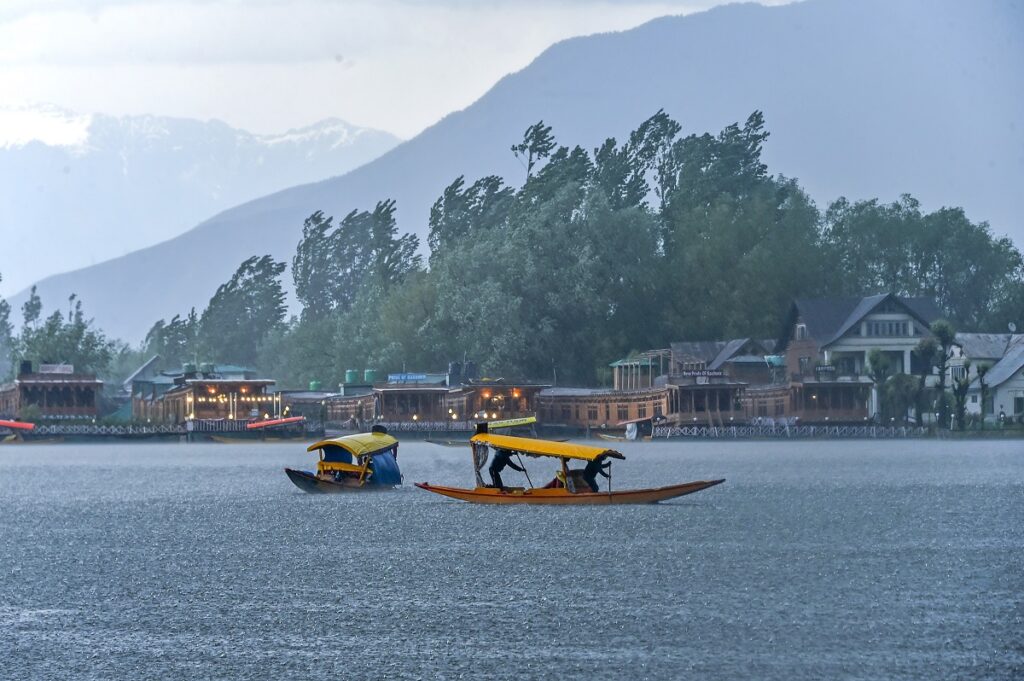
Daytime temperatures declined across Kashmir on Thursday as isolated parts of the higher reaches received light rainfall, while the plains largely remained dry under cloudy skies, the Meteorological Department said.
Light snowfall over higher reaches and isolated rainfall in the plains were possible late Thursday night, a department official said.
Gulmarg recorded the lowest maximum temperature in the Valley at 12.3 degrees Celsius, followed by Kupwara at 15.2 degrees, Pahalgam at 15.7, Kokernag at 18.2, Srinagar at 18.7 and Qazigund at 19.5 degrees Celsius.
In Jammu division, Jammu recorded a maximum of 29 degrees Celsius, while Katra registered 26 degrees, Bhaderwah 21.2, and Banihal and Batote 22.5 degrees each.
Director Meteorological Department Mukhtar Ahmad said a weak western disturbance was likely to affect Jammu and Kashmir on November 10 and 11, bringing light rain to parts of both divisions and snowfall over higher reaches.
Weather conditions were expected to remain largely dry from November 6 to 9, he said.
Night temperatures across Kashmir remained close to seasonal averages. Shopian recorded the lowest minimum at 0.8 degrees Celsius, while Sonamarg registered 1 degree, Pahalgam 1.5, Gulmarg 2 and Kupwara 2.1 degrees Celsius.
Qazigund recorded a minimum of 3.3 degrees Celsius, Srinagar 4.0 and Kokernag 6.1 degrees, according to the India Meteorological Department.
Jammu city recorded a minimum temperature of 15.1 degrees Celsius, with night temperatures in other parts of the division also remaining close to normal.
Ahmad said winter conditions had begun to establish themselves across the region, with shallow fog appearing over the plains during morning hours.
Fog formation and reduced visibility were likely to become more frequent as temperatures continued to fall, he said.
The Meteorological Department advised farmers to make use of the prevailing dry weather for agricultural activities.