
Kashmir Impulse Desk
Leh, Aug 20
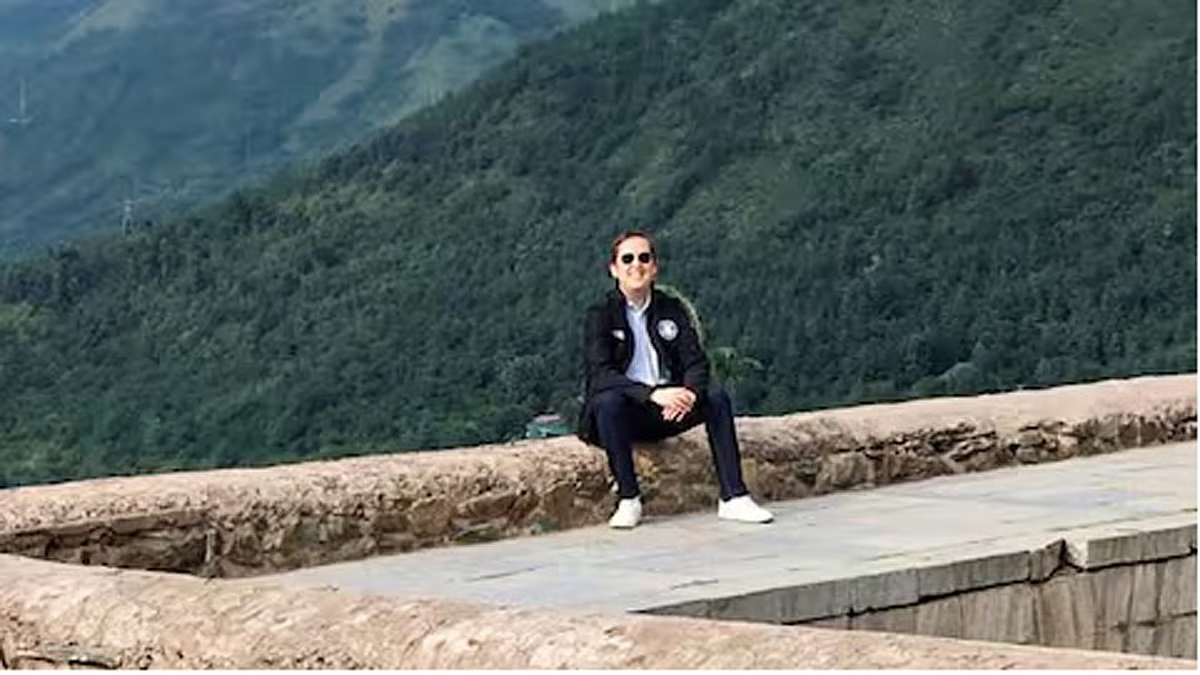
US Ambassador to India Sergio Gor arrived in Leh on Thursday, taking his first official trip to Ladakh and bringing a senior American diplomat to one of India’s most strategically sensitive frontier regions more than six years after a deadly military clash with China transformed the security landscape along the Line of Actual Control.
Gor’s visit to Ladakh followed a high-profile engagement in Srinagar a day earlier, where he described Jammu and Kashmir as an important part of India and said Washington was considering a review of its travel advisory for the region.
The sequence of the visits – Srinagar followed by Leh – places Gor’s trip against a backdrop of heightened diplomatic attention to northern India, where New Delhi has sought to consolidate security, connectivity and economic development after the 2020 India-China border crisis.
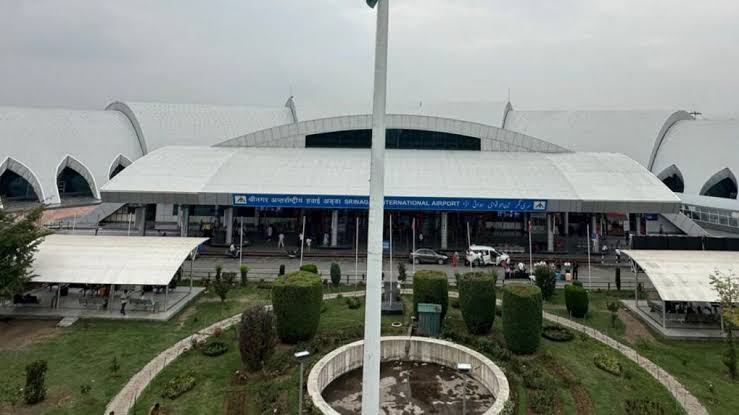
Gor arrived at Kushok Bakula Rimpochee Airport in Leh in the afternoon after adverse weather temporarily disrupted morning flight operations from Srinagar.
He was taken under heavy security cover to the city before travelling to Sangam, where the Zanskar and Indus rivers meet.
The ambassador took part in a river-rafting activity covering several kilometres from Tsogti before checking into a local hotel.
The visit is the first official trip by a serving US ambassador to the strategically important Ladakh region since the June 2020 clashes in the Galwan Valley, which resulted in the deaths of Indian and Chinese soldiers and triggered a prolonged military confrontation along the disputed frontier.
Gor is expected to meet senior officials of the Ladakh administration, security officials and other local stakeholders during his stay.
He is scheduled to return to New Delhi on August 22.
His visit also coincides with the presence in Leh of the Dalai Lama, the Tibetan spiritual leader who regularly spends the summer months in Ladakh and holds religious teachings and meetings there.
It was not immediately clear whether Gor would meet the Dalai Lama.
Ladakh has assumed greater strategic importance for India since the 2020 border crisis, with the region forming a critical part of the country’s northern frontier with China and Pakistan.
New Delhi has since accelerated infrastructure development and sought to improve connectivity in the high-altitude territory.
The visit also comes as India and the United States deepen cooperation across defence, technology, trade and strategic affairs, while maintaining close consultations on developments in the Indo-Pacific and along India’s northern borders.
Security arrangements in Leh were significantly strengthened for the ambassador’s visit.
Gor’s comments in Srinagar have meanwhile triggered a diplomatic response from Pakistan, which summoned US Chargé d’Affaires Natalie Baker on Wednesday and lodged what it described as a “strong demarche” over the ambassador’s remarks on Jammu and Kashmir.
Asked about the protest, Chief Minister Omar Abdullah said the issue was between Pakistan and the United States and did not require his intervention.
“That is a matter between Pakistan and the US,” Omar told reporters. “Whatever the US Ambassador said, he has said it. It is now between those two countries.”
Gor, during a joint interaction with Omar in Srinagar, had described Jammu and Kashmir as an important part of India and said Washington could reconsider its travel advisory in light of measures taken by the Indian government and the J&K administration to improve security.
Omar also declined to enter into a public dispute with his Congress alliance partners, who have opposed any third-party role in the Kashmir issue.
“Congress has their point of view,” he said. “I am not going to get into a war of words over this.”
The chief minister said foreign policy and diplomatic disputes involving Washington and Islamabad were beyond the remit of the J&K administration.
Former chief minister and People’s Democratic Party president Mehbooba Mufti took a sharply different view of Gor’s Srinagar remarks, saying Washington should not be treated as an authority capable of certifying the political status of Kashmir.
“There is no need to take the US so seriously,” Mehbooba told reporters, arguing that U.S. interventions in countries ranging from Vietnam to Iran had caused widespread destruction.
She said diplomatic visits to J&K had become more controlled since the 2019 constitutional changes that ended the erstwhile state’s special status and reorganised it into two federally administered territories.
Before 2019, foreign diplomats visiting the region had met representatives of different sections of society, including people from tourism, trade and travel, as well as political groups with differing views, she said.
After 2019, she alleged, foreign delegations had been taken on more tightly managed itineraries and had largely met government officials before departing.
Mehbooba nevertheless agreed with Omar that any political settlement on Kashmir would have to come from New Delhi rather than Washington.
She criticised the chief minister for not using his meeting with Gor to raise what she described as concerns over arrests, raids, dismissals from government service and property attachments in J&K.
She also alleged that an imam had been assaulted by Army personnel during a search operation in Karimabad in Pulwama district. There was no immediate official response to the allegation.
Mehbooba urged Omar to press New Delhi to reopen the Muzaffarabad and Rawalakot routes, where cross-LoC trade has remained suspended.
She also welcomed Gor’s indication that the US could review its travel advisory for J&K, saying greater American economic engagement could help sectors such as horticulture and handicrafts.
Congress leader Tariq Karra said J&K had always been and would remain an integral part of India, but argued that any third-party intervention reflected a failure of New Delhi’s policies.
Whether the statement came from a US ambassador, secretary or any other foreign diplomat, Karra said, it did not alter India’s position.
“The Congress does not recognise any third-party intervention,” he said, citing the Shimla Agreement as the basis for dealing with India-Pakistan issues bilaterally.
Karra also pointed to US involvement during the India-Pakistan military confrontation in May, saying Washington’s role in the episode demonstrated what he described as the growing extent of American intervention in regional affairs.
Pakistan’s decision to summon the US diplomat, he said, was Islamabad’s matter and had no bearing on India’s stated position.
The BJP welcomed Gor’s remarks as evidence of India’s growing diplomatic influence and a setback to Pakistan’s efforts to internationalise the Kashmir issue.
J&K Assembly opposition leader Sunil Sharma described the statement as a success for Indian diplomacy, saying there was no doubt that J&K was part of India.
BJP spokesman Altaf Thakur said Gor’s visit itself demonstrated changing perceptions about security and normalcy in the region.
He pointed to the ambassador’s public movements in Srinagar, including a Shikara ride on Dal Lake, and said the visit showed that the international perception of J&K was changing.
Thakur also welcomed the possible review of the US travel advisory, saying a relaxation could help tourism, investment and employment.
He said India should use the growing international interest in J&K to deepen engagement in tourism, trade, technology and investment.
Gor’s move from Srinagar to Leh gives the visit a broader strategic dimension.
While his Srinagar remarks focused on security, tourism and the political sensitivity surrounding J&K, his arrival in Ladakh brings the ambassador directly into a region central to India’s security calculations vis-à-vis China.
Ladakh shares a long and contested frontier with China and includes the area around the Galwan Valley, where the 2020 confrontation sharply deteriorated relations between the two Asian powers.
For Washington, the region also forms part of a wider strategic picture involving India’s role in the Indo-Pacific and its expanding defence and security relationship with the United States.
The ambassador’s meetings in Ladakh are therefore likely to attract attention beyond the immediate focus on tourism and local development, particularly because the visit follows his politically significant remarks in Srinagar.
The Ladakh administration’s leadership is also in flux during the visit. Lieutenant Governor Vinai Kumar Saxena is in New Delhi and is expected to return to Ladakh by August 21.
Gor’s itinerary and meetings will be closely watched for any indication of how Washington views the region’s evolving security, economic, and diplomatic significance.