
Kashmir Impulse Desk
Srinagar, July 12
The administration of the Union Territory of Ladakh has approved the creation of 17 new tehsils, nearly doubling the number of revenue subdivisions in the Himalayan region, in a move aimed at strengthening grassroots governance and improving access to public services for residents of remote and border areas.
The decision, approved by Lieutenant Governor Brigadier (Retd.) B.D. Mishra, increases the number of tehsils in Ladakh to 32 from the existing 15 and follows the creation of five new districts announced earlier this year as part of a wider administrative restructuring.
Officials said the reorganisation was intended to simplify the revenue administration by ensuring that every village falls under a single tehsil and each tehsil is aligned with one district, eliminating overlapping jurisdictions that had complicated governance for years.
“In a major policy decision to reorganise the revenue administrative framework in Ladakh, I have approved the creation of 17 new tehsils aimed at strengthening governance at the grassroots level and bringing administration closer to the people,” the Lieutenant Governor said in a statement.
The restructuring is expected to improve the delivery of government services, accelerate implementation of development programmes and reduce travel time for residents living in some of India’s most remote mountain communities.
Under the revised administrative framework, Leh district will comprise five tehsils, Kargil seven, Nubra six, Sham five, Changthang four, Zanskar four and Drass one.
Officials said the changes are part of a broader effort to streamline governance following Ladakh’s separation from the former state of Jammu and Kashmir in August 2019, when it became a Union Territory administered directly by the federal government.
The administration said the new structure aligns with the government’s broader vision of improving governance and infrastructure in the strategically important region, which borders both China and Pakistan.
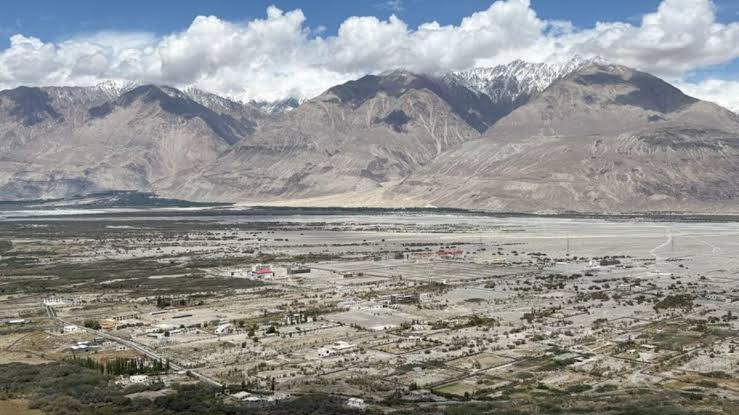
For decades, Ladakh’s vast distances, sparse population and rugged terrain have posed significant administrative challenges.
Residents in several remote villages have traditionally travelled hundreds of kilometres across high-altitude mountain passes to access revenue offices, obtain land records or complete routine government procedures.
Officials said the expansion of tehsils is expected to decentralise public administration and make essential government services more accessible, particularly in isolated settlements that remain cut off for extended periods during winter due to heavy snowfall.
The creation of additional revenue units is also expected to improve land administration, facilitate quicker delivery of welfare programmes and strengthen coordination between district authorities and local communities.
Administrative experts say decentralisation has become increasingly important as the Union Territory expands infrastructure development, tourism, border connectivity and rural welfare initiatives across its high-altitude districts.
Since Ladakh was carved out as a separate Union Territory in 2019, the administration has undertaken a series of institutional reforms aimed at strengthening governance while addressing the logistical challenges posed by one of India’s largest and least densely populated regions.
Officials said the latest restructuring represents one of the most significant administrative reorganisations undertaken in Ladakh since its formation as a Union Territory and is expected to provide a more balanced and accessible governance framework for communities spread across its vast mountainous landscape.