
Srinagar airport’s decision to remain operational throughout the runway maintenance period underscores the central role of uninterrupted air connectivity in sustaining Kashmir’s tourism, economy and everyday life. Tabish Khan reports.
The announcement was brief, but its implications stretched far beyond the perimeter fence of Srinagar International Airport.
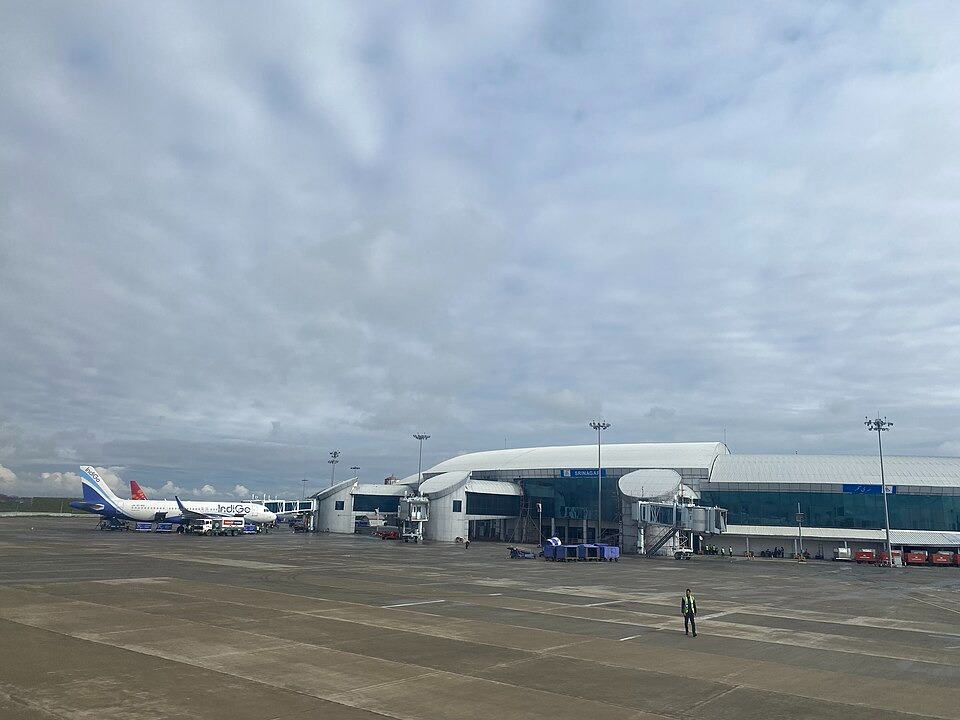
Just days after authorities proposed suspending passenger flight operations for two days every week to facilitate runway maintenance, the plan was withdrawn. The airport would remain open throughout the week after all, with flights continuing daily under reduced operating hours between 8 am and 5 pm until October.
For thousands of travellers, tourism operators and businesses across Kashmir, the reversal represented more than an administrative adjustment. It removed the prospect of a disruption that many feared would coincide with one of the Valley’s busiest tourism seasons, when hotels are filled, houseboats operate at near capacity, and airlines carry thousands of visitors into Kashmir every day.
The decision followed representations by the Jammu and Kashmir government, tourism stakeholders and industry bodies, who argued that a complete closure on Mondays and Tuesdays would have significantly affected travel plans, increased airfares and weakened the momentum of a tourism sector that has emerged as one of the Union Territory’s principal economic drivers.
Although runway maintenance will continue over the coming months, authorities have opted for a solution that seeks to balance infrastructure requirements with the need to maintain uninterrupted connectivity.
For Kashmir, where geography has always shaped mobility, that balance carries significance extending well beyond aviation.
Unlike many other Indian destinations served by multiple transport corridors, the Valley depends heavily on air travel for reliable year-round connectivity. Road links frequently face disruption because of snowfall, landslides, shooting stones and weather-related closures along the Jammu-Srinagar National Highway. During winter, particularly, flights become the most dependable means of travel for tourists, business travellers, students, patients seeking specialised medical treatment and families travelling between Kashmir and the rest of the country.
That dependence has steadily increased over the past decade as tourism recovered after successive periods of disruption and visitor arrivals reached new highs.
Srinagar Airport has consequently evolved from being merely a transport facility into one of Kashmir’s most important economic assets.
Every arriving aircraft carries not only tourists but also traders, entrepreneurs, students, migrant workers returning home, government officials, medical patients and cargo that supports businesses across the Valley. Every departing flight connects Kashmir’s residents to educational institutions, hospitals, commercial centres and employment opportunities elsewhere in India.
It is this broader role that transformed what might otherwise have been a routine engineering exercise into a matter of considerable public interest.
The original proposal emerged through a Notice to Airmen (NOTAM), which informed airlines that the runway would remain closed to civilian operations on Mondays and Tuesdays to facilitate resurfacing and maintenance work.
Runway rehabilitation is neither unusual nor unexpected.
Like highways, airport runways require periodic maintenance to preserve safety standards. Continuous exposure to aircraft movements, changing weather conditions and seasonal temperature variations gradually affects pavement quality, making scheduled engineering work essential to ensure long-term operational safety.
At Srinagar Airport, however, maintenance planning is shaped by a unique operational arrangement.
While passenger terminals and civil aviation services are managed by the Airports Authority of India, the runway itself remains under the operational control of the Indian Air Force because Srinagar functions as a civil enclave within an Air Force station.
As a result, engineering schedules require coordination between defence authorities, airport operators, airlines and civil aviation regulators, often leaving relatively limited windows for large-scale maintenance work.
The proposed twice-weekly closure reflected that operational reality.
Yet timing proved equally important.
The proposal coincided with the height of Kashmir’s summer tourism season, when visitor arrivals traditionally reach their annual peak. Families escaping the heat of the plains, honeymooners, trekkers, pilgrims and international visitors converge on the Valley between May and September, supporting an extensive network of hotels, guesthouses, transport operators, guides, handicraft traders, restaurants, cafés and houseboat owners.
For an economy where tourism supports thousands of direct and indirect livelihoods, even modest reductions in visitor arrivals can ripple across multiple sectors.
Industry representatives therefore argued that suspending passenger operations for two full days every week would reduce seat availability at precisely the time when demand remains strongest.
Tour operators feared itinerary disruptions.
Hotel owners anticipated cancellations.
Travel agents warned that compressed flight schedules could increase ticket prices by reducing available capacity while simultaneously making holiday planning more difficult.
Many also noted that travellers increasingly book short holidays lasting three or four days. Removing flights on two consecutive weekdays, they argued, would narrow itinerary options and potentially encourage visitors to choose alternative destinations with more predictable connectivity.
Those concerns were shared not only by tourism businesses but also by ordinary residents.
For many Kashmiris, flying is less a matter of convenience than necessity.
Patients requiring advanced medical treatment frequently travel to Delhi, Chandigarh and other cities. Students attend universities across India. Business owners depend upon reliable schedules to maintain commercial links. Government employees, professionals and families often make journeys at short notice because weather conditions can render road travel uncertain.
Against that backdrop, proposals affecting flight schedules inevitably attract attention extending well beyond the aviation sector.
Recognising these concerns, the Jammu and Kashmir government approached the Centre, arguing that maintaining uninterrupted connectivity during the tourism season was essential not only for visitors but also for the wider economy and the daily lives of residents.
Chief Minister Omar Abdullah publicly thanked Defence Minister Rajnath Singh and Civil Aviation Minister Kinjarapu Ram Mohan Naidu after the proposal was withdrawn, describing uninterrupted air services as critical for tourism, business, healthcare and public convenience.
His intervention reflected a broader recognition that transport infrastructure in Kashmir performs functions extending far beyond movement alone.
In mountainous regions, connectivity often determines economic opportunity itself.
If the proposal to close Srinagar Airport for two days each week highlighted the Valley’s dependence on air connectivity, its withdrawal underscored how deeply aviation has become intertwined with Kashmir’s economy.
Unlike destinations where tourism is supported by extensive rail and highway networks, Kashmir remains heavily dependent on air transport for both domestic and international visitors. Although the all-weather Jammu-Srinagar National Highway has significantly improved connectivity in recent years, landslides, snowfall, shooting stones and traffic disruptions continue to affect road travel, particularly during winter and periods of adverse weather. Rail connectivity to the Valley is still in the process of expansion, leaving aviation as the most reliable mode of transport for much of the year.
This dependence has grown alongside the remarkable resurgence of tourism.
Over the last few years, Kashmir has witnessed record tourist arrivals, with hotels, guesthouses, homestays and houseboats reporting sustained occupancy during peak seasons. Beyond the well-known destinations of Srinagar, Gulmarg, Pahalgam and Sonamarg, tourism has gradually expanded into lesser-known areas, creating new opportunities for rural communities, adventure tourism operators and local entrepreneurs.
The economic footprint of tourism now extends far beyond hotels and travel agencies.
Every tourist arriving at Srinagar Airport supports a chain of economic activity that includes taxi operators, shikara owners, pony handlers, tour guides, restaurants, handicraft traders, photographers, florists, dry fruit merchants and hundreds of small family-run businesses. Artisans producing carpets, papier-mâché, walnut wood carvings and Pashmina products also depend, directly or indirectly, on the steady flow of visitors.
Industry representatives had therefore argued that reducing air connectivity during the busiest months could have consequences disproportionate to the duration of the proposed closure.
Their concerns centred less on the maintenance work itself than on its timing.
A complete suspension of civilian flights on Mondays and Tuesdays would have compressed airline schedules into the remaining five days of the week, reducing seat availability at a time when demand was already high. Aviation analysts noted that lower capacity during peak travel periods often places upward pressure on fares, potentially making Kashmir a comparatively more expensive destination for families and budget travellers.
Tour operators also warned that many travel itineraries are built around fixed arrival and departure dates coordinated with hotel reservations, sightseeing schedules and onward transport. Any reduction in available flights could have forced tour operators to redesign packages, shorten itineraries or postpone arrivals, adding costs for both businesses and visitors.
Those concerns resonated with the government, which has consistently projected tourism as one of the principal drivers of economic growth and employment in Jammu and Kashmir.
Chief Minister Omar Abdullah welcomed the Centre’s decision to withdraw the proposed weekly shutdown, describing uninterrupted connectivity as essential for protecting the interests of tourists, local businesses and residents. He said the government had taken up the matter because the proposed closure would have affected not only holidaymakers but also patients travelling for specialised healthcare, students, businesspersons and families facing urgent travel requirements.
Tourism stakeholders echoed similar views.
Farooq Kuthoo, president of the Travel Agents Association of Kashmir, described the decision as significant relief for an industry that had feared widespread itinerary disruptions during the height of the travel season. He said tourism bodies had consistently urged authorities to explore alternatives that would allow runway maintenance without completely suspending passenger operations.
Frequent travellers also viewed the decision through the lens of everyday mobility rather than tourism alone.
For residents of Jammu and Kashmir, flights often become indispensable during medical emergencies, university admissions, competitive examinations, official assignments and family obligations. While highways remain the backbone of freight movement, air services provide speed and certainty that road travel cannot always guarantee in a mountainous region where weather continues to influence transportation.
Airport authorities have sought to balance these competing priorities by retaining daily flight operations while restricting operational hours to facilitate engineering work.
Under the revised arrangement, flights will operate each day between 8 a.m. and 5 p.m., while runway maintenance will continue during night closures until October. Airlines have been advised to adjust schedules accordingly, and passengers have been asked to verify flight timings before travelling to the airport.
The compromise illustrates a broader principle increasingly visible across infrastructure planning in regions experiencing rapid tourism growth: development and maintenance must proceed without unnecessarily disrupting economic activity.
As visitor numbers increase, airports, highways and other public infrastructure require periodic upgrades to maintain safety, efficiency and capacity. Yet the scheduling of such works has become equally important, particularly in destinations where tourism contributes substantially to employment and local incomes.
Srinagar Airport itself has undergone a steady transformation over the past two decades.
Passenger traffic has expanded significantly, airline networks have widened, terminal facilities have improved and aircraft movements have increased alongside growing visitor demand. The airport now functions not only as Kashmir’s principal civil aviation hub but also as one of northern India’s busiest airports, linking the Valley with major metropolitan centres and enabling tourism, trade and investment.
Its strategic importance extends beyond commercial aviation.
As a civil enclave operating alongside an Indian Air Force base, Srinagar Airport occupies a distinctive position in India’s aviation network. Operational decisions therefore require close coordination between defence authorities, the Airports Authority of India, airlines and civil aviation regulators – a factor that often makes infrastructure planning more complex than at conventional civilian airports.
The decision to continue daily operations while accommodating maintenance reflects those operational realities.
For Kashmir’s tourism industry, however, the immediate outcome is one of continuity rather than disruption.
Hotels will continue receiving guests throughout the week. Tour operators can retain established itineraries. Airlines remain connected to the Valley every day, while businesses dependent upon visitor spending avoid the uncertainty that prolonged weekly closures might have created during the busiest months of the year.
The episode nevertheless offers a broader lesson about the relationship between infrastructure and regional economies.
Transport facilities are often viewed primarily as engineering assets, but in regions like Kashmir they also serve as economic lifelines. Every decision affecting connectivity has implications that extend into hospitality, commerce, healthcare, education and household incomes. The discussions surrounding the proposed closure illustrated how closely these sectors are interconnected.
By choosing to continue operations while undertaking essential maintenance, authorities have sought to reconcile two legitimate public interests: ensuring long-term aviation safety through runway rehabilitation and preserving the uninterrupted connectivity upon which residents, businesses and visitors increasingly depend.
When the maintenance concludes later this year, passengers are unlikely to remember the engineering details behind the project. They will remember, instead, that despite months of work beneath the wheels of arriving aircraft, Kashmir’s gateway to the world remained open – allowing tourists to discover the Valley, families to reunite, businesses to function and one of the region’s most important economic seasons to proceed with confidence.
For a destination where connectivity has always shaped opportunity, that continuity may prove as significant as the runway improvements themselves.
About the Author
Tabish Khan is a multi-media journalist whose work moves fluidly across text, video, and the fast-evolving grammar of social media. With postgraduate degree in Convergent Journalism, her storytelling often bridges traditional field journalism with platform-driven formats – short-form video, visual explainers, and audience-first storytelling.