
Kashmir Impulse Desk
Srinagar, Aug 19
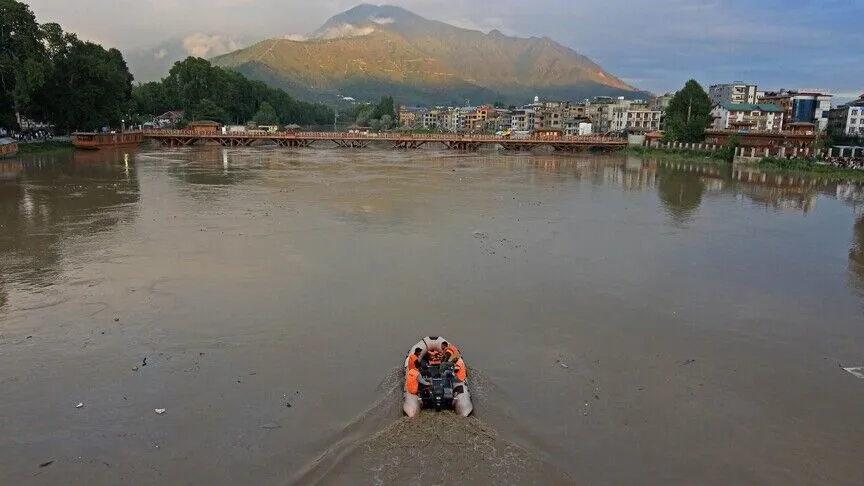
Torrential rain triggered flash floods in several parts of Kashmir on Wednesday, while heavy showers battered Jammu, swelling rivers and streams and disrupting roads and water supplies, as forecasters warned that intense but localised rainfall could continue across Jammu and Kashmir.
The Meteorological Centre in Srinagar ruled out widespread rainfall but cautioned that short-duration, high-intensity showers could produce flash floods, mudslides and landslides in vulnerable areas.
In Shopian, heavy rain caused a local stream in Shadab Kareva to swell, sending water, mud and slush through the area.
Flash floods were also reported at Dachnoo and Herpora, where overflowing streams entered orchards, as well as at Baderhma village.
Ganderbal district reported flooding in Haknar and Gund, while Upper Batkoot in Pahalgam, Anantnag, also experienced flooding.
The incidents affected road connectivity and water supply, with officials saying Batkoot had experienced at least five such incidents during periods of intense rainfall and cloudbursts.
Gusty winds also disrupted normal life in parts of the Valley.
Jammu recorded 88.7 mm of rain, while Banihal received 20.7 mm, Batote 28.8 mm, Katra 48.2 mm, Bhaderwah 1.8 mm, Kathua 76.6 mm, Jammu Airport 33 mm, Udhampur 32.2 mm, Ramban 6.5 mm, Samba 85 mm, Poonch 1.5 mm, Reasi 39 mm and Doda 9 mm. Rajouri and Kishtwar recorded traces.
Authorities issued a red alert and advised residents to stay away from rivers, streams and low-lying areas.
Kathua was considered at greatest risk of a rapid rise in water levels, followed by Samba.
Despite the rain, temperatures in Jammu remained below normal while Kashmir remained close to normal.
Jammu recorded 27.4 degrees Celsius, 5.7 degrees below normal. Srinagar recorded 31.6 degrees Celsius, while Qazigund registered 28 degrees, Pahalgam 25.2 degrees, Kupwara 32.5 degrees, Kokernag 26.5 degrees and Gulmarg 20.4 degrees.
The weather office forecast generally hot and humid conditions from Aug. 19 to 22, with light to moderate rain and thundershowers at scattered to many places.
Brief but intense showers were possible in some districts during the morning and afternoon.
From August 23 to 27, scattered rain and thundershowers were expected, mainly during the early morning and afternoon.
The MeT Department warned that intense localised rainfall could quickly trigger flash floods, mudslides and landslides.
People were advised to avoid rivers, streams, nallahs and landslide-prone areas and follow local authorities’ advisories. Farmers could continue harvesting and other agricultural operations, the department said.
The latest weather episode follows a series of monsoon-related disasters in Jammu and Kashmir in which more than 30 people have died, while roads, houses, farmland and livestock have suffered damage.
Flash floods and landslides in Poonch and Rajouri on July 19 killed more than 25 people, while earlier cloudbursts caused extensive damage in Doda, Kishtwar and Ramban.
MeT Srinagar Director Mukhtar Ahmad said rainfall was expected to remain largely localised but warned that parts of the Jammu division could receive intense showers.
“The intense, brief thundershowers and cloudbursts are a recurring phenomenon during the monsoon,” Ahmad said.
Two low-intensity flash floods also struck Haknar and Wangath in the Kangan subdivision of Ganderbal district following a brief spell of heavy rain.
Although the sudden surges initially caused alarm among residents, officials said there were no casualties, injuries or structural damage.
The floods occurred along two local streams in the upper reaches of the subdivision after torrential rain upstream caused water levels to rise rapidly, carrying silt, loose rocks and mud towards roads.
Local authorities, along with J&K Police and State Disaster Response Force teams, reached the affected areas.
“The situation was brought under control quickly as water levels receded,” an official said, adding that there was no reported damage to homes, commercial property or livestock.
Despite intermittent rain, fresh mudslides and waterlogging, the Srinagar-Jammu National Highway remained open to regulated two-way traffic, although vehicles moved slowly at several vulnerable stretches.
The Udhampur-Chenani section, which has remained susceptible to landslides during the current spell, also remained open.
Waterlogging and mudslides at Dewal and other locations affected traffic flow.
At Dewal, vehicles were being regulated through an approximately 40-metre damaged and uneven single-lane stretch. Ongoing road improvement and highway construction work added to congestion.
Similar restrictions were reported on the Maroog-Kishtwari Pather stretch in Ramban, where traffic was being managed through a single-lane section amid construction and damaged road conditions.
Heavy vehicles were particularly slow at the vulnerable locations.
Earlier, a mudslide near a construction site at Nagrota in Jammu temporarily blocked the highway, leaving vehicles stranded in long queues. National Highways Authority of India workers and machinery cleared the debris and restored traffic.
Later, a major mudslide hit Khari Tharad in Udhampur and blocked the road, but the obstruction was cleared.
Traffic remained congested for some time after reopening because of slippery conditions and the accumulation of vehicles.
Restoration work was continuing on the Srinagar-bound tube at Dhramthal near Samroli in Udhampur despite persistent rain.
The tube was blocked on Sunday evening after a massive landslide deposited a large quantity of debris on the carriageway. Traffic was diverted through the alternate Jammu-bound tube.
An NHAI official said workers and machinery remained deployed, but rain was slowing restoration.
Officials estimated that completely clearing the debris could take several days and that restoration of the affected tube could require at least four to five days.
Temporary inter-lane ramps had been created at both ends of the affected section to bypass the slide zone and keep traffic moving.
NHAI was also asked to widen and smooth the ramps, particularly to facilitate movement of large trailers and bulk carriers.
The temporary arrangement allowed traffic in both directions to continue through the respective tubes, although officials warned that the restricted width required careful regulation.
The down tube was also reduced to a single lane at two or three points because of erosion caused by recent rain.
SSP Traffic National Highway Raja Adil Hameed said the highway remained open to two-way traffic, with personnel regulating movement at vulnerable points.
Subject to weather and road conditions, authorities expected regulated two-way traffic to continue on Thursday.
Passenger vehicles, private cars and goods carriers would be allowed in both directions provided the highway remained safe and fresh obstructions were cleared.
Traffic authorities urged travellers to check the latest highway status before setting out and remain in contact with traffic control units in Jammu, Ramban and Srinagar.
Passengers and light motor vehicle operators were advised to travel between Ramban and Banihal during daylight hours and avoid unnecessary night journeys because of the risk of shooting stones, landslides and other weather-related hazards.
Motorists were told to maintain lane discipline, avoid overtaking and wrong-lane driving, and refrain from unnecessary stops at vulnerable stretches.
Truck operators carrying fresh produce and livestock were advised to comply with loading norms, while heavy-vehicle operators were urged to avoid overloading, ensure vehicle fitness and carry sufficient fuel in case of delays.
Officials cautioned that highway conditions could change at short notice if fresh landslides or mudslides occurred or weather conditions deteriorated, and urged travellers to follow official traffic advisories before and during their journey.