
Kashmir Impulse Desk
Srinagar, Sep 27
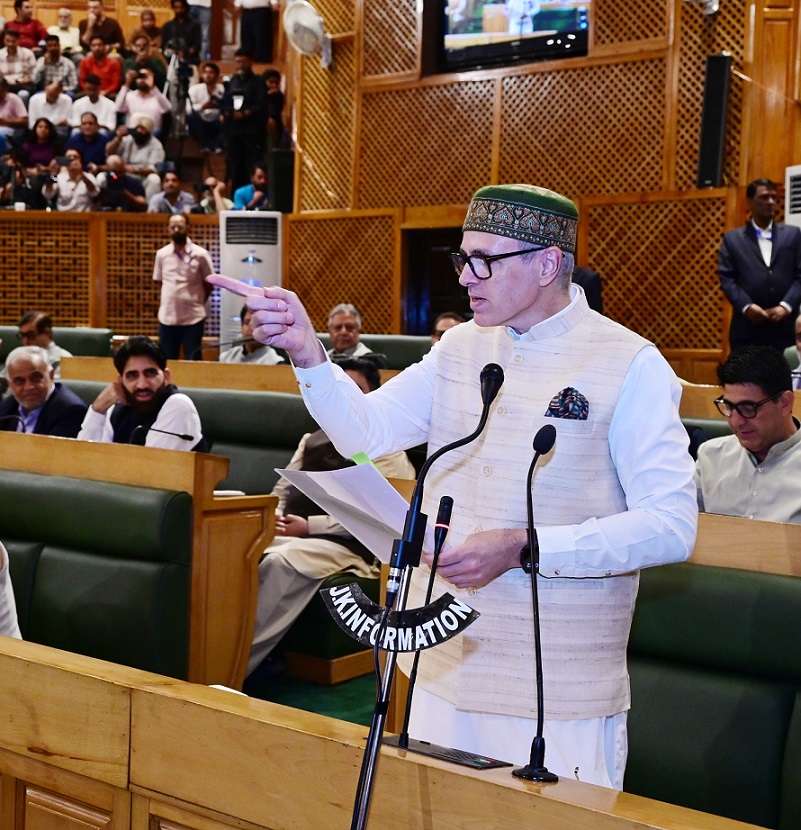
Chief Minister Omar Abdullah is set to introduce legislation in the Assembly on Monday aimed at reducing regulatory hurdles for businesses, speeding up approvals and shifting government oversight from a permission-based system to rule-based governance.
The Jammu and Kashmir Ease of Doing Business Bill, 2026, seeks to consolidate and amend existing laws while promoting investment, employment, economic growth and ease of living.
The Assembly is scheduled to meet at 10 am.
Under the proposed legislation, businesses would generally be allowed to undertake activities unless expressly prohibited by law. Prior approvals or restrictions would have to be justified by law and legitimate public interest.
The Bill also proposes a “One State Principle”, under which government authorities would not seek documents or information already submitted to another department.
Regulatory scrutiny would be based on risk, while procedures, fees, timelines and service standards would have to be published in advance.
A key provision is deemed approval if an application is not disposed of within the prescribed period.
The proposed institutional framework includes a J&K Ease of Doing Business Council headed by the chief minister and an Executive Committee led by the chief secretary.
At district level, empowered committees headed by deputy commissioners would coordinate approvals and could, in specified circumstances, override a rejection or failure by a competent authority to act within the prescribed period.
For enterprises in approved industrial parks, in-principle approval would be issued within three working days of a declaration of intent. The proposed timeline would be 30 working days for new enterprises outside industrial parks and 45 working days for existing enterprises.
Failure to decide within the deadline would result in deemed approval.
The Bill also proposes a three-year moratorium on routine inspections and coercive action related to approvals after an enterprise is registered, subject to exceptions including serious complaints and approval by the deputy commissioner.
Inspection reports would have to be uploaded online within 48 hours.
The proposed relaxations would not cover violations involving fraudulent information, construction rules or minimum fire-safety requirements. Enterprises established without authorisation on state or forest land could face closure and other penalties.
The legislation also seeks to reduce duplication in licences. Businesses registered under specified central laws could be exempted from obtaining separate municipal trade licences.
For industrial areas, authorities could relax certain restrictions relating to floor-area ratio, setbacks, ground coverage and building height. Long-term industrial leases of up to 99 years are also proposed.
The Bill would allow enterprises that have remained operational for five years to seek conversion of industrial land to freehold, subject to conditions under the industrial policy.
It also proposes common renewal cycles for licences and permits, third-party certification in specified areas and self-certification for some approvals.
The legislation would amend provisions in a range of existing J&K laws covering municipal administration, building regulations, land revenue, tourism, education, industrial investment, town planning and other sectors.
The government says J&K has implemented 20 of 23 reforms identified under the first phase of the Centre’s deregulation and compliance-reduction initiative. The Bill seeks to implement 12 further measures under the second phase.
The legislation is part of a broader Assembly agenda on Monday, which includes questions and calling-attention notices on roads, drinking water, crop damage, tribal certificates and livestock disease.
More than 30 Private Members’ Bills are also listed, covering employment, land rights, healthcare, education, tobacco, online gaming, solid waste, disaster compensation, government employees and other issues.
The Bill would come into force on a date notified by the government after enactment. Its implementation rules would subsequently be laid before the Assembly.
The Financial Memorandum says the proposed law would involve no recurring or non-recurring expenditure from the Consolidated Fund of Jammu and Kashmir.