
Kashmir Impulse Desk
New Delhi, Nov 20
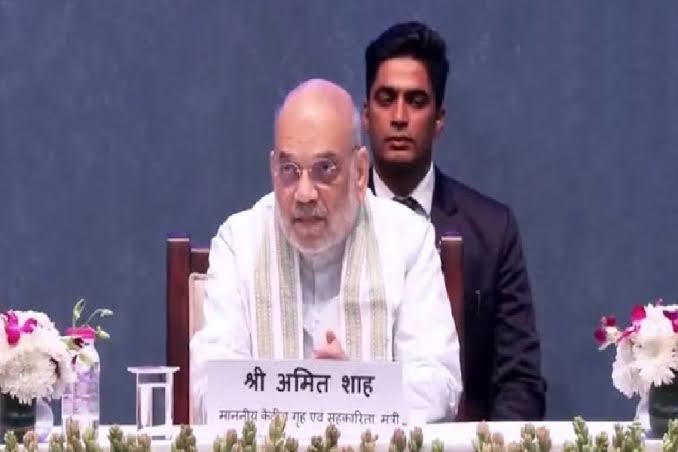
Union Home Minister Amit Shah on Thursday called for strengthening state Anti-Terrorism Squads (ATS) and integrating police stations into the national anti-terrorism grid to improve coordination in counter-terrorism operations.
Addressing the concluding session of the two-day sixth Anti-Terror Conference organised by the National Investigation Agency (NIA), Shah said agencies needed to dismantle the entire terror ecosystem, including cross-border handlers, financial networks, organised crime links and local facilitators.
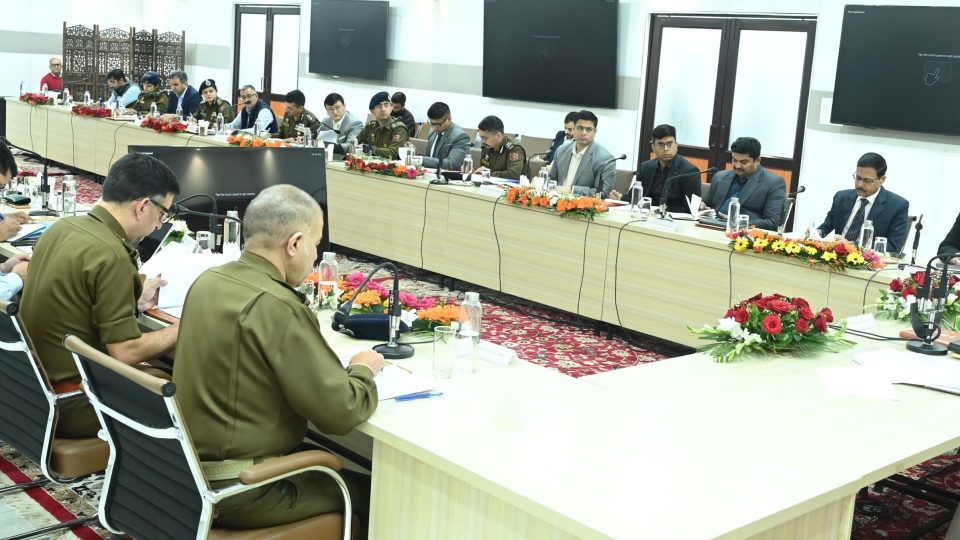
The conference, held at DRDO Bhawan on November 19 and 20, was attended by 40 directors general and heads of state police forces and central agencies, along with 230 personnel from state anti-terror investigation units.
Shah called for closer coordination between central and state agencies and improvements in the operational and cyber capabilities of state ATS units, citing the increasing use of technology by terrorist networks.
He said police stations should be integrated into the anti-terrorism grid so that intelligence gathered at the grassroots level could reach senior officers and prompt timely action.
He also called for greater operational and structural uniformity among anti-terror agencies under PRAHAAR, the national counter-terrorism policy.
Referring to security operations in Jammu and Kashmir, Shah said locally recruited terrorists had been eliminated and that the Valley was now free of India-born terrorists after more than 35 years.
He called for targeting terror financing networks and improving coordination with agencies investigating financial crimes.
Shah said terrorism, organised crime and drug trafficking were interconnected challenges requiring joint action by central and state agencies.
He reiterated that fugitives operating from abroad would be brought back to India to face trial, regardless of where they took shelter.
Since 2019, 303 fugitives have been brought back from 36 countries, he said, crediting the Central Bureau of Investigation, the Home Ministry and intelligence agencies for the efforts.
Shah also released the NIA publication Fail-Safe Investigation, which contains checklists covering 50 key investigative steps aimed at reducing procedural, technical and legal lapses.
He laid the foundation stone of the agency’s office complex in Chandigarh and inaugurated its residential complex at Maidangarhi in New Delhi.
The NIA also launched its Pushti portal to help citizens verify fraudulent notices issued in the agency’s name and prevent digital arrest frauds.
The conference discussed the links between organised crime and terrorism, radicalisation, cross-border terror financing and the use of technology by criminal networks.
Participants examined threats involving drones, online radicalisation, arms and narcotics smuggling, lone actors and financial channels such as hawala and trade-based money laundering.
Discussions also covered the use of artificial intelligence, big data analytics and digital forensics in investigations, besides extradition, deportation and international evidence-sharing.
A separate session focused on prosecution of terror cases, including the application of new criminal laws, admissibility of digital evidence, witness protection and case management.
Addressing the conference, Union Home Secretary Govind Mohan called for implementing PRAHAAR through coordinated action at the state, district and police station levels.
He urged states to strengthen their ATS units in line with the Model ATS Structure, improve specialised training and forensic capabilities, and initiate financial investigations alongside investigations into the principal terror offence.
Mohan also called for identifying radicalisation at an early stage and improving coordination between investigating and prosecuting agencies.
He said efforts to secure the return of fugitives should be supported by updated dossiers, INTERPOL mechanisms and the Extradition Portal.
The NIA registered 82 cases during 2026, according to figures presented at the conference. Of the 29 cases in which judgments were pronounced, the agency secured convictions in 27, recording a conviction rate of 93 percent.
A total of 123 accused were convicted, including 10 sentenced to death and 14 awarded life imprisonment.
The agency trained 5800 police personnel through 53 programmes during the year to strengthen the investigation of terror cases by state police units.
It has also established Technical Support Units in each of its 21 state units to improve its capacity to handle technology-related investigations and digital evidence.
Twenty-five exclusive NIA courts have been established, with another 14 expected to be set up, the conference was told.
The agency has also strengthened its Foreign Investigation Unit by appointing international legal experts to improve its extradition and deportation capabilities.