
Kashmir Impulse Desk
Srinagar, Sep 1
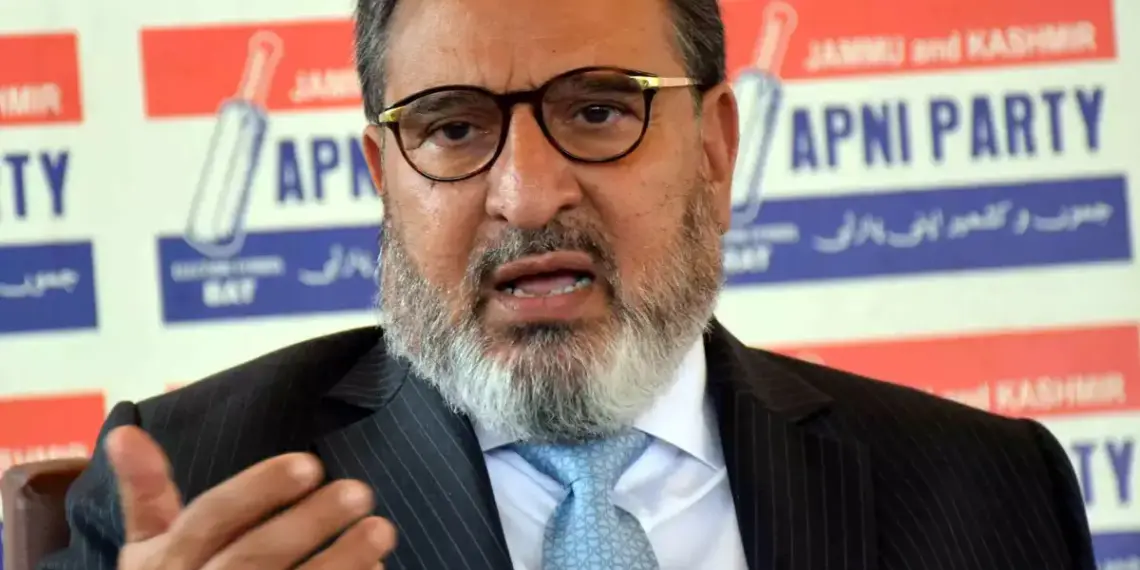
Apni Party President and former finance minister Altaf Bukhari has called for a collective effort to protect J&K Bank, saying recent developments concerning the institution could have wider economic implications for Jammu and Kashmir.
Bukhari appealed to political parties, civil society organisations, lawyers, business groups and chambers of commerce in Kashmir and Jammu to join what he described as an effort to safeguard the bank’s interests.
He identified four areas of concern: slower credit growth within Jammu and Kashmir despite expansion outside the region, a proposed recruitment policy that he said could affect employment opportunities for local youth, inadequate representation of people from J&K on the bank’s board and a reported move to shift the bank’s headquarters from Srinagar.
“These developments cannot be dismissed as routine administrative matters,” Bukhari said, arguing that they affect the economic interests of people in Jammu and Kashmir.
He questioned the bank’s lending priorities, saying greater attention should be paid to business outside J&K alongside credit growth within the region.
Bukhari said the bank should be assessed not only on commercial performance but also on its contribution to local businesses, entrepreneurs and the wider economy.
He also raised concerns over recruitment, saying any policy that enables greater recruitment of candidates from outside J&K could affect employment opportunities for local young people.
Bukhari questioned J&K’s representation on the bank’s board and said its composition should reflect the interests of the institution’s stakeholders.
He also opposed any proposal to move the bank’s headquarters from Srinagar, describing the location as part of its institutional identity and historic connection with J&K.
Bukhari urged political and social groups to avoid partisan divisions and develop a common response.
“This is not an issue concerning any one political party or section of society,” he said.
Bukhari said people of J&K collectively own more than 52% of the bank’s shares, giving them, in his view, a significant interest in its governance and future direction.
He urged political parties, civil society organisations, lawyers, business groups and chambers of commerce in both regions to make their concerns known.
“The time to act is now,” Bukhari said.