



From cloudbursts to collapsing roads, climate change is rapidly reshaping Jammu and Kashmir’s landscape, economy and way of life. Amir Yaseen reports.
From deadly cloudbursts and collapsing highways to shrinking snowpacks, failing orchards and a tourism industry living at the mercy of extreme weather, Jammu and Kashmir is witnessing a new climate reality – one that is transforming not just its landscape, but the lives and livelihoods of millions.
The rain that swept across Jammu and Kashmir this week brought something residents had desperately longed for after weeks of oppressive heat – a cool breeze, overcast skies and temperatures that plunged by nearly eight degrees Celsius in Srinagar overnight. But the relief was short-lived.
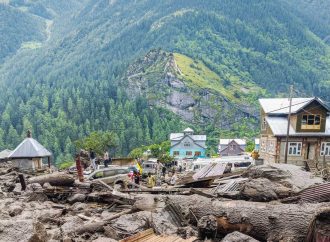
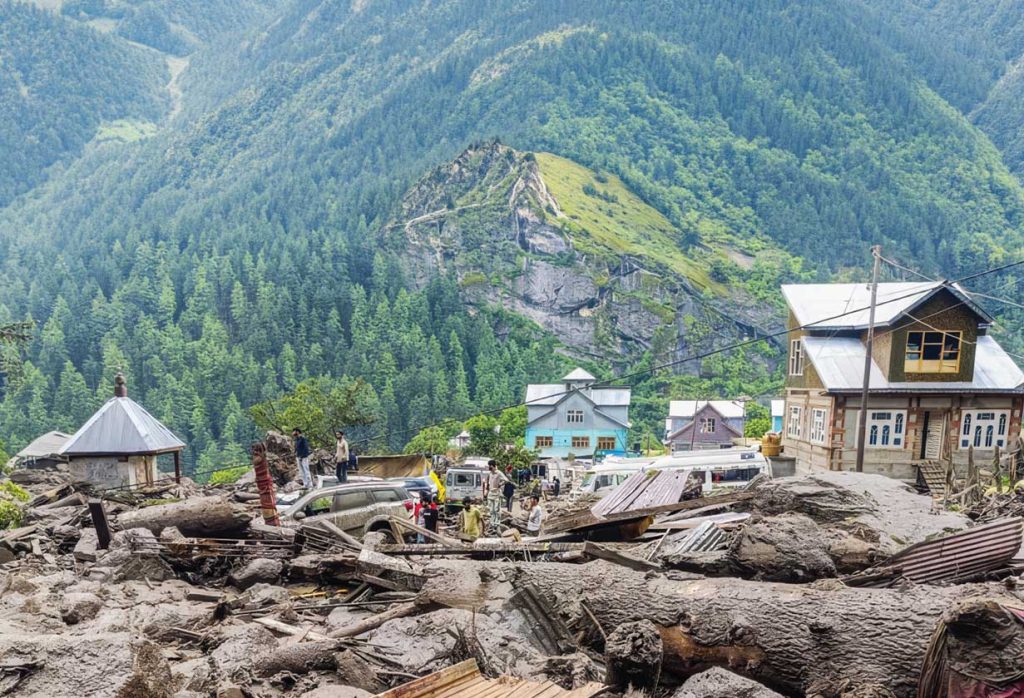
In Pahalgam, a cloudburst in the upper reaches of the Overa Wildlife Sanctuary sent a torrent of water, mud and boulders crashing through the Overa Nallah. Hotels were inundated, vehicles swept away and bridges damaged. Tourists scrambled to safety as floodwaters rushed into accommodation facilities.
Hours earlier, another cloudburst had struck Chattergul in Anantnag, damaging orchards, paddy fields and homes. Days before that, Thathri in Doda had witnessed one of its worst flash floods in years, leaving dozens of houses and commercial establishments damaged while National Highway-244, the lifeline of the Chenab Valley, was buried beneath mud and debris.
Across Rajouri, Poonch, Kishtwar and Ganderbal, swollen streams, washed-out roads and landslides became familiar headlines once again.
None of these events occurred in isolation.
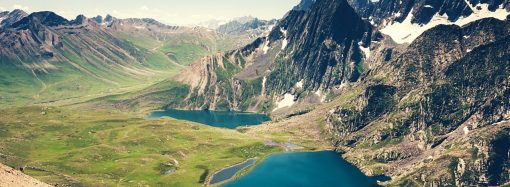
Scientists increasingly describe such disasters as signatures of a warming Himalayan climate—a region where rising temperatures are making rainfall more erratic, cloudbursts more frequent and mountain ecosystems more fragile. For Jammu and Kashmir, climate change is no longer a distant environmental concern. It is reshaping weather patterns, threatening infrastructure, disrupting livelihoods and testing the resilience of communities that have lived alongside mountains for centuries.
For generations, Jammu and Kashmir’s climate followed a relatively predictable rhythm.
Snowfall replenished glaciers during winter. Spring brought gradual melting, feeding rivers and irrigation canals. Summers remained mild across the Valley, while the southwest monsoon largely exhausted itself before reaching Kashmir, leaving only scattered rainfall.
That rhythm has begun to change.
The Valley has experienced unprecedented summer heat in recent years, with Srinagar repeatedly recording temperatures above 35 degrees Celsius—once considered exceptional. Humidity, historically uncommon in Kashmir, has become increasingly noticeable, making summers more uncomfortable.
At the same time, rainfall is becoming concentrated into shorter, more intense bursts.
Instead of steady precipitation spread over days, mountains are witnessing violent downpours that dump enormous quantities of rain within minutes or hours, overwhelming streams that remain almost dry for much of the year.
Meteorologists explain that a warmer atmosphere holds more moisture. Every degree of warming increases the atmosphere’s capacity to store water vapour by roughly seven percent. When conditions trigger rainfall, much of that moisture can be released suddenly, increasing the likelihood of extreme precipitation.
For mountain regions, that often means cloudbursts.
Cloudbursts are highly localised weather events characterised by exceptionally intense rainfall over a small area within a short period.
In the Himalayas, steep slopes accelerate runoff almost instantly.
Water rushing downhill gathers rocks, trees and debris before exploding into villages below as flash floods.
This week’s disasters in Overa, Chattergul and Thathri followed precisely that pattern.
Streams transformed into raging rivers within minutes.
Hotels became flood channels. Farmland disappeared beneath mud. Roads simply ceased to exist.
Unlike river floods, flash floods offer almost no warning. Residents often have only minutes to escape.
The growing frequency of such events has become one of the clearest indicators that Himalayan weather is becoming increasingly volatile.
Nature alone does not explain the scale of destruction.
Across Jammu and Kashmir, experts increasingly point towards unregulated development as a force multiplying climate risks.
Perhaps nowhere is this more evident than in Pahalgam.
The Overa Wildlife Sanctuary forms part of an ecologically significant wildlife corridor supporting Hangul, Himalayan brown bears, musk deer and numerous other species.
Yet over decades, hotels, huts and commercial establishments have steadily expanded along the banks of natural streams.
As one tourism official remarked after the latest flooding, “The nallah didn’t enter the commercial area. The commercial area entered the nallah.”
That observation captures an uncomfortable truth.
Floodplains exist for rivers to spread safely during periods of intense rainfall.
When those spaces are occupied by buildings, roads and parking lots, floodwaters simply reclaim them – with devastating consequences.
Environmental planners argue that climate adaptation can no longer focus solely on disaster response. It must begin with scientific land-use planning that respects natural drainage systems.
Climate change is also exposing the vulnerability of Jammu and Kashmir’s transportation network.
Highways through the Chenab Valley, Pir Panjal and Banihal are engineering marvels carved into unstable mountain slopes.
Increasingly intense rainfall is testing those roads beyond their design limits.
National Highway-244 connecting Doda and Kishtwar has been repeatedly blocked by landslides and flash floods.
The Srinagar-Jammu National Highway continues to witness frequent closures during heavy rain because of slope failures, falling rocks and mudslides.
Every closure carries enormous consequences. Medical emergencies are delayed.
Essential supplies cannot move. Tourism suffers. Fruit growers struggle to transport perishable produce. Pilgrimages face uncertainty. Entire districts can find themselves temporarily isolated.
As rainfall becomes more extreme, maintaining mountain roads will require entirely new engineering approaches designed for future climate conditions rather than historical weather patterns.
Few sectors illustrate climate change’s complexity more than agriculture.
The recent rains have undoubtedly benefited paddy cultivation after prolonged heat.
Yet excessive rainfall arriving suddenly can destroy standing crops just as easily.
Farmers across Anantnag reported damage to paddy fields and orchards following flash floods.
Elsewhere, erratic rainfall has increasingly complicated sowing schedules.
Apple growers – who underpin Kashmir’s rural economy – face growing uncertainty.
Warmer winters reduce the chilling hours required by many fruit varieties. Untimely rain affects flowering and pollination. Hailstorms damage fruit close to harvest. Rising temperatures encourage pests previously uncommon in higher altitudes. Traditional agricultural calendars that guided generations of farmers are becoming less reliable each year.
Tourism remains one of Jammu and Kashmir’s economic lifelines. Ironically, the very landscapes attracting visitors are becoming increasingly vulnerable.
Pahalgam, Sonamarg and Gulmarg now face recurring weather disruptions.
Cloudbursts threaten hotels. Landslides block access roads. Trekking routes become hazardous. Adventure tourism operators increasingly depend on accurate weather forecasts.
The Amarnath Yatra likewise illustrates the delicate balance between pilgrimage and climate risk.
This week’s rains forced authorities to regulate movement along both Baltal and Pahalgam routes while deploying additional rescue teams across vulnerable stretches.
Managing tourism in a warming Himalaya is becoming as much about disaster preparedness as hospitality.
Although dramatic floods dominate headlines, slower climate changes may ultimately prove even more consequential.
The glaciers of the western Himalaya feed rivers that sustain drinking water, agriculture and hydropower across Jammu and Kashmir.
Many are retreating. Snowfall patterns are shifting. Lower elevations increasingly receive rain instead of snow. Initially, accelerated glacier melt may increase river flows.
Eventually, however, shrinking glaciers threaten long-term water availability.
Communities that depend upon snow-fed springs are already reporting declining discharge in several mountain regions.
For villages relying on gravity-fed water systems, changing snowfall patterns translate directly into drinking water shortages.
Jammu and Kashmir’s development strategy places significant emphasis on hydropower.
Projects across the Chenab basin promise energy security and economic growth.
Yet climate change introduces new uncertainties.
Extreme rainfall increases sediment loads entering reservoirs.
Flash floods threaten construction sites. Changing river flows complicate long-term generation forecasts.
Infrastructure designed using historical hydrological data may increasingly face conditions outside original planning assumptions.
Climate resilience is becoming central to future infrastructure design.
Changing weather patterns are also reshaping ecosystems. Species adapted to cooler climates are gradually moving higher. Altered flowering seasons affect pollinators. Wetlands face changing hydrology.
The Hangul, already critically endangered, inhabits ecosystems sensitive to both climate change and human disturbance.
Forest fires during unusually warm, dry periods further threaten biodiversity. Extreme rainfall, meanwhile, destabilises slopes and fragments habitats. The Himalayan ecosystem functions as an interconnected web. Climate disruption affects every part of it.
Despite mounting challenges, communities across Jammu and Kashmir are adapting in remarkable ways.
Local disaster response has improved significantly. Weather forecasting has become more accurate. District administrations increasingly issue early warnings. Rescue agencies coordinate more effectively. Yet adaptation must extend beyond emergency response.
Experts argue that future planning should prioritise hazard mapping before approving construction; protection of wetlands and natural floodplains; climate-resilient road engineering; restoration of forests and degraded catchments; improved drainage systems in expanding towns; stronger enforcement against encroachment on streams; community-based disaster preparedness, and better monitoring of glaciers, rainfall and landslide-prone slopes.
Climate adaptation is no longer optional. It is becoming essential for sustainable development. Perhaps the greatest lesson from this week’s disasters lies in their timing.
The same rainfall that brought welcome relief from oppressive heat also unleashed destructive floods.
The paradox defines climate change. Warmer temperatures increase the atmosphere’s moisture. That moisture fuels heavier rainfall.
Heavier rainfall triggers more destructive floods. Heatwaves and cloudbursts become part of the same climate story.
The mountains are sending increasingly frequent warnings. Streams once regarded as harmless become torrents overnight.
Roads vanish beneath landslides. Settlements built too close to waterways discover that rivers have long memories.
As one official observed after the flooding in Pahalgam, nature eventually reclaims its space.
For Jammu and Kashmir, the question is no longer whether climate change is altering life in the Himalayas. It already is.
The challenge now is whether development, governance and communities can adapt quickly enough to live with a mountain landscape whose weather is becoming more unpredictable, more extreme and increasingly unforgiving.
The cool spell that followed this week’s rains may soon fade as temperatures rise again. But the deeper message carried by the monsoon will remain: in the Himalayas, climate change is no longer measured only by thermometers or rainfall records. It is measured in washed-away roads, damaged homes, threatened livelihoods and a growing recognition that the future of Jammu and Kashmir depends not only on responding to disasters, but on learning to coexist with a climate that has fundamentally changed.
About the Author
Amir Yaseen is a Srinagar-based journalist with an eye for the telling detail and an ear attuned to the cadences of Kashmir. He approaches news as narrative, locating the human story within the language of policy and progress and the quiet recalibration of everyday life.