




The participation of police chiefs from all ten border districts in the upcoming conference is therefore significant.
Border security has never been merely a military concern in Jammu and Kashmir. It is inseparable from the region’s peace, development and long-term stability. As Union Home Minister Amit Shah prepares to chair a high-level review of border management, the focus on Jammu and Kashmir comes at a time when the nature of threats along the International Border and the Line of Control is becoming increasingly complex.
For decades, the primary challenge was infiltration by heavily armed militants. While that threat persists, security agencies today confront a far more sophisticated ecosystem that includes drone-based smuggling, narcotics trafficking, illegal arms drops, encrypted communications and cross-border terror financing. The frontier has evolved from a physical line of defence into a technologically contested space where surveillance, intelligence and rapid coordination often matter as much as boots on the ground.
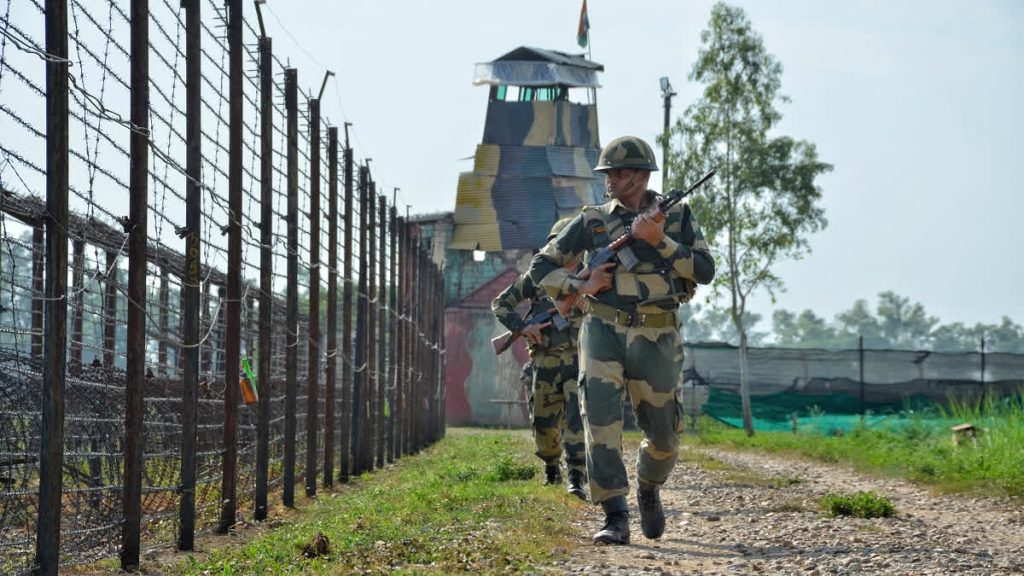
Jammu and Kashmir occupies a unique place in India’s security architecture. With an extensive International Border, the Line of Control and difficult mountainous terrain, the Union Territory presents challenges unmatched elsewhere in the country. Dense forests, deep ravines, snow-bound mountain passes and changing weather conditions create opportunities for infiltration even as security forces continue to strengthen the counter-infiltration grid.
The participation of police chiefs from all ten border districts in the upcoming conference is therefore significant. Border management today is no longer the exclusive responsibility of the Army or the Border Security Force. Jammu and Kashmir Police, through their network of Border Police Posts and local intelligence systems, have become an indispensable component of the security architecture. Their understanding of local terrain, demographics and community dynamics often provides the first line of actionable intelligence.
Equally important is the emphasis on inter-agency coordination. Counter-infiltration operations demand seamless cooperation between the Army, BSF, CRPF, intelligence agencies and the police. Recent years have demonstrated that successful operations increasingly rely on intelligence-led responses rather than reactive deployments. Information sharing, real-time surveillance and coordinated operational planning have become essential in preventing infiltration attempts before they translate into security incidents.
Technology, too, is reshaping border management. Smart fencing, thermal imaging cameras, drones, artificial intelligence-enabled surveillance and integrated command systems are gradually becoming indispensable tools. Yet technology cannot replace human intelligence. Border residents often remain the most reliable source of early warning. Their cooperation, trust and confidence in the administration are as vital to national security as any surveillance system.
This is where development and security intersect. Border villages in Jammu and Kashmir have historically lived under the shadow of conflict, often bearing the brunt of ceasefire violations, displacement and economic isolation. Improved roads, telecommunications, healthcare, schools and livelihood opportunities do more than enhance quality of life—they strengthen national security by encouraging stable populations to continue living in strategically important frontier areas.
The conference’s reported focus on better housing, healthcare and welfare for security personnel is equally welcome. Those deployed in remote posts endure extreme weather, difficult terrain and prolonged separation from their families. Modern infrastructure, quality accommodation and adequate medical facilities are not welfare measures alone; they are investments in operational readiness and morale.
However, border security cannot be viewed solely through the prism of defence. The challenge of narcotics trafficking deserves particular attention. Drug smuggling has emerged as both a law-and-order issue and a national security concern, with proceeds often linked to organised crime and terror financing. Tackling this menace requires closer coordination between enforcement agencies, financial investigators and intelligence units.
Ultimately, the success of any border security strategy will be measured not merely by the number of infiltration attempts foiled but by the broader stability it creates. Secure borders encourage investment, tourism, infrastructure development and public confidence. They allow communities living along the frontier to pursue normal lives without the constant uncertainty of conflict.
Jammu and Kashmir has witnessed notable improvements in its security environment over recent years, but complacency would be misplaced. Adversaries continue to adapt, exploiting technology, criminal networks and evolving tactics. India’s response must therefore remain equally dynamic, combining robust security measures with technological innovation, institutional coordination and sustained socio-economic development.
The upcoming review offers an opportunity not only to strengthen the border grid but also to reaffirm a broader principle: that the strongest borders are secured not by fences and patrols alone, but by resilient institutions, empowered communities and a governance framework that leaves no operational gaps. For Jammu and Kashmir, where national security and everyday life remain closely intertwined, that holistic approach is not simply desirable – it is indispensable.