



Army Chief General Dhiraj Seth’s maiden visit to Jammu and Kashmir underscores how the region’s security now rests on a blend of border vigilance, technology, intelligence, and seamless inter-agency coordination. Zafer Iqbal writes.
Army Chief General Dhiraj Seth’s first visit to Jammu and Kashmir underscores how the region’s evolving security landscape is increasingly being shaped by technology, intelligence, joint operations and the challenge of securing both borders and civilians.
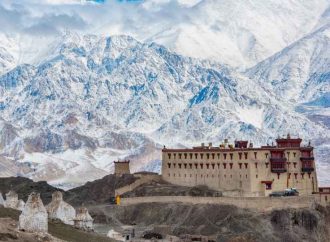
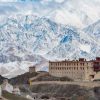
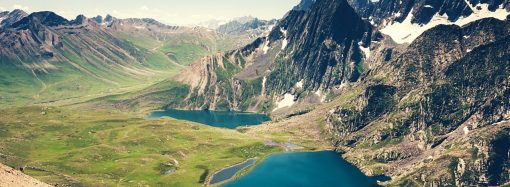
For most visitors, Kashmir’s towering mountains evoke images of breathtaking landscapes, alpine meadows and snow-fed rivers. For the Indian Army, however, those same mountains represent one of the world’s most demanding operational theatres – a landscape where every ridgeline, forest and mountain pass carries strategic significance.
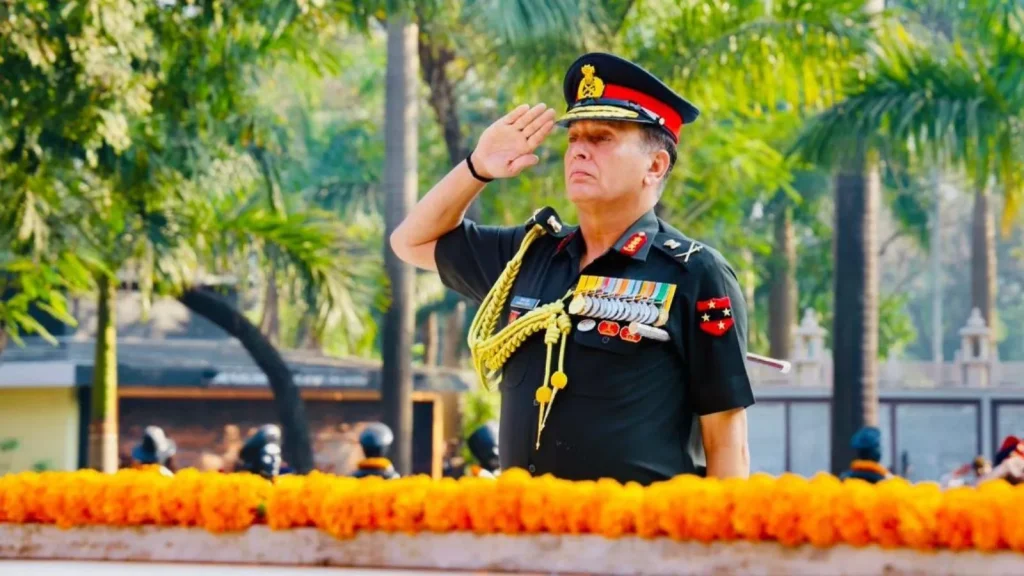
It is against this backdrop that Chief of Army Staff General Dhiraj Seth undertook his maiden visit to Jammu and Kashmir after assuming office on June 30, choosing one of India’s most operationally active commands for his first comprehensive security review.
The visit was more than a ceremonial introduction to the Valley.
It came at a time when the Army finds itself balancing multiple responsibilities simultaneously: guarding one of the world’s most volatile military frontiers along the Line of Control (LoC), sustaining counter-insurgency operations in the hinterland, integrating emerging surveillance technologies, and ensuring the security of the annual Amarnath Yatra, one of India’s largest religious pilgrimages.
Together, these responsibilities illustrate how Jammu and Kashmir’s security environment has evolved far beyond traditional notions of border defence.
General Seth’s itinerary reflected the complexity of that environment.
Beginning with briefings at the Srinagar-based Chinar Corps headquarters, he reviewed operational preparedness, troop deployment, anti-infiltration measures and counter-terrorism operations before travelling to forward formations and Kupwara, home to the strategically critical 28 Infantry Division deployed along the LoC.
The Army chief also assessed the Rashtriya Rifles’ security grid around the Manasbal sector, where forces remain heavily engaged in securing the ongoing Amarnath Yatra alongside the Jammu and Kashmir Police, Central Reserve Police Force (CRPF) and civil administration.
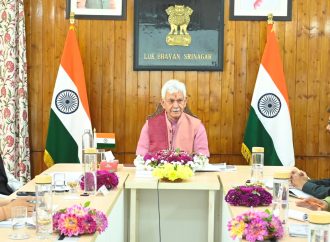
His meetings with Lieutenant Governor Manoj Sinha and Chief Minister Omar Abdullah added another dimension, reflecting the increasingly close coordination between military and civil authorities in managing both security and governance.
Few borders demand the level of vigilance required along the Line of Control.
Stretching through rugged mountains, dense forests and snow-covered ridges, the LoC remains one of the world’s most militarised frontiers.
Despite the ceasefire understanding that has significantly reduced cross-border firing in recent years, infiltration attempts continue to challenge security forces.
Mountain terrain offers numerous infiltration routes, particularly during periods of snowmelt and dense vegetation when visibility decreases.
The Army’s anti-infiltration grid therefore operates continuously.
Observation posts monitor ridgelines around the clock.
Patrols dominate vulnerable stretches.
Surveillance equipment scans remote mountain passes.
Quick Reaction Teams remain ready to respond to intelligence inputs within minutes.
General Seth’s review of operational readiness highlighted the importance of maintaining that layered defence.
The Srinagar-based Chinar Corps occupies a unique position within India’s military structure.
Responsible both for defending a substantial stretch of the LoC and conducting counter-terrorism operations across the Kashmir Valley, it remains among the Army’s busiest operational formations.
Unlike conventional military formations focused primarily on external threats, Chinar Corps simultaneously manages border security, counter-insurgency, intelligence coordination and support to civil authorities.
Its responsibilities extend from densely populated urban centres to remote alpine regions where terrain often determines operational success.
The Army chief’s visit underscored the Corps’ continuing centrality to security management in Kashmir.
The nature of militancy in Jammu and Kashmir has changed considerably over the past decade.
Large militant formations have largely disappeared.
Instead, security agencies increasingly confront smaller, highly mobile groups operating in forests, mountains and isolated villages.
Operations have become intelligence-driven rather than area-dominance exercises.
Precise surveillance, human intelligence and inter-agency coordination now underpin most successful encounters.
General Seth’s review reflected this evolving operational philosophy.
Military officials briefed him on coordination among the Army, Jammu and Kashmir Police, CRPF and intelligence agencies – cooperation that has become central to modern counter-insurgency.
The emphasis has shifted from reacting to incidents towards preventing them through improved intelligence and surveillance.
One recurring theme during the Army chief’s visit was technological integration.
Modern military operations in Kashmir increasingly depend on systems unimaginable a decade ago.
Thermal imaging cameras monitor infiltration routes after sunset.
Unmanned aerial vehicles conduct aerial reconnaissance over inaccessible terrain.
Ground sensors detect movement in vulnerable sectors.
Artificial intelligence assists in analysing surveillance feeds.
Secure communication systems enable faster coordination between formations.
Technology is gradually reducing the operational advantage traditionally enjoyed by infiltrators exploiting difficult terrain.
Yet commanders acknowledge that technology complements rather than replaces soldiers on the ground.
Mountain warfare still depends upon physically dominating terrain—a task that demands endurance, experience and constant vigilance.
The timing of General Seth’s visit also reflected another operational priority: the Amarnath Yatra.
Every year, thousands of pilgrims travel through high-altitude terrain to the sacred cave shrine.
Providing security for the pilgrimage represents one of the largest coordinated deployments involving the Army, CRPF, Jammu and Kashmir Police, intelligence agencies and civil administration.
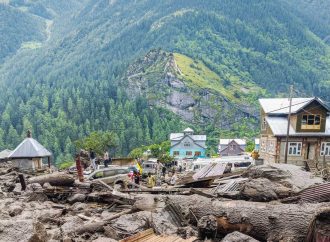
This year’s arrangements have become even more complex following recent weather-related disruptions, including cloudbursts and flash floods that affected parts of the Valley.
Security planning therefore extends beyond traditional threats.
Troops monitor weather conditions, maintain communication networks, support rescue operations when necessary and assist in disaster response alongside ensuring protection against terrorist threats.
The Army’s role increasingly encompasses humanitarian assistance as well as conventional security.
General Seth’s discussions with senior commanders also focused on force modernisation.
As warfare evolves globally, military planners increasingly recognise that future conflicts may combine conventional military threats with cyber operations, drone warfare, information campaigns and precision-guided systems.
Kashmir has often served as a testing ground for emerging technologies and operational concepts because of its unique terrain and security environment.
Lessons learned here frequently influence military doctrine elsewhere.
Maintaining operational readiness therefore requires continuous adaptation rather than reliance upon established practices.
Military preparedness ultimately rests upon soldiers deployed under demanding conditions.
General Seth’s interactions with troops in Kupwara, Nagrota and other forward locations highlighted the human dimension often overlooked in discussions of security.
Personnel serving along the LoC routinely operate in extreme weather.
Winter temperatures plunge well below freezing.
High-altitude deployments test physical endurance.
Remote posts require long periods away from families.
Operational readiness depends as much upon morale, logistics and leadership as equipment.
The Army chief’s acknowledgement of soldiers’ professionalism reflected recognition of those challenges.
Another notable feature of the visit was the emphasis on coordination beyond the military.
Security in Jammu and Kashmir increasingly involves close cooperation among multiple institutions.
Police provide local intelligence.
Civil authorities coordinate disaster response.
Administrative agencies manage infrastructure.
Intelligence organisations monitor emerging threats.
The Army operates within this broader ecosystem rather than independently.
General Seth’s meetings with the Lieutenant Governor and Chief Minister symbolised that collaborative approach.
Jammu and Kashmir’s security environment today differs markedly from earlier decades.
Cross-border infiltration remains a concern. Militancy persists. Yet the operational focus has broadened considerably.
Protecting critical infrastructure, securing tourism, facilitating pilgrimages, responding to climate-related emergencies and integrating advanced technology now form part of the military’s everyday responsibilities.
The Army’s mission is no longer confined to defending borders alone.
It increasingly contributes to maintaining conditions that allow normal civic and economic life to continue.
General Dhiraj Seth’s first visit to Jammu and Kashmir as Army chief was, in many ways, a statement of priorities.
By choosing to begin his operational engagements in one of India’s most strategically important theatres, he reaffirmed the centrality of the region to national security planning.
The visit also reflected a broader reality.
In Kashmir, security is no longer defined solely by troop numbers or military deployments.
It depends upon intelligence sharing, technological innovation, inter-agency coordination, disaster preparedness and sustained engagement with local communities. The mountains remain unchanged. The challenges they present continue to evolve. And for the Army formations entrusted with defending them, preparedness is not an occasional exercise but a continuous commitment—one measured not only by readiness for conflict, but by their ability to preserve stability in one of the country’s most sensitive regions.
About the Author
Zafer Iqbal is a cinematographer with a deep interest in politics. Trained to observe light, movement, and silence, he brings the same sensitivity to the shifting landscapes of politics.