

Announces nationwide push as ruling party prepares Delhi protest, questions Centre’s commitment
Kashmir Impulse Desk
Srinagar, July 11
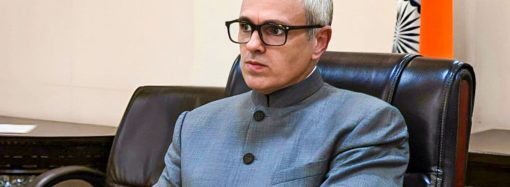
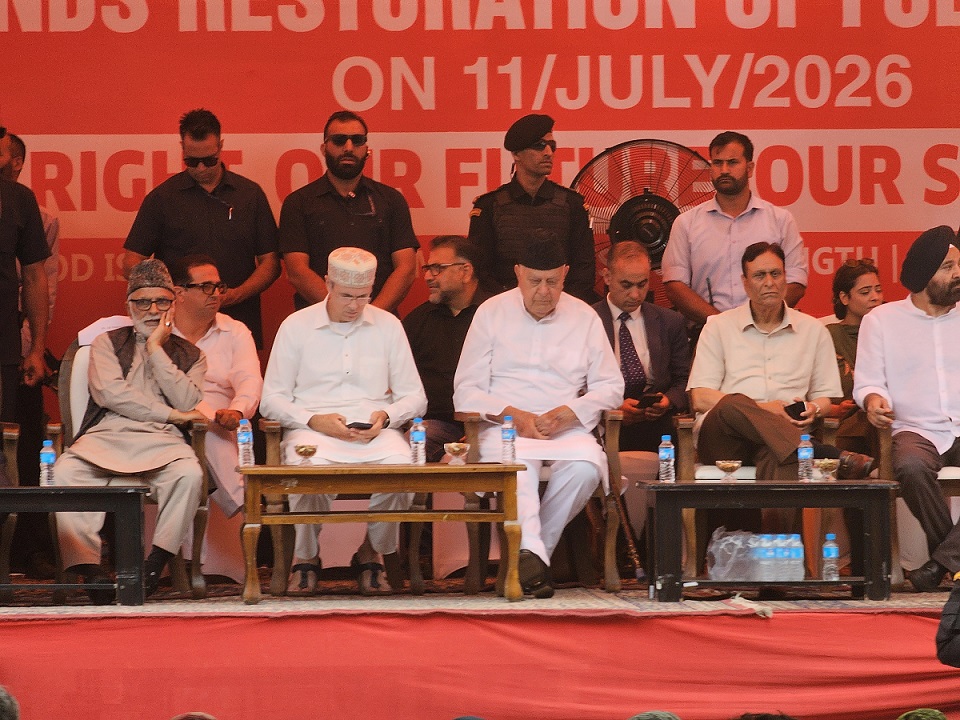
Chief Minister Omar Abdullah on Saturday intensified pressure on Prime Minister Narendra Modi’s government to restore statehood to the federally administered region, accusing New Delhi of reneging on commitments made before India’s Supreme Court and announcing a wider political campaign beginning with a protest in the national capital later this month.
Addressing party workers in Srinagar, Abdullah said his National Conference (NC) had exercised restraint since assuming office in the expectation that the Centre would honour repeated assurances that Jammu and Kashmir’s statehood would be restored following the completion of the delimitation exercise and Assembly elections.
Instead, he said, the prolonged delay had left the elected government functioning with limited authority under the Union Territory framework, prompting the party to launch what it described as a democratic movement to press for the restoration of full statehood.
“The time has come to raise our voice,” Abdullah said. “Patience should not be mistaken for surrender.”
The remarks come ahead of the NC’s planned July 20 protest at New Delhi’s Jantar Mantar, timed to coincide with the opening of Parliament’s Monsoon Session. The demonstration is expected to bring together leaders from several regional and national political parties in what the NC hopes will become a broader campaign for restoring Jammu and Kashmir’s constitutional status.
The Centre has repeatedly stated that statehood will be restored at an “appropriate time” after the democratic process is completed, a commitment it also placed on record before the Supreme Court during hearings on the constitutional changes introduced in August 2019.
However, no timetable has been announced, allowing the issue to emerge as the defining political debate in Jammu and Kashmir since Assembly elections returned an elected government to office.
Abdullah said his administration had consciously avoided confrontation with New Delhi despite mounting criticism from political opponents who argued that a more aggressive approach was needed.
“I believed our rights could be secured through democratic engagement rather than conflict,” he said. “That is why we chose cooperation over confrontation.”
He said the National Conference had accepted the delimitation exercise despite reservations about the redrawing of Assembly constituencies, arguing that the process disproportionately benefited the Bharatiya Janata Party (BJP).
“We believed the exercise was unfair, but we accepted it because we were told it was part of the roadmap towards restoring statehood,” Abdullah said.
He argued that the subsequent Assembly elections, which resulted in the National Conference returning to power, had fulfilled another key condition cited by the Centre.
“If those milestones have been completed, what remains?” he asked.
The chief minister questioned statements by BJP leaders suggesting that statehood would only be restored under conditions determined by the ruling party.
“If that was always the position, why was it not made clear before the Supreme Court? Why were the people of Jammu and Kashmir not told before the elections?” Abdullah said.
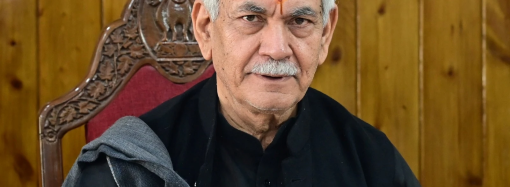
He also criticised the constitutional arrangement under which the elected government operates, saying significant executive authority continued to rest with the Lieutenant Governor under the Union Territory framework.
“If every important decision has to come from Raj Bhavan, then people are entitled to ask why elections were held in the first place,” he said.
Abdullah argued that democratic governance required elected representatives to possess meaningful executive powers rather than merely symbolic authority.
He also drew comparisons with neighbouring Ladakh, saying New Delhi appeared willing to discuss constitutional safeguards there while delaying action on restoring statehood to Jammu and Kashmir.
“We were told there would be one constitutional system across the country,” he said. “Yet different approaches are being adopted.”
The chief minister said he had consistently raised the issue during meetings with Prime Minister Narendra Modi, Union Home Minister Amit Shah and other senior federal ministers.
“Every time we are told that it will happen at the right time,” Abdullah said. “We simply want to know when that right time will arrive.”
During his address, Abdullah alleged that attempts had been made to persuade some National Conference legislators to defect by promising political rewards, including the restoration of statehood if they supported the BJP.
He did not provide evidence for the claim but said party legislators had rejected such approaches.
“Our representatives are not for sale,” he said.
The BJP has not publicly responded to those allegations.
Abdullah said the campaign for statehood was not intended to serve the interests of a single political party but represented a constitutional demand shared across Jammu and Kashmir.
He confirmed that invitations had been sent to leaders across the political spectrum, including rival regional parties, urging them to join the July 20 protest in New Delhi.
“This is not the National Conference’s fight alone,” he said. “It is the cause of every citizen of Jammu and Kashmir.”
He urged party workers unable to travel to Delhi to organise peaceful demonstrations at district headquarters across the Union Territory on the same day, calling for coordinated protests demanding the restoration of statehood.
The chief minister described the planned demonstration as the opening phase of a wider political movement, saying future steps would depend on the Centre’s response.
“We will assess the government’s reaction and then decide our next course of action,” he said.
Jammu and Kashmir was stripped of its special constitutional status and reorganised into the Union Territories of Jammu and Kashmir and Ladakh in August 2019, a move that fundamentally altered the region’s political and administrative structure.
Although the Supreme Court upheld the constitutional changes in 2023, it also recorded the Union government’s assurance that statehood would be restored at an appropriate stage.
With no timeline announced, regional political parties have increasingly turned the issue into the focal point of public mobilisation, arguing that democratic normalcy cannot be fully restored until Jammu and Kashmir regains the powers of a full-fledged state.