



Opposition says constitutional status will be restored through Parliament
Kashmir Impulse Desk
Srinagar, July 10
Bharatiya Janata Party (BJP) on Friday dismissed the National Conference (NC)’s planned protest in New Delhi demanding the restoration of Jammu and Kashmir’s statehood as a political distraction, accusing Chief Minister Omar Abdullah’s government of using the issue to divert attention from what it described as failures in governance and employment.
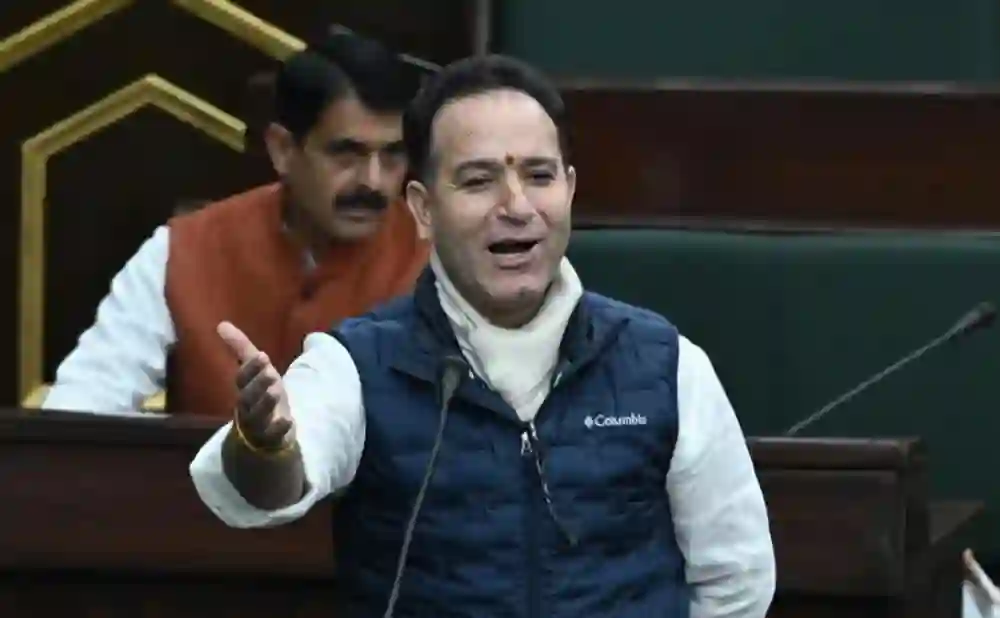
Leader of Opposition in the Jammu and Kashmir Assembly Sunil Sharma said the BJP would boycott the National Conference’s proposed July 20 demonstration at Delhi’s Jantar Mantar and instead launch a region-wide campaign against the government’s alleged outsourcing of jobs, an issue the party said had generated widespread resentment among unemployed youth.
The competing campaigns underscore the increasingly sharp political divide over the future of Jammu and Kashmir, where statehood has re-emerged as the dominant issue nearly seven years after the former state’s reorganisation into a Union Territory.
“The restoration of statehood is not achieved through protests on the streets but through Parliament,” Sharma told a press conference in Srinagar, rejecting the National Conference’s attempt to rally political parties from across the country behind its campaign.
The National Conference has invited leaders from more than 50 political and religious organisations, including several opposition parties and regional leaders, to participate in the July 20 sit-in, which coincides with the opening of Parliament’s Monsoon Session.
The ruling regional party says the demonstration is intended to remind the federal government of its repeated commitment to restore Jammu and Kashmir’s statehood, a promise that has been reiterated by the Centre in Parliament and before the Supreme Court but without a definitive timeline.
Sharma, however, accused the National Conference of exploiting the emotionally charged issue to shield itself from criticism over governance.
“The people ask questions about unemployment, development and public services, and the government responds by announcing a protest in Delhi,” he said. “This is an attempt to shift the political conversation away from its own performance.”
The BJP leader alleged that the ruling party had repeatedly resorted to political symbolism instead of addressing day-to-day administrative challenges facing the Union Territory.
He questioned the progress of an earlier signature campaign announced by Chief Minister Omar Abdullah in support of statehood shortly after assuming office, saying little had been heard about the initiative since its launch.
“A year has passed,” Sharma said. “People deserve to know what happened to those promises.”
The BJP has sought to portray employment as a more immediate concern than constitutional status, announcing plans for a mass agitation against the government’s outsourcing policy, which it said was depriving local youth of job opportunities.
Sharma said the campaign would begin with demonstrations outside the Civil Secretariat before expanding to districts across Jammu and Kashmir.
He urged unemployed young people to join the movement, calling on the government to withdraw what he described as an unfair outsourcing policy and adopt measures that prioritise local recruitment.
The NC has not formally responded to the BJP’s latest allegations, but party leaders have consistently argued that many governance constraints stem from Jammu and Kashmir’s reduced constitutional status.
Since returning to office, Chief Minister Omar Abdullah has repeatedly maintained that an elected government operating under Union Territory status lacks the legislative and administrative authority enjoyed by a full-fledged state, limiting its ability to implement key policy decisions.
The BJP rejects that argument, insisting that governance and constitutional status are separate issues and accusing the National Conference of conflating them for political gain.
During the press conference, Sharma also revived one of the BJP’s longstanding criticisms of the National Conference by referring to the deaths of civilians during the 2010 unrest in Kashmir.
He alleged that affidavits filed during the previous National Conference-led government had wrongly characterised teenage victims Wamiq Farooq and Tufail Mattoo, whose deaths became defining moments of the months-long protests that year.
The NC has previously rejected similar accusations, while the deaths remain among the most politically sensitive episodes in Kashmir’s recent history.
Sharma contrasted the security situation during earlier National Conference administrations with the present, crediting the Narendra Modi-led government with improving law and order and reducing civilian casualties.
The remarks reflect the BJP’s broader strategy of framing the debate over Jammu and Kashmir not only around constitutional issues but also governance, security and employment, themes the party is expected to emphasise in the run-up to future elections.
The political confrontation comes at a time when pressure is mounting on New Delhi to clarify the timetable for restoring statehood. While the Supreme Court, in its 2023 judgment upholding the abrogation of Article 370, recorded the Centre’s assurance that statehood would be restored at an appropriate time, no date has been announced.
That uncertainty has allowed the issue to become the principal fault line in Jammu and Kashmir politics, with regional parties portraying statehood as unfinished constitutional business and the BJP arguing that governance – not political mobilisation – should remain the immediate priority.