



Few places illustrate the complexity more vividly than Naranag.
After 14 months of silence, the reopening of Naranag is about more than restoring a tourist destination, it is a test of whether confidence can return to one of Kashmir’s oldest gateways to history and the Himalayas. Tabish Khan reports.
There is a peculiar kind of silence that belongs only to mountain roads. It is not the silence of emptiness but of expectation—the hush that settles before footsteps arrive, before horses begin climbing the trail, before tea stalls fill with conversations between strangers comparing maps and weather forecasts. In Kashmir, where entire communities have learned to measure the seasons by the arrival of visitors, silence can also become an economic condition.
For 14 months, the road leading to Naranag, in central Kashmir’s Ganderbal district, existed in that suspended state. Vehicles still travelled through the valley. Villagers tended orchards, grazed livestock and prepared fields as they always had. But the stream of trekkers carrying rucksacks, photographers chasing the first light over Harmukh, pilgrims visiting one of Kashmir’s oldest surviving temple complexes, and families escaping the summer heat had all but disappeared.
The destination had not been forgotten. It had been closed.
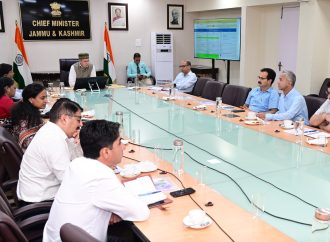
Last week, Lieutenant Governor Manoj Sinha announced that the administration had decided to reopen Naranag after what officials described as a comprehensive security assessment. The announcement ended more than a year of restrictions imposed in the aftermath of the devastating terrorist attack in Pahalgam, where twenty-six people, most of them tourists, were killed in Baisaran meadow. The attack fundamentally altered Kashmir’s tourism landscape overnight. Authorities responded by restricting access to several vulnerable tourist destinations across the Valley, including Naranag, as security agencies reassessed risks in remote locations.
The closure was intended as a precaution. Its consequences, however, extended far beyond security.
For the people living around Naranag, tourism is not an occasional source of income; it is the season itself. Every summer brings a carefully choreographed movement of people and commerce. Pony owners prepare their animals months in advance. Trekking guides update routes after winter snowfall. Homestays repaint rooms. Shopkeepers stock dry fruits, bottled water and rain gear. Taxi operators calculate how many trips they might make between Srinagar and the foothills before autumn arrives.
When visitors stop coming, the choreography collapses.
Unlike urban economies, where multiple industries soften the impact of downturns, mountain tourism functions through a chain in which every participant depends on the next. The guide needs trekkers. The trekkers need transport. Transport brings customers to restaurants. Restaurants buy from local suppliers. Pony operators rely on guides recommending their services. Even a tea seller at the entrance to the trail measures prosperity not in annual financial statements but in the number of disposable cups emptied before noon.
One missing link weakens the entire chain.
The closure of Naranag therefore became more than a security measure. It became an extended interruption to an economic rhythm that has evolved over decades around one of Kashmir’s most remarkable landscapes.
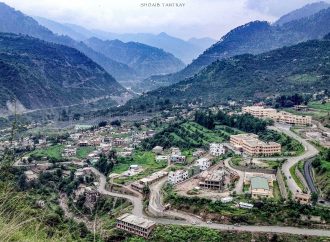
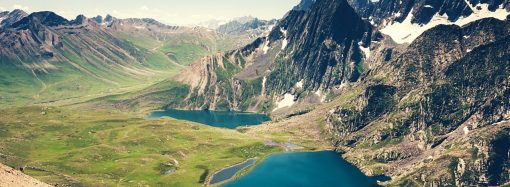
Naranag occupies a unique place in the Valley’s geography. Situated about fifty-four kilometres northeast of Srinagar, the village lies where cultivated land gradually yields to forests and alpine wilderness. Beyond it rise some of Kashmir’s most celebrated trekking routes, including the path to Gangabal Lake beneath the imposing Harmukh massif. Long before trekking became fashionable, shepherds, pilgrims and traders navigated these mountains, leaving behind trails that modern adventure tourism now follows.
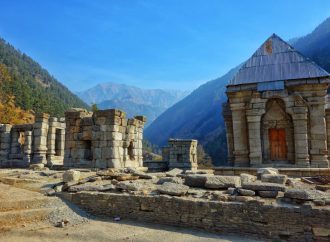
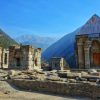
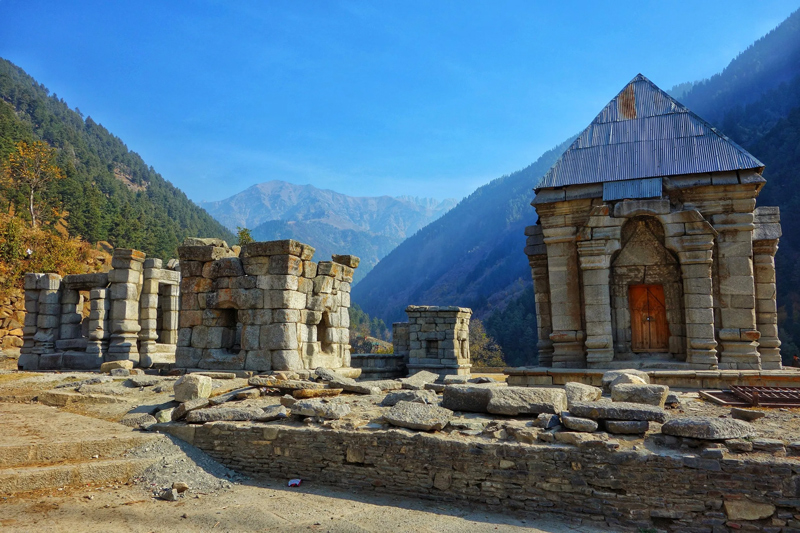
Closer to the village stand the remains of an eighth-century temple complex, among the most significant examples of early medieval stone architecture in Kashmir. Built during the Karkota period and associated with King Lalitaditya Muktapida’s era, the temples have endured earthquakes, political upheaval and centuries of changing religious and cultural landscapes. Massive limestone blocks, assembled with astonishing precision, continue to dominate the meadow where they have stood for well over a thousand years.
Visitors often arrive expecting ruins.
They leave having encountered continuity.
The temples are archaeological monuments, certainly, but they also function as reminders that Kashmir’s history has always been layered rather than linear. Dynasties rose and fell. Faiths evolved. Trade routes shifted. Yet the mountains remained, and so did the stones.
That historical permanence contrasts sharply with the fragility of the modern tourism economy.
A single administrative order can close a destination.
A single incident can reshape an entire season.
Confidence, unlike infrastructure, cannot simply be built and declared complete.
Officials insist that the reopening follows extensive security preparations. Additional arrangements have been made to facilitate the safe return of tourists and pilgrims. The decision is part of a broader effort to gradually restore access to destinations that remained restricted after last year’s attack.
The announcement also reflects an understanding that prolonged closures carry their own costs.
Those costs were repeatedly highlighted by local representatives. Kangan legislator Mian Mehar Ali raised the issue with the Lieutenant Governor, arguing that communities dependent on tourism had endured substantial economic hardship. Following the announcement, he welcomed the decision, describing it as a positive response to public demand and expressing hope that local businesses would once again benefit from visitor arrivals.
Member of Parliament Mian Altaf Ahmad echoed those sentiments, calling Naranag far more than a scenic destination. For hundreds of families, he noted, it represents the foundation of livelihoods built around seasonal tourism. Pony operators, guides, homestay owners, restaurant workers and shopkeepers all depend on the short summer window when the mountains become accessible.
Their optimism, however, remains tempered by experience.
Tourism has always been unusually sensitive to perception.
Roads may reopen, but travellers make decisions based on confidence rather than notifications. Families planning holidays weigh headlines as carefully as hotel prices. Trekking groups consider advisories before they consider itineraries. Tour operators wait for enquiries to become bookings before declaring a season successful.
The reopening of Naranag is therefore not the end of a story.
It is the beginning of another one.
Whether the destination quickly regains its place on Kashmir’s tourism map will depend not merely on official orders but on something considerably more intangible: the willingness of people to return to landscapes whose beauty has never been questioned, but whose accessibility has too often been interrupted by forces beyond the mountains themselves.
The first visitors who return to Naranag this summer may notice little that has changed. The mountains remain where they have always been. The Sindh River continues its hurried descent through the valley. Pine forests still soften the slopes before they give way to alpine meadows, and the ancient temple stones continue to catch the evening light with the same quiet dignity they have possessed for centuries.
Yet for those who have spent the past fourteen months here, almost everything has changed.
The reopening represents the return of anticipation. Shops that remained open through the closure, often serving only local customers, now have reason to stock trekking equipment, bottled water, snacks and rain jackets once again. Homestay owners can begin answering phone calls from travellers planning overnight stays before heading toward Gangabal. Pony owners, whose animals require year-round care regardless of business, hope that the familiar lines of tourists gathering near the trailhead will return before the height of the summer season.
Economic recovery in places like Naranag rarely arrives through dramatic announcements. It returns incrementally – one booking at a time, one trekking group after another, one family deciding to stop for tea before continuing into the mountains.
Every visitor supports a network that extends well beyond the destination itself.
A taxi hired in Srinagar creates income for a driver. A local guide hired in Kangan often purchases supplies from neighbourhood stores before leading a trek. Homestays source vegetables, milk and other essentials from nearby villages. Restaurants employ cooks, helpers and suppliers. Artisans selling locally produced goods depend on the increased footfall that accompanies a healthy tourism season.
The reopening of Naranag therefore represents more than the restoration of access to a scenic location. It reactivates an ecosystem of livelihoods that has evolved over decades around seasonal tourism.
This relationship between landscape and livelihood is particularly visible in Kashmir’s mountain destinations. Unlike urban tourist centres that function throughout the year, high-altitude gateways operate within a compressed calendar dictated by snowfall, weather and accessibility. A missed season cannot easily be recovered. Income lost during one summer often affects families throughout the following winter.
That reality explains why local stakeholders repeatedly appealed for the reopening of the destination.
For elected representatives, the issue was not simply about tourism policy but about sustaining communities whose economic opportunities remain limited. The demands reflected concerns heard across villages where tourism has increasingly become the principal source of seasonal employment for young people who might otherwise migrate in search of work.
The administration’s decision acknowledges those concerns while emphasising that security considerations remain paramount. Officials have stated that strengthened arrangements are now in place to facilitate the safe movement of visitors, reflecting an attempt to balance economic revival with the continuing need for vigilance.
That balance has become one of the defining characteristics of Kashmir’s tourism story.
Few places illustrate the complexity more vividly than Naranag.
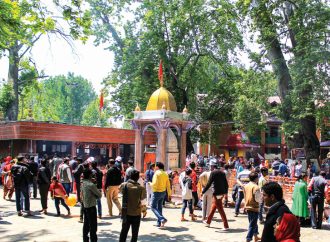
The destination exists at the intersection of multiple narratives. It is an archaeological site preserving evidence of Kashmir’s early medieval history. It is a religious landmark that continues to attract devotees. It is the starting point for one of the Valley’s most celebrated trekking routes. And it is an economic lifeline for surrounding communities.
Each identity reinforces the others.
A pilgrim may stop at a local restaurant before visiting the temple complex. Trekkers often spend a night in nearby accommodations before beginning their ascent. History enthusiasts exploring the ruins frequently extend their journeys to surrounding villages. Tourism, in such places, is never confined to sightseeing. It circulates through the local economy in ways that are both visible and subtle.
The Harmukh-Gangabal trek, for which Naranag serves as the principal base camp, has long occupied a special place in Kashmir’s outdoor culture. Rising through forests, streams and alpine meadows before reaching the pristine waters of Gangabal Lake beneath the imposing Harmukh peak, the route has introduced generations of visitors to landscapes that remain remarkably untouched.
For many young Kashmiris, the trek is also a rite of passage—a journey that combines physical endurance with an intimate encounter with the Valley’s high-altitude wilderness. Local guides often describe it not simply as a route through mountains but as a passage through memory, where every meadow and stream carries a story passed down by shepherds and earlier travellers.
The reopening restores access to those stories.
It also restores a measure of confidence at a time when Kashmir’s tourism industry has been striving to recover from successive disruptions. Over the past decade, the sector has repeatedly demonstrated its resilience, rebounding after periods of uncertainty whenever visitors regained confidence in travelling to the Valley. Each recovery, however, has required more than promotional campaigns. It has depended upon rebuilding trust.
Trust is perhaps tourism’s most valuable currency.
Unlike monuments or hotels, it cannot be constructed through investment alone. It grows gradually through consistent experiences of safety, hospitality and reliability. Every successful visit encourages another. Every satisfied traveller becomes an informal ambassador whose recommendations travel further than advertisements.
That process begins again at places like Naranag.
The reopening may appear administrative on paper, but its true significance will be measured in ordinary moments: children posing for photographs among the ancient temple stones, trekkers adjusting backpacks before beginning the climb to Gangabal, local vendors serving steaming cups of noon chai to travellers escaping an afternoon shower, and guides once again leading visitors along paths they know almost instinctively.
Such scenes, commonplace before the closure, now carry renewed meaning.
They suggest that normalcy, in Kashmir, is rarely a permanent condition. It is something that must continually be rebuilt through policy, public confidence and the quiet determination of communities whose livelihoods depend upon welcoming strangers.
For the ancient temple complex itself, fourteen months is almost imperceptible. Stone structures that have survived more than twelve centuries do not measure time in tourist seasons. Their endurance offers a reminder that history often unfolds across far longer horizons than contemporary politics or security challenges.
The people living around them, however, experience time differently.
For them, 14 months meant fourteen months without expected earnings.
Fourteen months of uncertainty.
Fourteen months of waiting for a familiar rhythm to return.
That rhythm is now beginning again.
The decision to reopen Naranag will not erase the memories of the attack that precipitated its closure, nor will it eliminate the security concerns that continue to shape governance in sensitive regions. Those realities remain part of Kashmir’s contemporary landscape. But reopening acknowledges another truth as well: communities cannot remain indefinitely suspended between caution and commerce.
They need roads that lead somewhere.
They need visitors willing to follow them.
As summer unfolds across the Valley, the first footsteps will once again echo through the temple courtyard before fading into the forests beyond. They will belong to pilgrims, trekkers, photographers and families—people drawn by curiosity, faith or adventure, each arriving for different reasons but participating in the same quiet act of restoration.
For 14 months, Naranag waited.
Now, it waits no longer.
About the Author
Tabish Khan is a multi-media journalist whose work moves fluidly across text, video, and the fast-evolving grammar of social media. With postgraduate degree in Convergent Journalism, her storytelling often bridges traditional field journalism with platform-driven formats – short-form video, visual explainers, and audience-first storytelling.