




Cracks down on environmental violations
Kashmir Impulse Desk
Leh, June 28
Authorities in Ladakh imposed fines totalling Rs 2 lakh on four tourists for illegally driving vehicles through ecologically sensitive areas, including the shores of Pangong Lake, marking the administration’s toughest action yet against off-road driving in protected wildlife habitats.
The penalties, imposed under the Wildlife (Protection) Act, 1972, follow a recent surge in incidents involving tourists driving sport utility vehicles across wetlands, alpine meadows and lake shores, often filming the stunts for social media despite repeated warnings from conservation authorities.
The Ladakh administration said each of the four vehicle owners was fined Rs 50,000 for driving into protected wildlife areas in Changthang and Nubra, both of which are home to several endangered Himalayan species and fragile high-altitude ecosystems.
Officials said the offenders were from the northern Indian states and Union Territories of Himachal Pradesh, Punjab, Chandigarh, and Uttar Pradesh.
The vehicles were impounded during the investigation and released only after the penalties were paid, officials said.
Authorities described the action as the first instance in which such substantial penalties had been imposed on tourists in Ladakh for damaging environmentally sensitive areas through illegal off-road driving.
The enforcement drive follows directions issued by Lieutenant Governor Vinai Kumar Saxena, who has called for stricter protection of the Union Territory’s fragile mountain ecosystem amid rising tourist arrivals.
Officials said wildlife authorities detected the violations during routine patrolling, while additional evidence was gathered through social media posts and complaints forwarded to the Lieutenant Governor’s Secretariat.
According to the Wildlife Department, the violations occurred at four separate locations under the Leh Wildlife Division, including the ecologically sensitive shores of Pangong Lake near Merak and Lukung, Nurboo La in Hanle and Sumur in Nubra Valley.
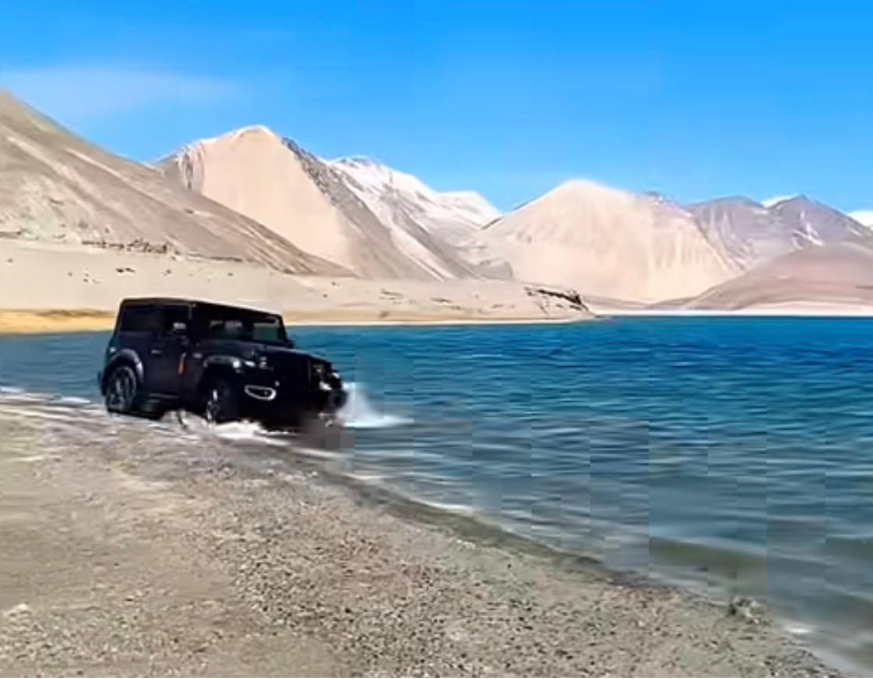
One of the most serious violations occurred on June 23, when wildlife officials found a Mahindra Thar sport utility vehicle being deliberately driven into the waters of Pangong Lake near Merak.
Officials alleged that the driver entered the lake to perform vehicle stunts, disturbing wildlife habitat and polluting the waterbody before the vehicle was seized under provisions of the Wildlife (Protection) Act.
The administration said the driver was found prima facie guilty of violating wildlife protection laws.
Pangong Lake, situated at an altitude of more than 13,800 feet and extending across India and China, has witnessed a sharp increase in tourism over the past decade after gaining international attention through films and social media.
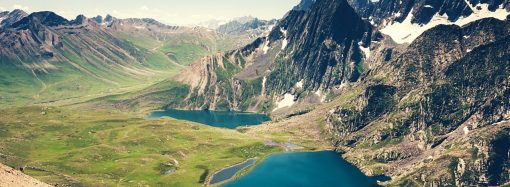
Conservationists have repeatedly warned that uncontrolled tourism, off-road driving and increasing vehicular traffic are placing growing pressure on the region’s delicate ecosystem, which supports migratory birds, rare alpine vegetation and endangered mammals including the snow leopard, Tibetan wild ass and black-necked crane.
Officials said illegal off-roading damages fragile vegetation that can take decades to regenerate in the cold desert environment while also disturbing breeding grounds and migration corridors for wildlife.
LG Saxena said Ladakh continued to welcome tourists from across India and abroad but urged visitors to travel responsibly and avoid protected habitats.
He said adventure tourism must not come at the cost of environmental degradation.
“Off-road driving within or near protected wildlife areas is a punishable offence under the Wildlife (Protection) Act,” the Lieutenant Governor said, warning that strict enforcement would continue against future violators.
The latest crackdown reflects the administration’s growing emphasis on balancing tourism with ecological conservation in Ladakh, where visitor numbers have risen steadily in recent years, bringing economic benefits but also increasing pressure on some of India’s most fragile mountain landscapes.
Wildlife officials said surveillance of sensitive areas would be intensified during the peak tourist season, with greater use of patrols and monitoring of social media content to identify violations.
Authorities have appealed to tourists, tour operators and vehicle owners to remain on designated roads and comply with environmental regulations, warning that future violations could result in prosecution in addition to financial penalties.