



‘Pandemic reminded world that trust, transparency, collaboration are indispensable in overcoming global crises’
Kashmir Impulse Desk
Evian, June 16
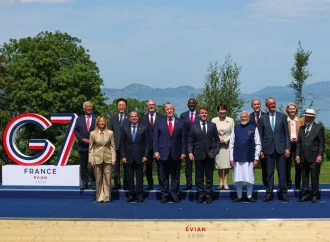
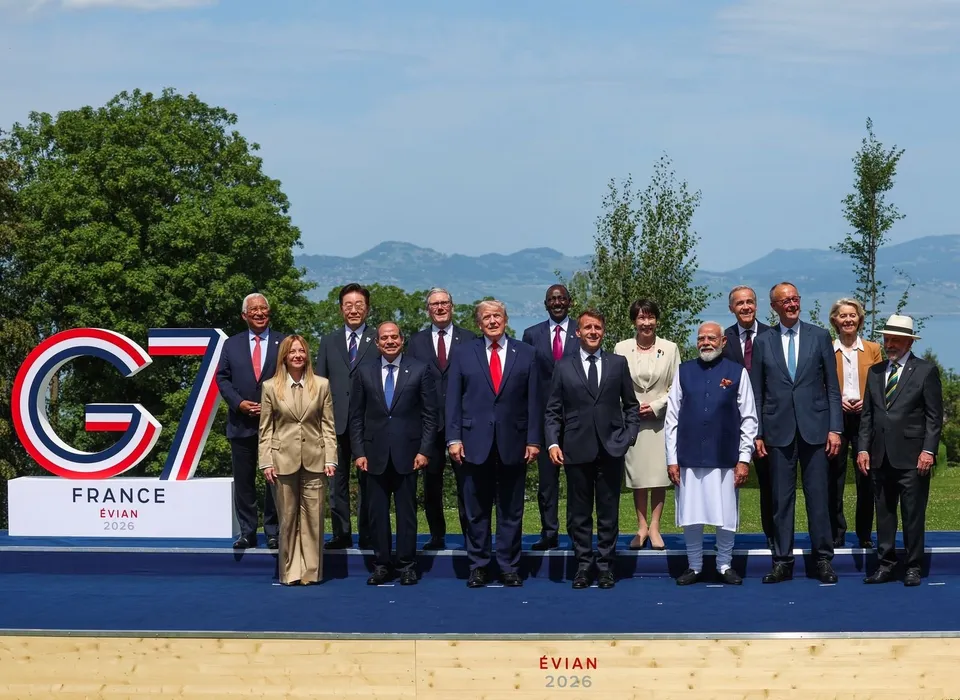
Prime Minister Narendra Modi on Tuesday urged world leaders to rebuild international solidarity through partnerships founded on trust, transparency and shared responsibility, warning that growing geopolitical divisions and the misuse of trade and technology were contributing to a widening trust deficit in global affairs.
Addressing the Outreach Session on ‘Forging New Partnerships and Rebuilding International Solidarity’ at the Group of Seven (G7) Summit in the French city of Evian, Modi said countries must strengthen cooperation to address increasingly interconnected global challenges ranging from food and energy security to health crises, cyber threats and economic instability.
His remarks came at a time when the international community is grappling with geopolitical conflicts, supply-chain disruptions, climate-related emergencies and growing concerns over economic fragmentation.
“In today’s interconnected world, challenges relating to energy, food, health, cyber and economic security are closely linked. No country can effectively address these issues in isolation,” Modi told leaders attending the session.
The PM cautioned against the growing tendency among nations to use trade and technology as strategic tools for advancing narrow national interests.
Such practices, he said, risk undermining confidence in international institutions and weakening the spirit of multilateral cooperation that has historically underpinned global stability.
Without naming any country, Modi stressed that trust remains the foundation of sustainable partnerships and called for greater transparency in international engagement.
Drawing lessons from the COVID-19 pandemic, he said the global health crisis demonstrated both the vulnerabilities of interconnected economies and the importance of cooperation among nations during emergencies.
“The pandemic reminded the world that trust, transparency, and collaboration are indispensable in overcoming global crises,” he said.
Modi highlighted India’s approach to international cooperation, saying New Delhi’s engagement with the world has consistently been guided by the principle of “humanity first.”
He pointed to several initiatives launched or supported by India, including the International Solar Alliance, Coalition for Disaster Resilient Infrastructure, Global Biofuel Alliance, Mission LiFE and the “Ek Ped Maa Ke Naam” environmental campaign, as examples of collaborative models focused on common global challenges.
According to the prime minister, these initiatives seek to address climate change, energy transition, environmental sustainability and disaster resilience through collective action rather than unilateral approaches.
Modi also highlighted India’s role as a first responder during natural disasters and humanitarian crises in different parts of the world.
He cited assistance extended by India following cyclones in Sri Lanka, earthquakes in Afghanistan, floods in Mozambique and hurricanes in Jamaica, saying such interventions reflected New Delhi’s commitment to global welfare beyond regional boundaries.
“India’s development and humanitarian initiatives are driven by the belief that progress must be inclusive and benefit all,” he said.
The prime minister also used the platform to showcase India’s domestic development experience, arguing that governance models focused on inclusion and empowerment can contribute to broader global stability.
He said initiatives aimed at expanding financial inclusion, healthcare access, digital identity systems, technology-enabled service delivery and women-led development have helped improve socio-economic outcomes in India.
The experience, he suggested, offers lessons for developing nations seeking to combine economic growth with social inclusion.
A key theme of Modi’s address was the need to redefine the framework of international cooperation.
Global partnerships, he said, should move beyond the traditional donor-recipient model that has long characterised development assistance and instead be based on equality, mutual respect and shared ownership.
“The future of international cooperation lies in solidarity and partnership, not dependency,” he said.
Modi further argued that respect for international law remains essential for maintaining peace and strengthening global institutions.
The absence of consistent adherence to international norms, he said, has emerged as one of the principal obstacles to rebuilding international trust.
Calling for peaceful resolution of disputes, he urged countries to prioritise dialogue and diplomacy over confrontation.
“Peace and stability can only be sustained through communication, mutual understanding and respect for international norms,” he said.
The outreach session brought together G7 members and partner countries to discuss ways of addressing global challenges through enhanced international cooperation.
India, although not a member of the G7 grouping, has regularly been invited to participate in outreach discussions because of its growing economic influence and role in global governance debates.
Modi’s intervention reflected India’s broader diplomatic positioning as an advocate of multilateralism, reform of international institutions and greater representation for developing countries in global decision-making processes.