


The details differ. The outcomes do not.
From reckless driving to missing guardrails, Kashmir’s recurring road tragedies reveal a crisis that demands action long before the next accident makes headlines. Tabish Khan writes.
Every road accident begins with a moment. A driver presses harder on the accelerator. A vehicle attempts a risky overtake. A seatbelt remains unfastened. A road barrier is missing. A dangerous curve lacks warning signs. A pothole forces a sudden manoeuvre. And then, in a matter of seconds, lives are altered forever.
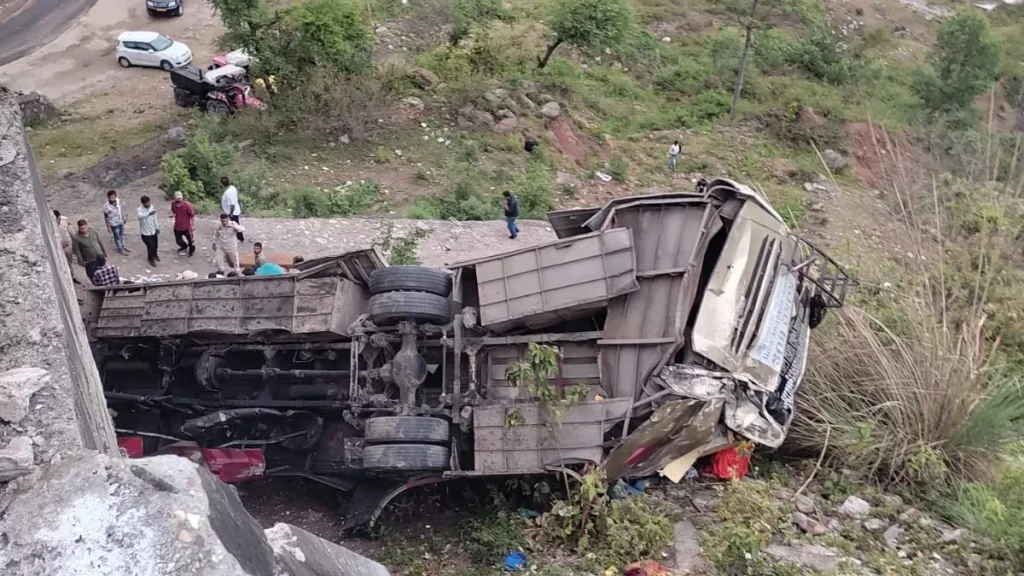
Last week, Kashmir witnessed yet another pair of tragic accidents that should force us to confront an uncomfortable reality. In Budgam, a school bus carrying children plunged into a gorge, killing the driver and injuring two young sisters. On the same day in Ramban, two men lost their lives after their car skidded off a mountain road and crashed into a stream below.
The details differ. The outcomes do not.
Two families are grieving. Two children are recovering from injuries. Communities are mourning. Officials have ordered investigations. Condolences have been offered. And then, as often happens, we move on until the next tragedy arrives. This cycle has become dangerously familiar.
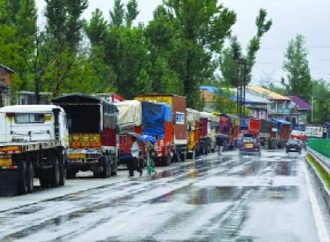
Road accidents in Jammu and Kashmir are no longer isolated incidents. They have become a recurring public safety crisis. Every year, hundreds of people are killed or injured on our roads. The victims include students, labourers, tourists, government employees, businessmen and entire families. No district is immune. No season is exempt.
Yet despite the frequency of these tragedies, we continue to treat them as unfortunate accidents rather than symptoms of deeper problems.
The first problem is reckless driving.
Let us be honest with ourselves. Too many drivers on our roads drive as if traffic laws are optional suggestions rather than binding rules. Speeding has become normalised. Dangerous overtaking is common. Mobile phone use while driving remains widespread. Overloading of passenger vehicles continues despite repeated warnings.
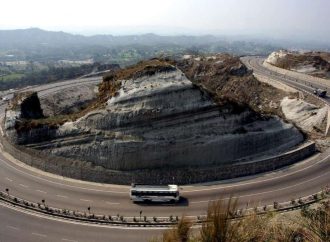
In mountain regions such as Ramban, Doda, Kishtwar, Poonch and parts of Budgam and Kupwara, reckless driving becomes even more dangerous because roads often run alongside steep slopes and deep gorges. A mistake that might result in a minor collision elsewhere can become fatal in these areas.
There is no justification for risking lives to save a few minutes. No destination is important enough to justify speeding on roads where one wrong move can send a vehicle plunging hundreds of feet.
Parents teach children not to play with fire because the consequences are obvious. We need a similar cultural shift regarding road safety. Reckless driving should be viewed not as confidence or skill but as irresponsibility.
The second problem is weak enforcement. Traffic laws are effective only when violations carry consequences. Jammu and Kashmir has witnessed improvements in traffic monitoring over recent years, but enforcement remains inconsistent. Drivers often obey rules when they see a checkpoint and ignore them once it is out of sight. This must change.
Authorities should adopt a zero-tolerance approach towards dangerous driving. Speed limits must be enforced rigorously. Repeat offenders should face heavier penalties. Commercial vehicle operators, especially those transporting schoolchildren, must be held to the highest safety standards.
School buses deserve particular attention. When parents place their children on a school bus each morning, they are placing trust in a system. That trust carries enormous responsibility. Every school vehicle should undergo regular fitness inspections. Drivers should receive specialised training. Emergency preparedness measures should be mandatory. Safety audits should not be conducted only after tragedies occur.
The third problem is infrastructure. Even the most responsible driver can be endangered by poor road conditions. Across Jammu and Kashmir, many roads continue to suffer from inadequate safety features. Crash barriers are missing at vulnerable locations. Warning signage is insufficient. Road markings fade and remain unrepaired. Dangerous curves often lack reflective indicators. Lighting is inadequate on many stretches.
In mountainous regions, these shortcomings can prove deadly. A modern road is not merely a strip of asphalt. It is an integrated safety system. Guardrails, signage, drainage, lane markings, lighting and emergency response infrastructure are all part of that system.
The government deserves credit for expanding road connectivity across Jammu and Kashmir. New highways, tunnels and bridges are transforming mobility. Projects such as the Chenab Rail Bridge, Zojila Tunnel and highway upgrades demonstrate what ambitious infrastructure development can achieve.
But alongside these landmark projects, greater attention must be paid to everyday road safety. A village road deserves safety measures just as much as a national highway. A school route deserves the same attention as a tourist corridor. A mountain road used by local residents every day deserves the same concern as a strategic route.
The fourth problem is emergency response. In many accidents, survival depends on how quickly medical assistance arrives. Mountainous terrain often complicates rescue operations. Delays in evacuation can turn survivable injuries into fatal ones.
The government should strengthen emergency response systems along accident-prone corridors. Additional ambulances, trauma centres, rescue equipment and trained first responders can significantly improve outcomes.
Technology can also play an important role. Surveillance cameras, emergency call systems and GPS-based monitoring of commercial vehicles should become standard features of modern road management.
Road safety is not solely the responsibility of the government. Nor is it solely the responsibility of drivers. It requires collective responsibility.
Schools should educate students about traffic safety from an early age. Parents should model responsible driving behaviour. Community leaders should advocate road safety awareness. Media organisations should treat traffic safety as a public interest issue rather than merely reporting accidents after they occur.
Most importantly, we must stop accepting road fatalities as inevitable. Every accident is not unavoidable. Every death is not destiny. Many road tragedies are preventable.
Behind every statistic is a human story. A father who never returned home. A student whose future changed in an instant. A family waiting for someone who will never arrive.
The Budgam school bus accident and the Ramban crash should not become just two more entries in a long list of road tragedies.
They should serve as reminders. Reminders that safety matters. Reminders that enforcement matters. Reminders that infrastructure matters And reminders that every life lost on our roads represents a failure that society must strive to prevent.
We cannot bring back those who have already been lost. But we can honour them by ensuring fewer families receive that devastating phone call in the future. That requires better roads. Stronger enforcement. Safer driving.
And above all, the collective determination to ensure that our roads carry people to their destinations – not to tragedy.
About the Author
Tabish Khan is a multi-media journalist whose work moves fluidly across text, video, and the fast-evolving grammar of social media. With postgraduate degree in Convergent Journalism, her storytelling often bridges traditional field journalism with platform-driven formats – short-form video, visual explainers, and audience-first storytelling.