




By Mushtaq Ahmad Dar The developments around Chief Minister Omar Abdullah this week reveal more than routine political messaging. They expose the fragile balancing act at the heart of contemporary Jammu and Kashmir: a government trying to project authority while operating without full constitutional power, and a political class still negotiating what governance means in
By Mushtaq Ahmad Dar
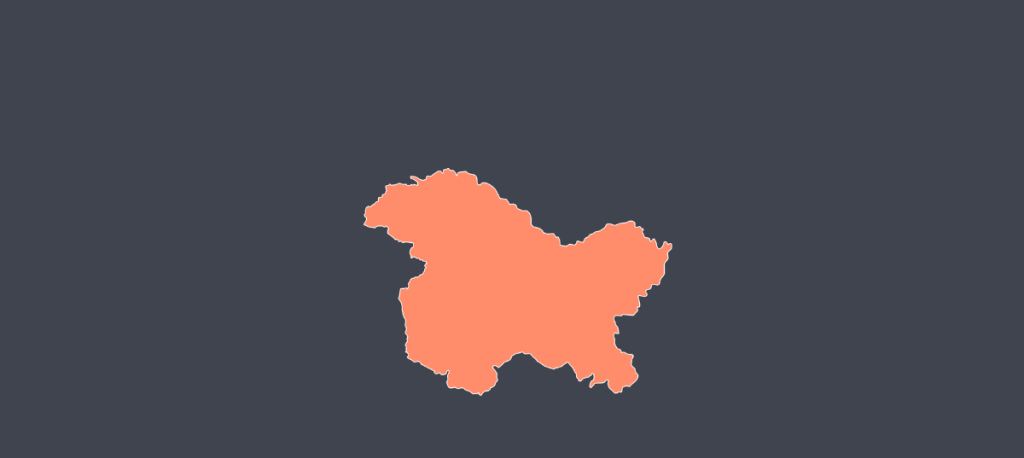
The developments around Chief Minister Omar Abdullah this week reveal more than routine political messaging. They expose the fragile balancing act at the heart of contemporary Jammu and Kashmir: a government trying to project authority while operating without full constitutional power, and a political class still negotiating what governance means in a post-Article 370 landscape.
When Abdullah dismissed rumours of factionalism within the National Conference by declaring, “There is no Eknath Shinde in the National Conference,” he was not merely responding to gossip about cabinet expansion. He was trying to reassure both his party and the public that political stability still exists in a Union Territory where authority remains structurally incomplete.
The comparison with Eknath Shinde was politically loaded. Shinde’s rebellion in Maharashtra became shorthand for the collapse of party discipline through defections engineered by power realignments. By invoking him, Omar Abdullah was signalling awareness of the anxiety now embedded in Indian regional politics: that elected mandates can be destabilised not only through elections, but through prolonged political pressure and strategic fragmentation.
In Jammu and Kashmir, those anxieties are amplified by the absence of statehood.
The National Conference-led government occupies an unusual and constrained space. It governs, but not fully. It administers, but under the shadow of a Lieutenant Governor with significant powers. It makes promises, but often lacks the constitutional autonomy historically associated with elected governments in the region.
This is why Omar Abdullah’s remarks on cabinet expansion matter.
His argument was simple: the delay is not because of internal dissent but because Jammu and Kashmir has not regained statehood. That distinction is politically important. If cabinet expansion stalls because of factionalism, the government appears weak. If it stalls because constitutional restoration remains incomplete, the burden shifts back to New Delhi.
And increasingly, the National Conference wants every governance debate to return to that central unresolved question: what exactly is Jammu and Kashmir politically supposed to become?
Since the revocation of Article 370 in 2019 and the bifurcation of the former state into two Union Territories, politics in Jammu and Kashmir has functioned within a peculiar condition of suspension.
Elections returned an elected government.
But not full political agency.
The result is a system where even ordinary administrative decisions carry constitutional undertones. Cabinet reshuffles become debates about autonomy. Bureaucratic appointments become questions of federalism. Development announcements become proxies for legitimacy.
Omar Abdullah understands this terrain well.
By repeatedly linking cabinet expansion to delayed statehood restoration, he is reframing administrative limitation as democratic deprivation. The message is aimed simultaneously at Kashmiri voters, Jammu constituencies, and New Delhi.
To Kashmiris, it signals that the National Conference has not abandoned its political demand for restoration of status.
To Jammu voters, particularly those frustrated by administrative centralisation, it suggests that incomplete statehood affects governance itself.
And to the BJP-led central government, it serves as a reminder that promises regarding restoration of statehood remain politically alive.
This strategy reflects a larger transformation underway in Jammu and Kashmir politics. Before 2019, regional parties largely competed over power-sharing within the constitutional framework that existed. After 2019, even routine governance has become inseparable from constitutional identity.
The system itself is now the argument.
Omar Abdullah’s accusation that the BJP is engaging in “blackmail politics” by linking governance and statehood to political power reveals the deeper antagonism shaping the current political order.
The relationship between the BJP and regional parties in Jammu and Kashmir remains defined by mutual distrust.
For the BJP, the post-2019 framework represents integration, administrative efficiency, and a restructured political future.
For the National Conference and other regional parties, it represents democratic diminishment and constitutional rupture.
These are not merely competing policy visions.
They are competing narratives about history itself.
This explains why even cabinet expansion rumours generate intense speculation. In a politically fragile environment, any perception of instability invites immediate interpretation through the lens of larger power struggles.
Would the BJP attempt indirect influence?
Could legislators defect?
Is Delhi dissatisfied?
Such questions circulate constantly because politics in Jammu and Kashmir remains unusually dependent on signals rather than certainties.
Omar Abdullah’s public confidence was therefore designed not only to deny rebellion but to pre-empt narrative formation.
In conflict-sensitive regions, perception often becomes political reality before facts catch up.
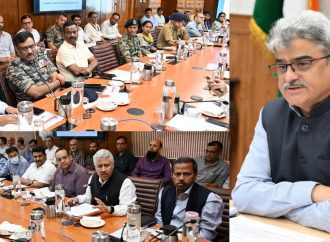
Ironically, the same cabinet meeting that produced political headlines also addressed issues far more immediate to ordinary citizens: electricity subsidies and administrative restructuring.
The government’s discussion about providing 200 units of free electricity to Antyodaya Anna Yojana families reflects an attempt to shift political conversation toward welfare governance.
Electricity matters deeply in Jammu and Kashmir, where harsh winters, economic vulnerability, and unreliable infrastructure turn power supply into an intensely emotional public issue. Free electricity schemes carry symbolic weight because they speak directly to household survival rather than ideological positioning.
Yet even here, structural limitations appear.
According to reports, discrepancies emerged between beneficiary records maintained by different departments. The state machinery itself seems fragmented — a reminder that governance efficiency depends not only on political promises but also on bureaucratic coherence.
Similarly, the reorganisation of the Jal Shakti Department points toward an administration attempting institutional restructuring while simultaneously fighting political battles over legitimacy and constitutional status.
This duality defines governance in contemporary Jammu and Kashmir.
Everyday administration exists alongside unresolved political identity.
There is another notable feature in Omar Abdullah’s recent remarks: the re-emergence of his older political instincts.
For several years after 2019, regional political leadership in Jammu and Kashmir appeared subdued, uncertain about how directly to confront the new political order. But Omar Abdullah increasingly sounds like a politician reclaiming rhetorical aggression.
His comments on Tamil Nadu, where he argued that the single largest party should ordinarily be invited to form government in a hung assembly, reflect an attempt to situate Jammu and Kashmir within broader national democratic debates rather than isolate it as an exceptional case.
The invocation of Atal Bihari Vajpayee was especially strategic.
Vajpayee remains one of the few BJP leaders remembered relatively positively across sections of Kashmir because of his emphasis on “insaniyat” — humanity — in approaching the region. By referencing him, Omar Abdullah subtly contrasts older traditions of coalition-era democratic accommodation with what regional parties perceive as contemporary centralised political dominance.
It is not accidental rhetoric.
It is calibrated political memory.
Beyond the Cabinet Expansion
Ultimately, the speculation around cabinet expansion is less important than what it reveals.
Jammu and Kashmir today exists in a prolonged transitional phase where institutions function, elections occur, and governance proceeds – yet foundational political questions remain unsettled.
Statehood has become more than an administrative demand.
It is now shorthand for dignity, representation, constitutional trust, and political normalcy.
That is why Omar Abdullah continues returning to it repeatedly.
And that is why cabinet expansion, an issue that would ordinarily remain minor political management, becomes headline material in Jammu and Kashmir.
Because in the region’s current political climate, even the composition of a ministry is no longer just about portfolios.
It is about power itself.
About the Author
Mushtaq Ahmad Dar has a keen interest in national politics across the spectrum from left to right to centre.












Leave a Comment
Your email address will not be published. Required fields are marked with *