
Kashmir Impulse Desk
Srinagar, Aug 22
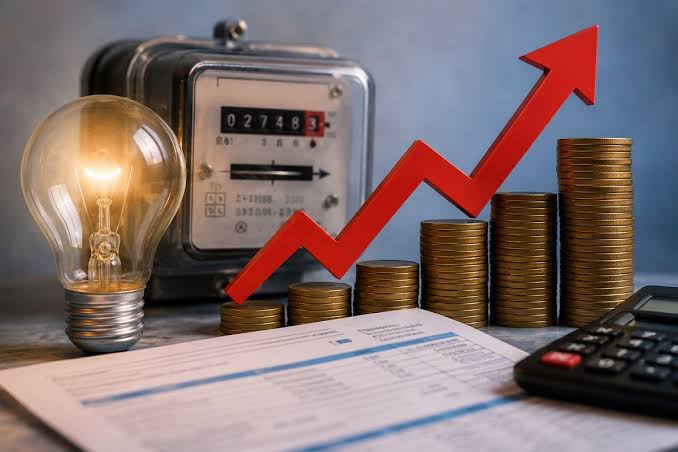
Electricity consumers in Jammu and Kashmir will pay higher tariffs from Sept. 1 after the Joint Electricity Regulatory Commission (JERC) approved an average 6.83 percent increase for 2026-27.
The revised tariff, approved in an order dated August 20, will apply until March 31, 2027, unless changed by the regulator.
The increase varies by consumer category and consumption.
For ordinary metered households, the energy charge will rise to Rs 2.45 per unit for monthly consumption up to 200 units, Rs 4.20 for 201-400 units, and Rs 4.60 above 400 units.
The fixed charge will rise to Rs 10 per kW per month from Rs 8.
A household using 200 units will pay Rs 490 in energy charges, excluding other components, compared with Rs 460 previously.
At 300 units, the charge will rise to Rs 910 from Rs 860, while 400 units will cost Rs 1330 against Rs 1260.
The regulator retained a subsidised tariff for eligible below-poverty-line households.
Consumers with valid BPL certificates using up to 30 units a month will continue to pay Rs 1.40 per unit, with a fixed charge of Rs 5 per kW.
Agricultural consumers will also continue to receive subsidised rates.
Metered connections up to 20 HP will pay Rs 1.05 per kWh, while unmetered connections up to 20 HP will be charged Rs 375 a month.
Commercial and industrial users will face separate rates.
The order also introduces time-of-day pricing for eligible consumers, with a 20 percent peak-hour surcharge for industrial and commercial users and a 10 percent surcharge for other eligible consumers. A 20 percent rebate will apply during solar hours.
JERC approved the tariff against a combined revenue requirement of Rs 10,275.72 crore for the Jammu and Kashmir power distribution companies.
Jammu Power Distribution Corporation Ltd’s requirement was fixed at Rs 5095.82 crore and Kashmir Power Distribution Corporation Ltd’s at Rs 5179.90 crore.
Existing tariffs were assessed to leave revenue gaps of Rs 1142.85 crore and Rs 1779.99 crore.
The commission included Rs 2420.78 crore in government subsidy.
It said recovering the entire gap through tariffs alone could have required an increase of about 40 percent.
JERC retained distribution-loss targets of 15 percent for JPDCL and 19 percent for KPDCL, saying inefficiencies should not simply be passed on to consumers.
The order followed scrutiny of petitions by the two distribution companies, technical validation, public hearings and stakeholder consultations.
Leader of Opposition Sunil Sharma criticised the government’s decision to raise electricity tariffs by an average 6.83 percent, saying it contradicted the National Conference’s election promise of 200 units of free power for every household.
Sharma said the NC had campaigned on providing 200 units of free electricity but consumers were instead facing higher bills nearly two years after the 2024 assembly election.
“The people of J&K deserve answers, not slogans,” Sharma said, calling on the government to explain why the promised free power had not been delivered.
He said the BJP would continue to raise the issue and hold the government accountable for its election commitments.
Apni Party President Altaf Bukhari criticised the 6.83 percent increase in electricity tariffs, saying the government was taking measures that would put further pressure on consumers.
Bukhari said he was not surprised by the decision and accused the government of taking steps that would trouble people.
He said his party would oppose measures it considered harmful to consumers.