
As the annual Amarnath Yatra draws hundreds of thousands of yatris to Kashmir, PM Modi’s emphasis on 5 Pledges of responsible travel, environmental stewardship, and support for local livelihoods highlight broader questions about balancing faith, ecology, and sustainable development. Bilquees Punjabi writes.
Every summer, as snow retreats from the Himalayan slopes and mountain passes reopen, Kashmir prepares for one of the largest annual pilgrimages in the country. The Amarnath Yatra is more than a religious journey to a cave shrine perched at nearly 13,000 feet above sea level. It is also a major logistical exercise, an important seasonal economic activity and an event that places extraordinary pressure on one of India’s most fragile mountain ecosystems.
For nearly two months, hundreds of thousands of pilgrims travel through the Valley, generating economic activity that sustains thousands of livelihoods. Hotels, guesthouses, pony operators, porters, transporters, roadside vendors, artisans, fruit growers and small shopkeepers all benefit from the influx of visitors. At the same time, the yatra places significant demands on roads, waste-management systems, water resources and alpine landscapes that remain vulnerable to climate change and human activity.
Against this backdrop, the broader themes reflected in the Prime Minister’s five pledges—supporting local businesses, maintaining cleanliness, protecting the environment, following safety advisories and encouraging civic responsibility—invite discussion that extends beyond politics. They speak to questions that have become increasingly relevant for Kashmir: how should pilgrimage coexist with conservation, how can tourism generate sustainable livelihoods, and what responsibilities do visitors carry when travelling through ecologically sensitive landscapes?
Perhaps the most immediate economic dimension is the emphasis on supporting local livelihoods.
Tourism remains one of Jammu and Kashmir’s largest employment generators. While large hotels and established travel companies benefit from visitor arrivals, a substantial share of tourism revenue reaches ordinary households through small enterprises. Carpet weavers, papier-mâché artisans, walnut wood carvers, Pashmina producers, dry fruit sellers, taxi operators, pony owners, shikara operators and countless family-run businesses depend heavily on seasonal tourism.
The Amarnath Yatra provides an important boost to this local economy.
Every purchase made from a roadside stall, every handicraft bought as a souvenir and every locally owned accommodation booked contributes directly to household incomes. Encouraging visitors to spend a portion of their travel budget on locally produced goods aligns with broader principles of sustainable tourism, where economic benefits are retained within host communities rather than flowing primarily to external suppliers.
For many villages along the yatra routes, the pilgrimage season represents one of the year’s most significant income opportunities. Families often prepare months in advance by improving guest facilities, stocking supplies or arranging transport services. Increased local spending during this period can therefore have multiplier effects that extend well beyond the duration of the pilgrimage itself.
Yet economic sustainability cannot be separated from environmental sustainability.
The Himalayas are among the world’s youngest and most fragile mountain systems. Their ecosystems are particularly sensitive to changes in temperature, increased visitor numbers and waste generation. Scientific studies have repeatedly highlighted the vulnerability of Himalayan glaciers, alpine meadows and high-altitude water sources to climate change and human pressures.
The Amarnath route passes through precisely such environments.
Each year, government agencies undertake extensive efforts to manage solid waste, sanitation, drinking water and environmental protection along the pilgrimage routes. Temporary infrastructure must accommodate large numbers of visitors while minimising long-term ecological damage. Even with these arrangements, balancing environmental protection with the demands of mass pilgrimage remains a continuing challenge.
Maintaining cleanliness, therefore, is not simply an aesthetic concern.
Plastic waste, discarded packaging and improper disposal of refuse can affect fragile alpine ecosystems where natural decomposition occurs slowly because of low temperatures. Streams originating in these high-altitude areas also contribute to downstream water systems, making environmental management important for communities far beyond the immediate pilgrimage route.
Responsible visitor behaviour can significantly complement official efforts.
Carrying reusable water bottles, minimising single-use plastics, respecting designated waste disposal systems and remaining on authorised trails are relatively small actions individually but become collectively significant when hundreds of thousands of people undertake the same journey.
Environmental responsibility also extends beyond waste management.
Tree-planting campaigns such as “Ek Ped Maa Ke Naam” reflect growing recognition of the importance of afforestation in addressing climate change and ecological degradation. While planting saplings alone cannot offset the complex environmental challenges facing mountain ecosystems, such initiatives can encourage wider public awareness about biodiversity, forest conservation and ecological restoration.
Experts, however, frequently emphasise that the effectiveness of afforestation depends not merely on the number of saplings planted but on selecting native species, ensuring long-term maintenance and integrating plantation drives into broader landscape restoration programmes. In Kashmir, where forests contribute to watershed protection, biodiversity conservation and climate resilience, sustained ecological management remains as important as symbolic participation.
Another important aspect concerns safety.
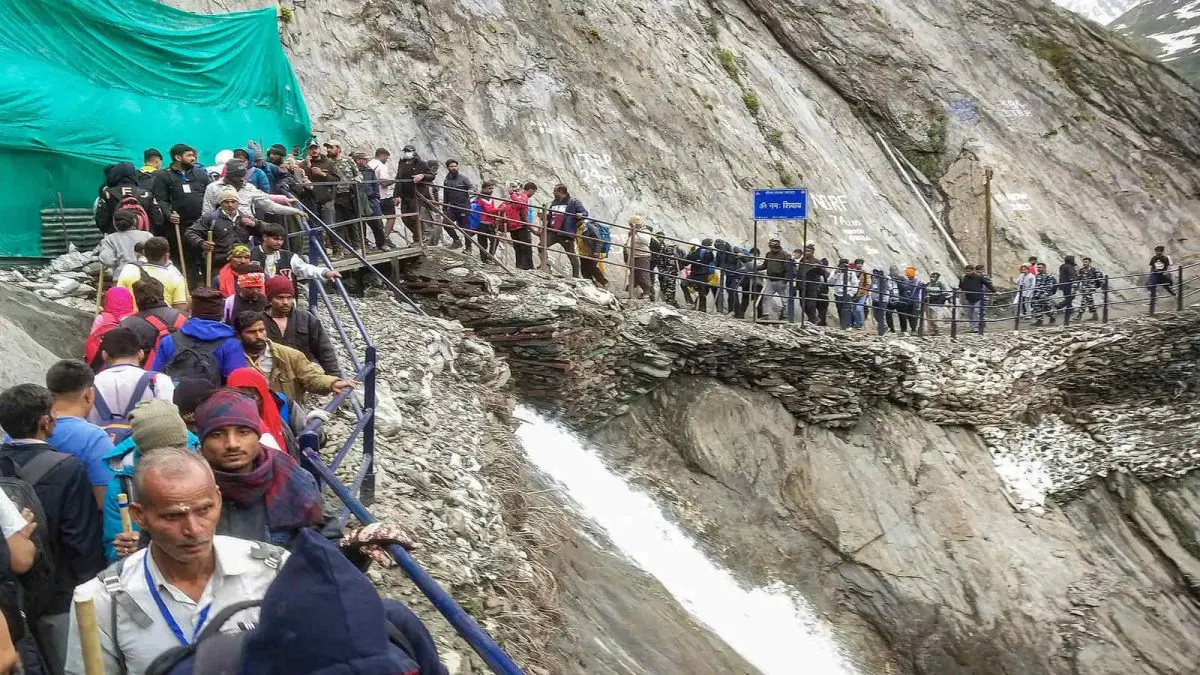
Mountain pilgrimages differ fundamentally from travel in urban environments. Sudden weather changes, altitude sickness, narrow trekking routes and difficult terrain require careful planning and strict adherence to official advisories. Every year, authorities deploy extensive medical teams, disaster response personnel, security forces and volunteers to support pilgrims throughout the yatra.
Following safety instructions is therefore not simply a personal responsibility; it also reduces pressure on emergency response systems operating in demanding mountain conditions. Well-informed travellers are better prepared to complete the pilgrimage safely while allowing rescue and healthcare resources to focus on genuine emergencies.
Equally significant is the role of community participation.
One of the defining characteristics of the Amarnath Yatra has long been the involvement of local residents. Many families, volunteers and businesses assist pilgrims by providing accommodation, transport, food and logistical support. This interaction between visitors and host communities has contributed to the pilgrimage’s broader social and cultural significance, illustrating how tourism and faith-based travel can create opportunities for engagement across regional and cultural boundaries.
For local communities, the pilgrimage is not only an economic event but also an occasion that demonstrates the importance of hospitality in sustaining tourism.
That relationship works in both directions.
Visitors benefit from local knowledge, services and assistance, while communities benefit from tourism-generated livelihoods. Strengthening this reciprocal relationship requires mutual respect, environmental responsibility and recognition that the long-term success of pilgrimage tourism depends upon preserving both the natural environment and community trust.
The discussion surrounding responsible pilgrimage also reflects wider changes occurring within global tourism.
Increasingly, destinations are shifting attention from visitor numbers alone towards the quality and sustainability of tourism. International experience suggests that protecting natural resources, encouraging local participation and supporting community enterprises contribute not only to environmental conservation but also to stronger and more resilient tourism economies.
Kashmir is particularly well placed to benefit from such an approach.
Its tourism appeal rests fundamentally upon its landscapes, forests, lakes, mountains and cultural heritage. Protecting these assets is therefore not merely an environmental obligation but an economic necessity. Every effort to conserve forests, reduce pollution, safeguard water resources and support local entrepreneurship ultimately strengthens the foundations upon which the region’s tourism industry depends.
The Amarnath Yatra illustrates this interconnectedness more clearly than perhaps any other annual event in Jammu and Kashmir.
It demonstrates how faith, ecology, livelihoods and governance intersect within a shared landscape where the actions of visitors, authorities and local communities collectively shape outcomes.
The long-term success of the pilgrimage will depend not only on efficient administration and infrastructure but also on fostering a culture of responsible travel—one in which environmental stewardship, community participation and economic inclusion become integral parts of the journey.
Ultimately, the broader message emerging from the themes associated with the five pledges is that sustainable pilgrimage is a shared responsibility. Governments can provide infrastructure, regulate environmental safeguards and coordinate logistics. Local communities can continue their longstanding tradition of hospitality. Visitors, in turn, can contribute by travelling responsibly, supporting local livelihoods and respecting the fragile ecosystems through which they pass.
For Kashmir, where tourism and the environment are inseparable, that shared responsibility extends well beyond the Amarnath Yatra. It offers a framework for ensuring that economic opportunity, ecological preservation and cultural heritage reinforce rather than compete with one another, allowing one of the Himalayas’ most remarkable landscapes to remain both spiritually significant and environmentally resilient for generations to come.
About the Author
Bilquees Punjabi has a Masters in Computer Applications and approaches journalism not just as storytelling, but as a system – one shaped by algorithms, audiences, and the quiet mechanics of the web. Her interests lie in the evolving world of online journalism, where headlines compete for attention, metrics shape narratives, and clicks, traction, and ads become part of the story itself.