
Bisma Rafiq explores how conserving Kashmir’s indigenous livestock can strengthen food security, climate resilience, and sustainable rural livelihoods in the Himalayan region.
Conserving Kashmir’s indigenous livestock is not merely about preserving native breeds – it is about strengthening food security, climate resilience, rural livelihoods and the future of mountain agriculture.
For centuries, the people of Kashmir have depended upon an intimate relationship with their livestock. Long before modern breeding technologies, commercial poultry and high-yield dairy animals entered the Valley, indigenous cattle, sheep, goats and poultry formed the backbone of rural life. They provided milk, meat, wool, manure, draught power and, perhaps most importantly, resilience. These native breeds evolved alongside the harsh Himalayan climate, adapting naturally to long winters, rugged terrain, scarce fodder and disease challenges that continue to test mountain farming systems today.
Yet, despite their remarkable adaptability, indigenous livestock have steadily receded from the agricultural landscape. The pursuit of higher productivity, coupled with indiscriminate crossbreeding and changing farming practices, has reduced populations of native breeds across Jammu and Kashmir. While improved breeds have undoubtedly enhanced production in certain sectors, they have also exposed farmers to new vulnerabilities, particularly in remote and ecologically fragile regions where commercial livestock often struggle to survive without intensive management.
The recent outreach programme by Sher-e-Kashmir University of Agricultural Sciences and Technology of Kashmir (SKUAST-K) in the remote Gurez Valley offers an important reminder that conservation and development need not exist at opposite ends of the policy spectrum. Instead, conserving indigenous animal genetic resources can become a powerful strategy for ensuring food security, strengthening rural economies and preparing mountain agriculture for an increasingly uncertain climatic future.
Food security is often viewed through the lens of crop production. Discussions frequently focus on rice, wheat, horticulture or vegetable cultivation. However, livestock remains an equally important pillar of nutritional security, particularly in rural and high-altitude communities where agriculture alone cannot meet household dietary requirements.
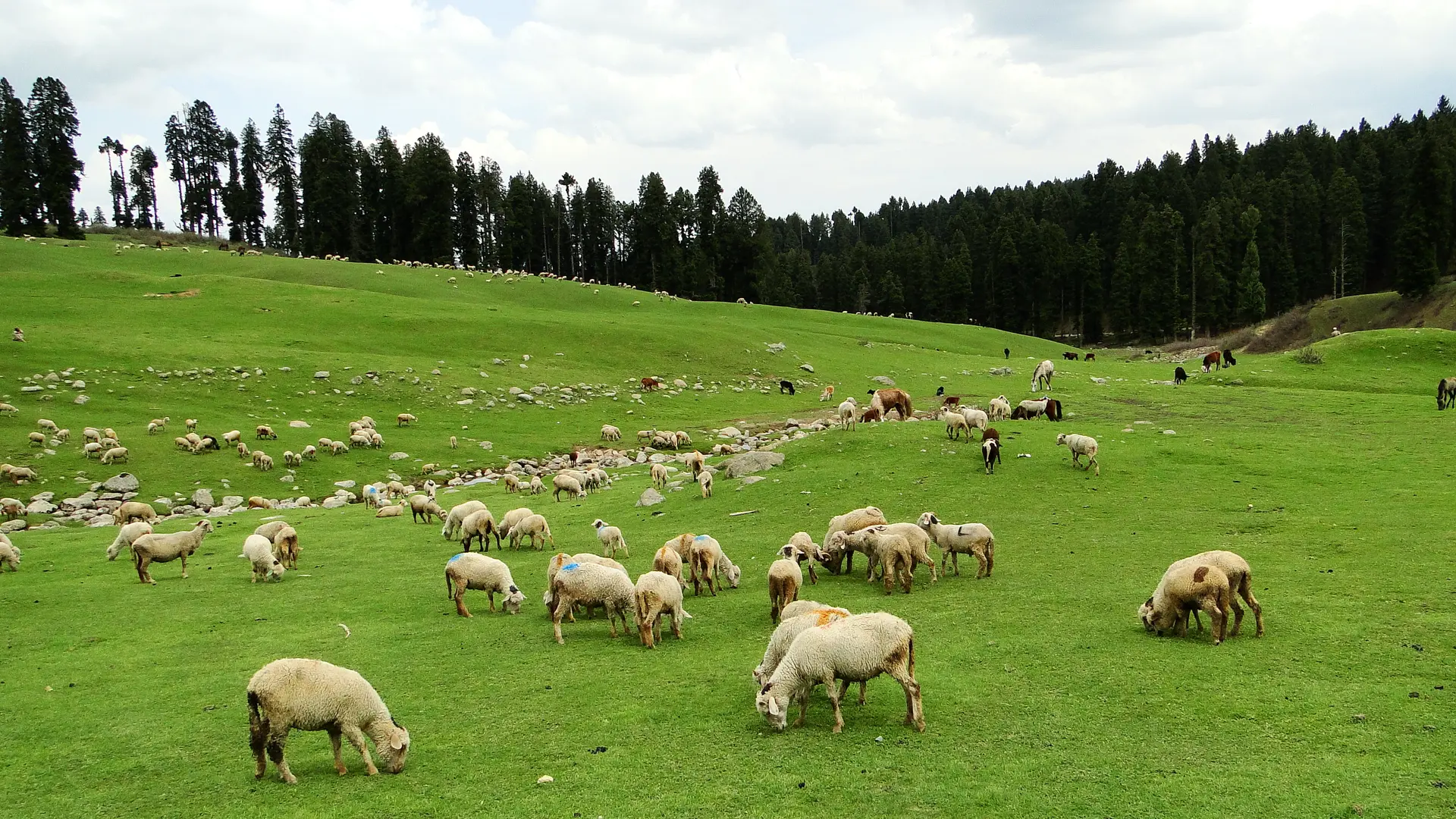
Milk, eggs and meat provide affordable sources of protein and essential micronutrients, especially for children and women. Backyard poultry contributes directly to household nutrition while offering families an additional source of income. Sheep and goats continue to support pastoral communities whose livelihoods depend upon seasonal migration and grazing. Livestock also provides organic manure that sustains soil fertility, reducing dependence on costly chemical fertilisers.
In mountain ecosystems like Kashmir, these interconnected relationships cannot be ignored.
The significance of indigenous breeds becomes even greater in the context of climate change.
The Himalayas are warming faster than many other regions, altering snowfall patterns, shortening winters, affecting pasture availability and increasing the frequency of extreme weather events. Such changes place considerable stress on agricultural systems already constrained by geography and limited resources.
Native livestock possess characteristics that commercial breeds often lack. They are naturally adapted to local climatic conditions, utilise available fodder more efficiently and frequently display greater resistance to endemic diseases. Their ability to survive under extensive grazing systems reduces production costs for small farmers who cannot afford expensive feed, sophisticated housing or intensive veterinary care.
These qualities represent an invaluable biological resource that deserves far greater policy attention.
Conserving indigenous livestock is therefore not an exercise in nostalgia. It is an investment in climate resilience.
Every native breed embodies generations of natural selection and traditional knowledge. Losing such genetic diversity would diminish the options available to future livestock breeding programmes seeking animals capable of adapting to changing climatic conditions.
Scientists across the world increasingly recognise animal genetic diversity as an insurance policy against future uncertainties.
SKUAST-K’s initiative demonstrates how conservation can move beyond laboratories into farming communities themselves.
Distributing indigenous Kashmiri poultry birds under the ICAR-National Bureau of Animal Genetic Resources project is significant because conservation succeeds only when local communities become active participants rather than passive beneficiaries. Farmers remain the true custodians of indigenous genetic resources, and their continued engagement determines whether native breeds survive or disappear.
The programme’s emphasis on scientific breeding, veterinary healthcare and farmer education illustrates another important principle.
Conservation alone is insufficient if it fails to improve livelihoods.
Farmers will naturally choose livestock that provides better economic returns. Therefore, preserving indigenous breeds must go hand in hand with improving productivity through better nutrition, disease management, selective breeding and market access. Scientific intervention should strengthen native breeds rather than replace them.
Equally encouraging is the promotion of backyard poultry farming among women’s self-help groups.
Across rural India, backyard poultry has emerged as one of the most accessible livelihood opportunities for women. It requires relatively low investment, fits comfortably within existing household responsibilities and generates regular income through the sale of eggs and birds. More importantly, it improves household nutrition by ensuring regular access to animal protein.
Empowering rural women through livestock development creates benefits extending well beyond individual households.
Women’s incomes are often reinvested in children’s education, healthcare and nutrition, creating lasting social dividends for communities.
Remote regions such as Gurez particularly illustrate why decentralised livestock development deserves sustained attention.
Geographical isolation frequently limits market access, increases transportation costs and constrains the availability of veterinary services. Under such conditions, resilient indigenous livestock becomes an essential economic asset rather than simply another agricultural enterprise.
Outreach programmes that combine scientific expertise with doorstep veterinary care therefore perform a critical public service.
However, isolated interventions, however valuable, cannot substitute for a long-term policy framework.
Jammu and Kashmir requires a comprehensive indigenous livestock conservation strategy that integrates research institutions, veterinary departments, local communities and policymakers. Breed registration, genetic mapping, cryopreservation of germplasm, community breeding programmes and farmer incentive schemes should become integral components of agricultural planning.
Traditional knowledge also deserves recognition.
Many rural households continue to possess generations of practical experience in breeding, grazing management and animal healthcare. Modern science should complement rather than overlook this accumulated wisdom. Collaborative research involving scientists and farming communities often produces solutions better suited to local realities than externally designed interventions alone.
Marketing presents another opportunity.
Consumers across India increasingly value naturally reared, indigenous and organic food products. Kashmir could develop premium branding for products derived from native livestock, including free-range poultry, organic dairy products, wool and traditional cheeses. Such value addition would provide stronger economic incentives for conservation while opening new market opportunities for rural producers.
Digital technology can also play an important role.
Mobile veterinary advisory services, online livestock health monitoring, digital breed registries and market information platforms can help farmers access scientific knowledge even in geographically isolated areas. Strengthening rural connectivity alongside extension services will allow innovations developed in research institutions to reach the villages that need them most.
Importantly, livestock conservation should not remain confined to agriculture departments alone.
It intersects with biodiversity conservation, rural development, nutrition, women’s empowerment, climate adaptation and sustainable tourism. Visitors increasingly seek authentic rural experiences, creating opportunities for farm tourism that showcases traditional livestock systems alongside Kashmir’s rich cultural heritage.
Educational institutions too have a responsibility.
Agricultural universities, veterinary colleges and schools should encourage greater awareness among younger generations regarding the ecological and economic importance of indigenous breeds. Conservation ultimately depends upon public understanding as much as scientific research.
The Gurez initiative offers an encouraging model precisely because it demonstrates how research, community participation and public institutions can work together toward shared goals.
Its success should inspire similar programmes across Kupwara, Bandipora, Kishtwar, Poonch, Rajouri, Doda and other mountainous districts where indigenous livestock continues to support thousands of households.
As Jammu and Kashmir seeks pathways towards sustainable agricultural growth, policymakers would do well to remember that resilience often resides in resources already present within local communities.
The Valley’s indigenous livestock represents centuries of adaptation, biodiversity and cultural heritage. Protecting that legacy is not merely about preserving the past; it is about securing the future.
In an era marked by climate uncertainty, ecological pressures and changing food systems, investing in native livestock is investing in food security itself. Healthy indigenous breeds mean healthier ecosystems, stronger rural economies and more resilient farming communities. They reduce dependence on costly external inputs while preserving the biological wealth that has sustained Himalayan agriculture for generations.
The lesson emerging from Gurez is therefore both simple and profound: conservation and development are not competing objectives. When guided by science and supported by communities, they become partners in building a food-secure, climate-resilient and economically stronger Kashmir. The future of mountain agriculture may well depend not on introducing what is new, but on rediscovering and strengthening what has always belonged to these mountains.
About the Author
Bisma Rafiq is interested in human resources and wants to improve journalism from the human resources point of view. She is also a passionate story teller.