
In the paperwork of a city administration, an illegal building can look deceptively ordinary: a plan submitted, a file moved from one desk to another, an approval granted or an objection overlooked. But when the people charged with enforcing those rules are accused of helping circumvent them, the question becomes larger than a single structure.
That is the allegation at the heart of a corruption case now before a special court in Srinagar, where the Anti-Corruption Bureau has filed a chargesheet against 10 people, including seven officials of the Srinagar Municipal Corporation, accusing them of abusing their official positions to facilitate unauthorised construction in the city.
The chargesheet, filed Monday before the Special Judge, Anti-Corruption, Srinagar, stems from an investigation into a case registered as FIR No. 06/2023 at the ACB police station in Srinagar. Seven of the accused are government officials associated with the municipal corporation; the remaining three are private individuals, the bureau said.
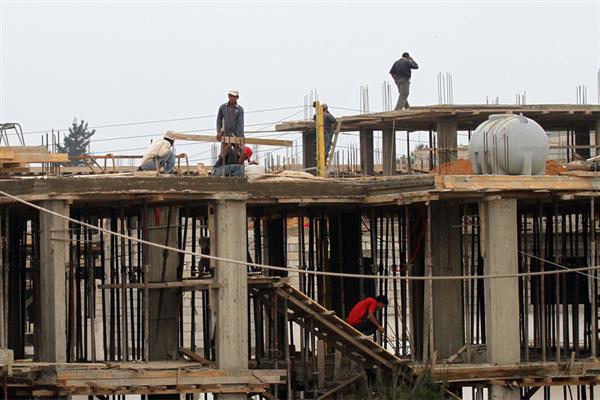
The case centres on Ward No 28 in Batamaloo, near Tiny Hearts School in Tengpora, where the bureau alleges that construction was carried out without the required authorisation.
According to the ACB, the alleged irregularity was not simply the result of private individuals building without permission. Its investigation, the bureau said, uncovered a criminal conspiracy involving municipal officials and a private beneficiary, identified as Reyaz Ahmad Dar, to facilitate the construction.
The allegations place the conduct of public officials at the centre of the case. Municipal authorities are among the institutions responsible for regulating construction in a rapidly changing city, where buildings rise alongside roads, markets and residential neighbourhoods and where decisions taken inside government offices can have consequences well beyond the property named in a file.
The bureau said it relied on oral and documentary evidence gathered during its investigation and that the material established a link between the accused officials and private beneficiaries in facilitating the alleged unauthorised construction.
The chargesheet represents a formal step in that investigation, rather than a finding of guilt. The court will now consider the allegations and the evidence presented by the prosecution. All of the accused are presumed innocent unless proven guilty.
At the centre of the ACB’s case is an accusation familiar to anti-corruption agencies around the world: that public authority was allegedly used not to enforce the rules, but to help someone evade them.
That distinction matters.
Construction regulation is, on paper, an administrative process. Buildings require permissions, plans must comply with applicable rules, and officials are expected to act within the authority given to them. When that system functions, the process is largely invisible to the public. When it fails, the consequences can become physical — a structure that should not have been built, a change to land use, or development taking place without the safeguards intended by planning authorities.
The ACB’s allegation is that the officials named in this case did more than fail to prevent an unauthorised structure. It says they entered into a conspiracy with a private beneficiary to facilitate it.
The bureau did not, in the material announcing the chargesheet, describe the precise role allegedly played by each of the seven officials. Nor did it publicly establish through the chargesheet itself that the construction had caused a particular injury to neighbouring residents or the wider public. Those questions will form part of the judicial process.
What the agency has asserted is narrower but significant: that its investigation found evidence connecting government officials with private beneficiaries in the alleged facilitation of construction that was not authorised.
For a municipal institution, such allegations strike at the principle behind regulation itself. Rules governing construction are meaningful only if they are applied consistently, regardless of who owns the property or who seeks permission to build.
The alleged construction is located in Ward No 28 of Batamaloo, near Tiny Hearts School in Tengpora.
The location gives the case a concrete setting, but the chargesheet is fundamentally about conduct rather than the building alone. The ACB’s investigation examined how the construction was allegedly enabled and whether public officials used their positions to assist those who stood to benefit from it.
Reyaz Ahmad Dar is identified by the bureau as the private beneficiary at the centre of the alleged conspiracy. Two other private individuals have also been chargesheeted.
The ACB said the case involves offences under several laws, including the J&K Prevention of Corruption Act, 2006, the Ranbir Penal Code, the Registration of Documents Act and the Evacuees (Administration of Property) Act, 1949.
The combination of statutes reflects the range of allegations that can arise when a construction dispute intersects with questions of official conduct, documentation and property.
The chargesheet follows an investigation that began with the registration of the FIR in 2023. For the government officials, prosecution could proceed only after the required sanction was obtained from the government. The ACB said that sanction had been granted, allowing the bureau to formally prosecute the public servants and place its findings before the court.
That procedural step is important because the filing of a chargesheet changes the status of the investigation without determining its outcome. The prosecution has put forward its allegations and evidence. The defence will have an opportunity to contest them. The court will assess what can be established under law.
Srinagar’s urban landscape has changed substantially over time, with construction extending across established neighbourhoods and newer areas alike. But the ACB’s case is not an indictment of urban growth itself. It is an allegation about the way that growth was allegedly permitted to occur in one particular instance.
That distinction is essential.
Cities depend on rules that are often mundane but consequential: where a structure can be built, how it can be built, what documentation is required and which authority can grant permission. Those rules can appear bureaucratic until they are ignored. Then the administrative decision becomes part of the physical landscape.
The allegations against the SMC officials therefore raise a broader institutional question: what happens when the enforcement mechanism becomes vulnerable to the interests it is supposed to regulate?
The ACB’s answer, in this case, has been to pursue the officials alongside the alleged private beneficiaries.
Anti-corruption investigations involving public servants often hinge on evidence of intent and action rather than simply on the existence of an irregularity. A building can be unauthorised without every official connected to the relevant administrative process having participated in wrongdoing. That is why the bureau’s allegation of a criminal conspiracy is more consequential than an accusation of administrative oversight.
The agency says its investigation established a link between the government officials and private beneficiaries. The court will ultimately determine whether the evidence supports that claim.
The chargesheet moves the case from the investigative stage into the judicial process.
For the ACB, the filing is the culmination of the investigation into the 2023 FIR. For the accused, it is the beginning of a legal contest in which the prosecution must establish its allegations. The difference is fundamental: a chargesheet is an accusation supported by material collected during an investigation, not a conviction.
The bureau said its case is based on oral and documentary evidence. Such evidence will now be examined within the framework of the court proceedings.
The seven municipal officials have been accused of using their official positions to facilitate the alleged illegal construction. The three private individuals face allegations arising from the same case. The identities and specific roles of all seven officials were not detailed in the information provided by the ACB announcing the filing.
The case will therefore turn not simply on whether unauthorised construction occurred, but on the evidence surrounding how it was allegedly facilitated, who participated, and whether the conduct meets the legal standards of the offences charged.
That is a determination reserved for the court.
The significance of the case ultimately extends beyond the walls of the structure in Batamaloo.
Municipal officials are gatekeepers. Their signatures, inspections, records, and decisions determine whether regulations are applied in practice. If an official improperly helps a private party bypass those requirements, the alleged benefit may belong to one person, but the institutional damage can be wider.
It can weaken confidence in the rules themselves.
For residents, the legitimacy of a planning system rests partly on the expectation that the same requirements apply across properties and individuals. For builders and property owners, predictable regulation is essential to making investment decisions. And for government, enforcement depends on the credibility of the people entrusted with it.
The ACB’s prosecution is an assertion that those responsibilities cannot be traded for private benefit.
But the agency’s allegations are still allegations.
The Special Judge, Anti-Corruption, Srinagar, will now examine the case. The prosecution must establish its claims through admissible evidence, while the accused will have the opportunity to defend themselves. Until the judicial process is complete, no conclusion of guilt can properly be drawn.
What the chargesheet does establish is that a matter that began with alleged unauthorised construction in a Srinagar neighbourhood has become a test of something larger: whether the officials responsible for administering the city’s rules themselves followed the limits of public office.
The building at the centre of the case may be made of concrete and steel. The case before the court is about something less visible — the line between public authority and private interest, and whether, in one corner of Srinagar, that line was crossed.
About the Author
Moien Darial writes with the precision of an analyst and the sensitivity of a storyteller, exploring global economic shifts and emerging technologies.