
Kashmir Impulse Desk
Leh, Oct 22
The Ladakh administration has defended its decision to cancel a land allotment to an institute founded by climate activist Sonam Wangchuk, telling the High Court of Jammu and Kashmir and Ladakh that the lease had lapsed because mandatory payments were not made and a formal deed was never executed.
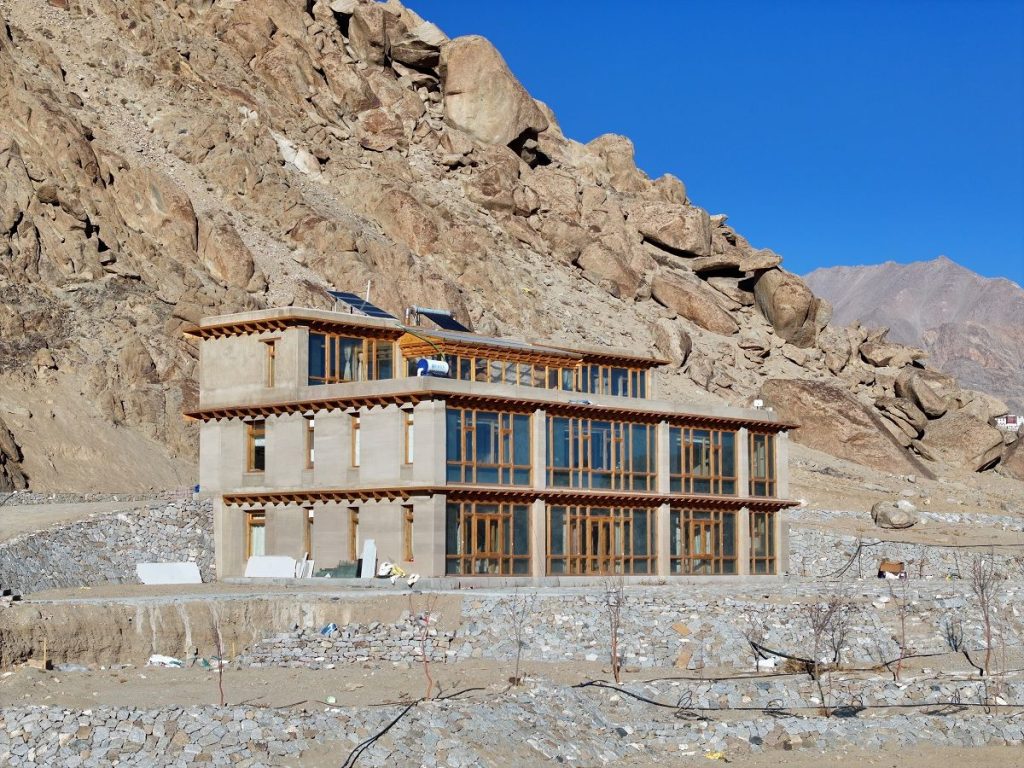
In a 136-page affidavit, Leh Deputy Commissioner and Ladakh Autonomous Hill Development Council chief executive officer Romil Singh Donk said the 40-year allotment of 1,076 kanals and one marla at Phyang Thang to the Himalayan Institute of Alternative Learning (HIAL) had lapsed on May 5, 2019.
The administration said the original allotment, issued on May 5, 2018, required the institute to execute a lease deed and deposit the land premium within one year.
It said neither requirement had been met.
The affidavit was filed in response to HIAL’s petition challenging an August 21, 2025, cancellation order.
The administration urged the court to dismiss the petition, describing it as lacking merit and barred by delay.
HIAL chief executive Gitanjali Angmo denied the administration’s claims when approached for comment.
The administration said HIAL had not paid land premium or ground rent and had failed to secure formal possession through the local revenue authorities.
It also cited an October 2026 certification by Ladakh’s Higher Education Department stating that HIAL was not a recognised university and that its courses were not affiliated with the University of Ladakh or another statutory body.
The affidavit raised separate allegations concerning the Students’ Educational and Cultural Movement of Ladakh (SECMOL), founded by Wangchuk.
It said the organisation occupied 124 kanal of state land at Phey without formal allotment or payment of an assessed premium of Rs 8 crore.
The administration also referred to complaints by residents, the Phyang Welfare Society and village officials concerning alleged broken promises over the proposed university, the diversion of traditional irrigation streams for ice-stupa experiments and alleged encroachment on additional land.
These allegations were presented by the administration and were not independently established in the material provided.
The affidavit further cited the cancellation of SECMOL’s foreign contribution registration in September 2025 and Wangchuk’s detention under the National Security Act, which was revoked in March 2026.
It also referred to violent protests in Leh in September 2025.
The administration argued that the history of disputes over public land and the institute’s failure to meet lease conditions justified cancellation.
It said public land should be managed in the public interest and asked the court to impose costs on the petitioner.
It suggested that the land could instead be allocated to national educational institutions, including a Sainik School, an Eklavya Model Residential School or Sindhu Central University.
The affidavit also cited earlier administrative records and warnings concerning Wangchuk and SECMOL dating back to 2006 and 2007.
The court’s decision on HIAL’s challenge was not included in the material provided.