
Kashmir Impulse Desk
Srinagar, Oct 23
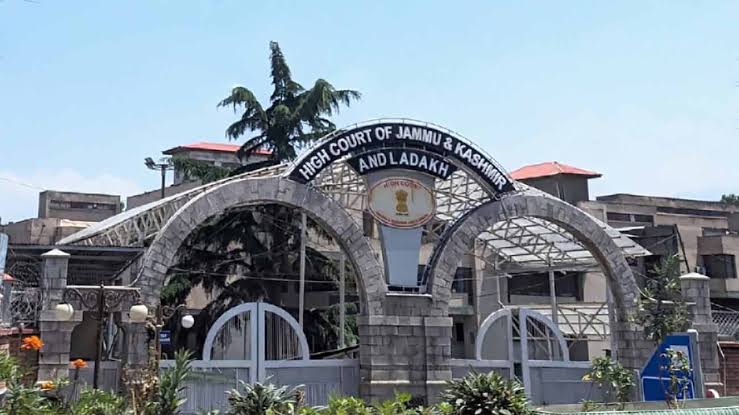
The High Court of Jammu and Kashmir and Ladakh has upheld a rule restricting access to certified copies of Border Security Force trial proceedings before confirmation of a finding and sentence, ruling that the restriction does not by itself violate the constitutional right to a fair trial.
A division bench comprising Chief Justice Pushpendra Singh Bhati and Justice M.A. Chowdhary set aside a single-judge ruling dated April 28, 2022, that had declared Rule 129 of the BSF Rules, 1969, unconstitutional under Article 21 of the Constitution.
The bench delivered its judgment on October 22 after reserving its decision on September 24.
It allowed an appeal brought by the Union Home Ministry, BSF officials and other authorities.
The case arose from the killing of Head Constable Chander Bhan at a BSF campus in Bandipora on November 27, 2017.
Rovinder Singh, a BSF constable, was tried by a General Security Force Court for murder and for allegedly leaving his picket without orders from superior officers.
The court found Singh guilty and sentenced him to life imprisonment and dismissal from service, subject to statutory confirmation.
During the trial, Singh sought certified copies of the charge sheet, related documents and prosecution witness statements.
His request was rejected under Rule 129, which provides for copies after confirmation of the finding and sentence.
Singh challenged the restriction, arguing that denial of the documents impaired his ability to prepare an effective defence.
The single judge accepted his plea, struck down the rule and directed the trial proceedings to resume from the conclusion of prosecution evidence, with the relevant copies supplied to him.
The division bench overturned that decision, holding that the rule regulates when certified copies may be obtained rather than eliminating access to the trial record.
It said the right to inspect proceedings at reasonable times, together with other statutory safeguards, could satisfy the requirements of natural justice.
Article 21 guarantees a fair opportunity to defend oneself but does not invariably require certified copies to be provided at every stage of a trial, the bench said.
The court also referred to Section 87 of the BSF Act, which applies the Indian Evidence Act to Security Force Court proceedings subject to the special legislation.
It said the BSF framework provides for inspection of proceedings, representation and assistance during trial, confirmation and review of findings and sentences, and further statutory remedies.
The bench noted that Article 33 of the Constitution empowers Parliament to restrict or modify the application of fundamental rights to members of the armed forces and forces charged with maintaining public order, where necessary to ensure the proper discharge of duties and maintenance of discipline.
The judges said no material had been presented to show that Singh had been prevented from inspecting the record, cross-examining a material witness or advancing a specific defence because copies had not been supplied.
The possibility that copies might assist a defence was not, by itself, sufficient to invalidate a rule forming part of a special statutory procedure, the bench held.
It declared Rule 129 constitutionally valid and ruled that withholding certified copies before confirmation of the finding and sentence does not, on its own, violate Article 21.
The bench clarified that its judgment does not determine Singh’s guilt or punishment and directed the competent authorities to proceed in accordance with the BSF Act and Rules.
Central government counsel Hakim Aman Ali appeared for the BSF authorities.