



The Western Himalayas’ alpine grasslands may seem timeless, but fragile ecosystems face growing pressure. Tabish Khan reports.
In the high country of Kashmir, the landscape changes almost imperceptibly.
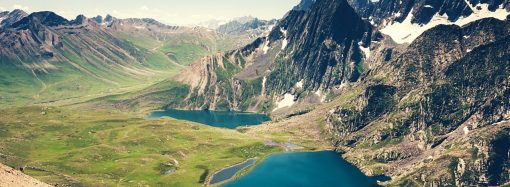
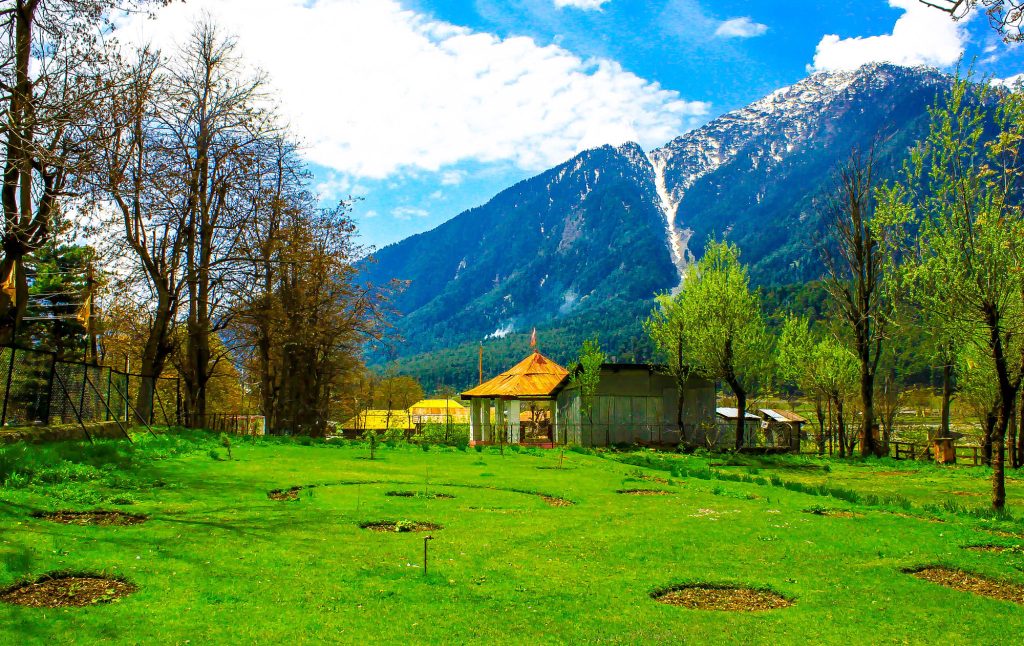
The road rises. The air thins. The trees become fewer, then disappear altogether, giving way to open slopes and rolling meadows where the horizon seems unusually close. In summer, alpine grasslands spread across the mountains like a green carpet, interrupted by streams, rocks and patches of wildflowers. To a visitor, they can appear almost indestructible – an expanse of wilderness with enough sky above it to make human concerns seem small.
But alpine grasslands are not empty spaces.
They are living systems, among the most delicate and ecologically important landscapes of the Western Himalayas. They hold water, support biodiversity, provide seasonal grazing grounds and sustain communities whose lives have long been shaped by the rhythms of the mountains.
And like many things that appear permanent in Kashmir, they are changing.
The University of Kashmir has now brought scientists, policymakers, forest officials and local stakeholders together in an effort to confront that change. A three-day workshop, titled “Rehabilitating Alpine Grasslands of the Western Himalayas: Connecting Science, Policy and Communities”, is examining how these fragile ecosystems can be conserved and restored before the pressures upon them become irreversible.
The workshop, organised by the university’s Centre for Biodiversity and Taxonomy in collaboration with the G B Pant National Institute of Himalayan Environment, CSIR-Institute of Himalayan Bioresource Technology, University of Ladakh and HNB Garhwal University, is sponsored by the Ministry of Environment, Forest and Climate Change under the National Mission on Himalayan Studies.
The institutional list is long. The problem is longer.
Alpine grasslands do not recognise the boundaries between departments, universities or administrative jurisdictions. Nor do the consequences of their degradation remain confined to the slopes where it begins. Water absorbed and released by mountain ecosystems eventually travels downstream. Biodiversity lost in one landscape can alter ecological relationships elsewhere. A damaged grazing system can affect communities far beyond the immediate pasture.
The mountains, in other words, are connected. So must be the response.
The workshop’s premise is straightforward: restoring alpine grasslands will require more than scientific papers or government notifications. It will require evidence-based conservation, practical ecosystem management and the participation of the communities who live in and around these landscapes.
That last part may be the most difficult – and the most important.
For generations, mountain communities have possessed a knowledge of the landscape that rarely appears in formal conservation plans. They know when the snow recedes, when the grass emerges, where animals graze, which slopes hold water and how the seasons have shifted.
Any attempt to restore alpine ecosystems without listening to the people who depend upon them risks creating a conservation model that looks convincing on paper and fails in practice.
The challenge is to bring two kinds of knowledge into conversation: the systematic language of science and the lived experience of the mountain.
At the University of Kashmir, that conversation is being framed as a connection between science, policy and communities.
Vice Chancellor Nilofer Khan said protecting Himalayan ecosystems would require sustained cooperation among academic institutions, government agencies and local communities.
“Universities have an important role in generating scientific knowledge that supports informed environmental policies and sustainable resource management,” she said, stressing the importance of collaborative research and practical solutions to ecological challenges.
There is something fitting about a university taking on this role.
The Himalayas are often described in superlatives – youngest mountain range, highest peaks, immense glaciers, extraordinary biodiversity. But their future may depend less on the dramatic summits that dominate photographs than on the quieter ecosystems beneath them.
Alpine grasslands rarely receive the same attention as glaciers.
They do not produce the same spectacular images. Yet their importance is profound.
These high-altitude meadows are part of a larger ecological machinery that regulates water, supports plant and animal life and sustains the seasonal economies of mountain communities. They are also vulnerable precisely because their apparent abundance can be misleading. A landscape that stretches endlessly across a mountainside may take years to recover once damaged.
The pressures are not always dramatic. Sometimes they arrive gradually.
A changing climate alters temperature and precipitation patterns. Shifts in snowfall affect the timing of spring. Grazing pressures can change. Tourism expands into previously less-accessible areas. Roads and infrastructure open new corridors into remote landscapes. Waste follows people into places that once seemed beyond its reach.
The result is a form of ecological erosion that can be difficult to see until it has become significant.
Tawheed Ahmad Deva, Regional Wildlife Warden, Kashmir, highlighted the growing environmental pressures on alpine ecosystems and underlined the importance of community participation in conserving Himalayan biodiversity.
His point goes to the heart of the problem.
Conservation is often imagined as an act of protection: draw a boundary, restrict access, enforce a rule.
But landscapes inhabited and used by people cannot always be preserved through exclusion alone.
The question is not simply how to keep people out of alpine ecosystems. It is how to ensure that human use does not destroy the ecological processes upon which both nature and communities depend.
The answer lies somewhere between preservation and use. It lies in management. And management, in turn, depends on knowledge.
This is why the workshop’s emphasis on interdisciplinary research matters. Alpine ecosystems do not fit neatly within a single academic discipline. Their conservation involves ecology, botany, wildlife science, hydrology, climate studies, sociology, economics and public policy.
A scientist may measure vegetation change. A forest official may observe pressure on habitats. A policymaker may consider regulation. A villager may describe a spring that no longer flows as it once did. Each sees a different part of the same landscape.
The task of conservation is to make those observations speak to one another.
The organising secretary of the workshop, Anzar Ahmad Khuroo, said the programme was designed to examine the ecological importance of alpine grasslands, the threats they face and practical approaches to rehabilitation through scientific research and engagement with stakeholders.
The word rehabilitation deserves attention. It suggests that conservation is no longer only about protecting what remains untouched. In many places, there may already be damage to repair. Restoration, however, is not the same as reconstruction.
A mountain meadow cannot simply be replanted like a garden. Its ecological character is shaped by altitude, soil, water, temperature, native vegetation and seasonal cycles. The objective cannot be to create a landscape that merely looks green. It must be to restore the functions that make the ecosystem alive.
That means understanding what has been lost, why it was lost and what conditions are necessary for recovery.
It also means accepting that nature does not work according to administrative deadlines.
A workshop may last three days. An ecosystem may take decades to heal.
This is one of the central tensions in environmental policy. Governments operate through schemes and projects, often with defined timelines and measurable outputs. Mountains operate on a different clock.
A restored grassland may not produce an impressive result within a financial year. A conservation programme may succeed precisely because its greatest achievement is something that does not happen – a spring that continues to flow, a species that does not disappear, a slope that does not erode.
The value of conservation is often measured by the disasters it prevents. That makes it easy to underestimate.
The National Mission on Himalayan Studies, under which the workshop is sponsored, reflects the growing recognition that the Himalayas require sustained scientific attention. But research becomes meaningful only when it travels beyond the laboratory and into policy.
Good science can tell policymakers what is happening. Good policy must decide what to do about it. And effective conservation must determine whether those decisions work on the ground. The missing link, too often, is the community.
Local people are sometimes invited into conservation projects only after the important decisions have already been made. Their role becomes one of compliance rather than participation.
A different approach would treat communities as partners from the beginning.
That could mean involving local residents in monitoring ecosystems, documenting biodiversity, identifying ecological changes and designing restoration strategies. It could mean creating livelihood opportunities linked to conservation rather than asking communities to bear the costs of environmental protection without sharing its benefits.
In the Himalayas, this distinction is critical.
A conservation policy that protects an alpine meadow but impoverishes the people who depend upon it will eventually face resistance. A policy that combines ecological restoration with sustainable livelihoods has a better chance of enduring.
The future of alpine grasslands, therefore, may depend as much on economics as ecology. The mountains do not exist in isolation from the people who inhabit them. Nor should conservation.
The workshop’s three-day programme includes expert lectures, training sessions, technical presentations and interactive discussions, alongside field-oriented deliberations on biodiversity conservation, ecological restoration and sustainable management.
The more difficult task begins afterwards.
Can the research inform a policy? Can the policy change behaviour? Can the community see a benefit? Can the ecosystem recover?
These questions are harder to answer than any technical presentation. But they are the questions that will determine whether restoration succeeds.
There is also a larger lesson in the effort to conserve Kashmir’s alpine grasslands.
The environmental story of the Himalayas is often told through crisis: melting glaciers, shrinking snowfields, floods, landslides and extreme weather. Those threats are real, but ecological change is also being written in quieter places – in the gradual alteration of grasslands, the disappearance of native plants, the changing behaviour of wildlife and the weakening of ecosystems that once seemed permanent.
The crisis is not always spectacular. Sometimes, it is simply the slow loss of resilience.
An ecosystem becomes less able to absorb pressure. A drought that would once have been temporary becomes more damaging. A disturbed slope takes longer to recover. A species loses part of its habitat. A community finds that an old resource is no longer reliable.
By the time the change becomes visible to everyone, it may already be difficult to reverse.
This is why conservation must begin before the landscape reaches the point of collapse.
Alpine grasslands may not be the most famous symbols of Kashmir. They do not appear on postcards with the frequency of Dal Lake or snow-covered peaks. Yet their future is tied to the future of the larger Himalayan system.
The mountains send water downhill. The grasslands help hold it. The communities live between the two.
To understand that relationship is to understand why restoration cannot be reduced to planting vegetation or declaring protected areas. It is a question of how humans choose to live with landscapes that ultimately sustain them.
Perhaps the most hopeful aspect of the University of Kashmir initiative is that it does not place science, government and communities on opposite sides of the conservation question.
It places them in the same sentence. That may sound modest. It is not.
Environmental problems often persist because responsibility is fragmented. Scientists produce evidence. Policymakers formulate rules. Forest officials enforce them. Communities adapt – or resist.
The mountain, meanwhile, continues to change.
Bringing these worlds together does not guarantee success. But without such a connection, success is unlikely.
The alpine grasslands of the Western Himalayas do not need another declaration that they are precious. Everyone already knows that.
What they need is a sustained effort to understand how they function, how they are changing and how they can be restored without disconnecting the people who depend upon them from the landscapes they call home.
The workshop in Srinagar is one step in that direction.
The larger journey will be measured not in conferences but in seasons. In the return of native grasses. In the recovery of a degraded slope. In the continued flow of a mountain spring. In the presence of wildlife where it had begun to disappear. In the willingness of a community to see conservation not as a restriction imposed from outside, but as an investment in its own future.
The Himalayas have always appeared permanent to those who look at them from below. But permanence is an illusion.
Mountains change. Grasslands change. Climate changes. And the relationship between people and the landscape changes with them.
The question now is whether Kashmir can change its approach to conservation quickly enough to keep pace.
The alpine meadows are still there. The opportunity to save them is, too.
But like the brief summer that transforms the high mountains into green, flowering worlds, that opportunity may not last forever.
About the Author
Tabish Khan is a multimedia journalist and postgraduate in Convergent Journalism, working across text, video, social media, and digital storytelling.