




Every recruitment cycle that takes years to conclude keeps aspirants trapped in uncertainty.
The JKPSC’s 67th Annual Report offers encouraging evidence that recruitment in Jammu and Kashmir can be made faster, more transparent and more efficient without compromising merit. The real challenge now is to ensure that these reforms translate into a sustained reduction in the time taken to fill vacancies.
The numbers underline the scale of the task. During 2025-26, the Jammu and Kashmir Public Service Commission made 1152 selections against 1263 posts referred to it. It conducted 52 written tests and preliminary examinations, two mains examinations and three departmental examinations. It also held 29 Departmental Promotion Committee meetings and cleared 508 officers for promotion. These are significant achievements, particularly given the volume of applications – 94,546 candidates for the 1263 posts.
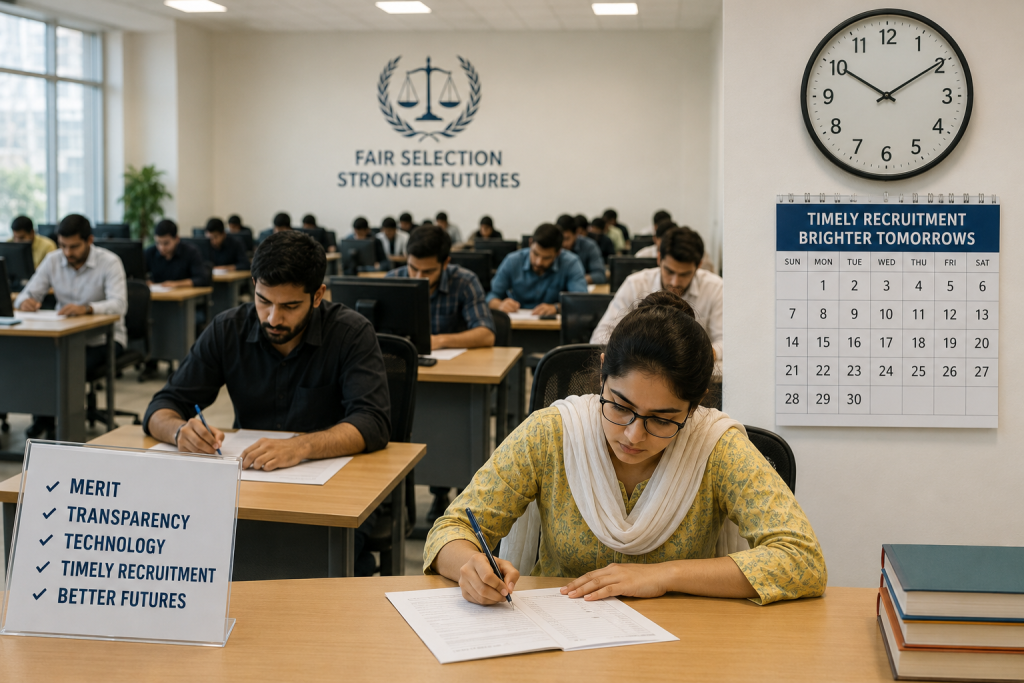
Yet, behind every vacant post is a human story. For thousands of young people in Jammu and Kashmir, government recruitment is not simply an administrative exercise. It is a pathway to employment, economic stability and dignity. Every recruitment cycle that takes years to conclude keeps aspirants trapped in uncertainty. Many candidates spend their most productive years preparing for examinations, repeatedly appearing for tests and waiting for results, only to find that another recruitment process has begun before the previous one is fully completed.
This is why the emphasis on accelerated selection timelines by the Jammu and Kashmir Public Service Commission deserves particular attention. The adoption of 100 percent written-examination-based recruitment, the introduction of On-Screen Evaluation and SMS-based communication are welcome steps. Technology can significantly reduce delays, minimise human error and improve transparency. But technology must be accompanied by institutional discipline and clearly defined timelines.
The government and recruiting agencies must work together to ensure that vacancies are identified and referred on time. Departments should not sit on vacant positions for months or years. Recruitment rules must be updated promptly, requisitions should be sent without unnecessary procedural delays and examinations should be scheduled through predictable annual recruitment calendars wherever possible.
The same urgency is needed in the conduct of examinations and declaration of results. A candidate who clears an examination should not have to wait indefinitely for the next stage. Document verification, interviews, final selection lists and appointment orders must follow within a reasonable and publicly stated timeframe. If there are unavoidable legal or administrative complications, candidates deserve to be informed rather than left to rely on speculation and rumours.
There is also a strong case for greater coordination between the JKPSC and other recruiting bodies. The objective should be to create a recruitment ecosystem in which vacancies across different cadres are processed simultaneously, wherever feasible, rather than allowing gaps between one cycle and the next. A centralised vacancy-monitoring mechanism could help track posts from the moment they become vacant until the selected candidates actually join.
The JKPSC’s performance during 2025-26 demonstrates that reform is possible. The Commission has shown that transparency and speed need not be competing priorities. The task now is to institutionalise this momentum.
For Jammu and Kashmir, where educated youth continue to look towards public employment amid limited opportunities in the private sector, timely recruitment is more than an administrative necessity. It is an economic and social imperative. A vacant post is not merely a vacant post; it represents a lost opportunity for an eligible young person.
The message from the 67th Annual Report should therefore be clear: recruitment must not only be fair and transparent – it must also be fast. The government and recruiting agencies must make timely filling of vacancies a priority, because for an aspirant waiting for a job, every delayed year is a year that cannot be recovered.