

Tunnel plans for Sadhna and Razdan Passes aim to end winter isolation in J&K’s remote border valleys. Bisma Rafiq reports.
For generations, winter in Jammu and Kashmir’s remote border regions has meant more than cold, snow and difficult weather. For communities living in valleys such as Tangdhar and Gurez, the arrival of heavy snowfall can also mean months of isolation, as mountain passes close and road connectivity becomes uncertain.
Now, plans for two major tunnel projects are moving forward, offering the possibility of transforming year-round access to some of the region’s most remote and strategically important areas.
The Centre has advanced the process for the proposed Sadhna Tunnel on the Kupwara-Tangdhar section of National Highway-701, while consultancy bids have been invited for preparing a detailed project report for a tunnel beneath Razdan Pass to improve access to Gurez.
The developments were disclosed by Union Minister for Road Transport and Highways Nitin Gadkari in a written reply in the Rajya Sabha to a question from lawmaker Chowdhary Muhammad Ramzan.
The movement of the projects from planning towards detailed technical and consultancy stages marks an important step in a long process that could eventually reduce the dependence of border communities on seasonal mountain routes.
For Tangdhar, consultancy services for preparing the detailed project report for the proposed Sadhna Tunnel have already been awarded. The tunnel is planned on the Kupwara-Tangdhar section of National Highway-701, a route that serves a strategically significant area close to the Line of Control.
For Gurez, the process has also moved ahead, with the government inviting bids for consultancy services to prepare a DPR for a proposed tunnel beneath Razdan Pass.
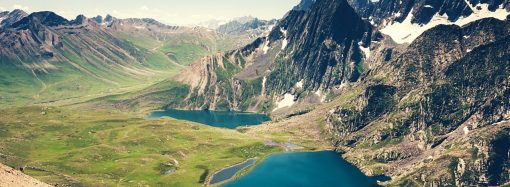
The significance of the proposed Razdan Pass tunnel lies in the geography of Gurez itself. Nestled deep within the mountains, the valley remains vulnerable to prolonged isolation during winter, when heavy snowfall makes the Razdan Pass route difficult or impossible to traverse for extended periods.
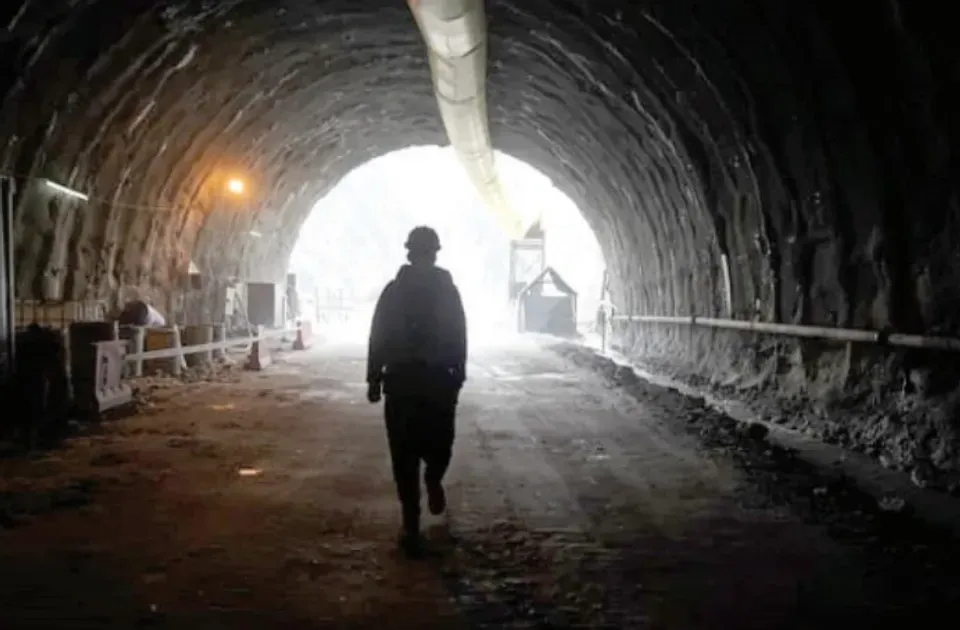
A tunnel beneath the pass could potentially offer a more reliable alternative to the seasonal road, creating the possibility of substantially improving access to the valley throughout the year.
For residents, however, the importance of connectivity goes far beyond convenience.
A road is a lifeline in a remote Himalayan region. It determines whether essential supplies can reach communities, whether students can travel, whether government services can function normally and whether patients can access specialised medical care.
The consequences of prolonged isolation are particularly serious in the healthcare sector.
The government has stated that, during periods when roads remain closed for extended periods, critically ill patients from Gurez can be evacuated by helicopter or air to tertiary healthcare facilities outside the valley. Such evacuations are coordinated by the district administration and health authorities.
While air evacuation provides a vital emergency lifeline, it is not a substitute for dependable road connectivity.
Helicopter operations are inherently dependent on weather conditions, visibility and operational availability. A tunnel that allows uninterrupted surface connectivity could therefore have a transformative impact on emergency healthcare, particularly during the harsh winter months.
The Centre is also supporting healthcare infrastructure in the region under the Pradhan Mantri-Ayushman Bharat Health Infrastructure Mission.
Block Public Health Units have been sanctioned at Dawer in Gurez, Tangdhar and Teetwal. In addition, a primary health centre has been sanctioned at Sheikhpora, along with a new type primary health centre at Bhagote.
The development of healthcare facilities and improvement in road connectivity are closely linked. Medical infrastructure can function most effectively when doctors, medicines, equipment and patients can move through a reliable transportation network.
In remote border areas, connectivity also has a strategic dimension.
The valleys of Tangdhar and Gurez lie in sensitive border regions where infrastructure is closely connected to national security and defence logistics. Reliable roads and tunnels can improve the movement of personnel and essential supplies while strengthening the resilience of communities living in frontier areas.
At the same time, better connectivity can help integrate remote populations more closely with the wider economic and administrative systems of Jammu and Kashmir.
Yet the road to a completed tunnel is a long one.
The current developments relate to consultancy work and the preparation of detailed project reports. A DPR is an essential stage in determining the technical feasibility, alignment, engineering requirements, costs and other considerations associated with a major infrastructure project.
For the Sadhna Tunnel, consultancy services for the DPR have been awarded. For the Razdan Pass tunnel, bids have been invited for consultancy services.
The movement of these processes is therefore significant, but it should also be understood in the context of the time required to complete technical studies, approvals, tendering and construction.
The government has also clarified an important administrative aspect concerning connectivity in the region. Gurez and Marwah-Warwan do not lie on national highways and, therefore, fall outside the direct responsibility of the Ministry of Road Transport and Highways for national highway infrastructure.
This distinction is important because the responsibility for roads in Jammu and Kashmir is divided among different agencies and departments.
In the absence of permanent tunnel connectivity, authorities currently rely on snow clearance operations during winter to keep national highways and roads maintained by the Border Roads Organisation open wherever possible.
Such operations remain essential for maintaining access across the region. But snow clearance has obvious limitations in areas that experience heavy and persistent snowfall. Roads can be reopened after snowfall, only to be blocked again by the next weather system.
A tunnel, by contrast, can provide a more dependable passage beneath a mountain pass.
That is why the proposed projects have generated expectations among residents of the affected regions. They represent the possibility of moving from a model of seasonal access to one based on year-round connectivity.
For Gurez in particular, the proposed tunnel beneath Razdan Pass could mark a major shift in the valley’s relationship with the rest of Jammu and Kashmir.
The challenge, however, will be to ensure that infrastructure development proceeds with careful attention to the fragile Himalayan environment. Large tunnels require extensive geological studies and careful planning in mountainous terrain. The final design and construction approach will need to account for the region’s complex geology, environmental sensitivity and difficult climatic conditions.
The broader objective should be to create infrastructure that is both resilient and sustainable.
For the people of Tangdhar and Gurez, the tunnel plans are ultimately about more than engineering. They are about reducing the isolation imposed by geography and winter.
A reliable road can mean faster access to hospitals. It can make the transportation of essential supplies easier. It can strengthen local economies and tourism. It can help students, workers and families travel with greater certainty. And in strategically sensitive border areas, it can reinforce the connection between remote communities and the rest of the country.
The Centre’s latest update does not mean that the tunnels are around the corner. But it does indicate that the projects have moved beyond mere discussion and into concrete stages of technical preparation.
That progress will be closely watched by communities that have lived with the limitations of winter connectivity for decades.
The mountains will remain. The snow will continue to fall. The passes will still face the forces of nature.
But if the proposed tunnels eventually become reality, winter may no longer have the final word on whether Tangdhar and Gurez remain connected to the world beyond their valleys.
About the Author
Bisma Rafiq is interested in human resources and its role in improving journalism and media organisations. She is also a passionate storyteller.