




True women’s empowerment in Kashmir must move beyond awareness to education, economic independence, and entrepreneurship, with institutions playing a central role in unlocking women’s potential. Bisma Rafiq writes.
The workshop on women’s empowerment recently organised by the Central University of Kashmir, in collaboration with Inderprastha Engineering College, offers a timely reminder that empowering women requires far more than laws and policies. Legal awareness is undoubtedly essential, particularly for women facing domestic violence, marital disputes, divorce and economic vulnerability. But awareness can become transformative only when it is supported by education, economic independence and institutions that help women translate their rights into real opportunities.
For Kashmir, this conversation assumes an even greater significance. Women in the region have demonstrated remarkable resilience, talent and enterprise, yet many continue to face social, economic and institutional barriers that limit their participation in education, employment and entrepreneurship. If Jammu and Kashmir is to build a more prosperous and inclusive economy, women’s empowerment cannot remain a slogan. It must become a measurable development priority.
Educational institutions have a particularly important role to play. Schools, colleges and universities are not merely places where students acquire degrees; they are spaces where attitudes are shaped, confidence is built and social change begins. Every educational institution must therefore become an environment where girls are encouraged to dream beyond conventional boundaries and are equipped with the knowledge and skills required to pursue those dreams.
In Kashmir, this means strengthening access to quality education for girls, particularly in rural and remote areas. It also means ensuring that education is relevant to the changing economy. Alongside traditional academic disciplines, young women should have opportunities to learn digital skills, financial literacy, coding, artificial intelligence, communication, marketing and entrepreneurship. A degree should not be the end of a woman’s educational journey; it should be a platform from which she can enter the world of work, innovation or enterprise.
Universities can become powerful engines of women’s entrepreneurship. They can establish dedicated women entrepreneurship cells, innovation hubs and incubation centres that provide mentorship, business training and access to markets. Students with promising ideas should be helped to convert those ideas into viable ventures. Women should not have to navigate the complicated world of business registration, finance, taxation and marketing alone. Educational institutions can create partnerships with banks, government agencies, industry bodies and successful entrepreneurs to build a support ecosystem around them.
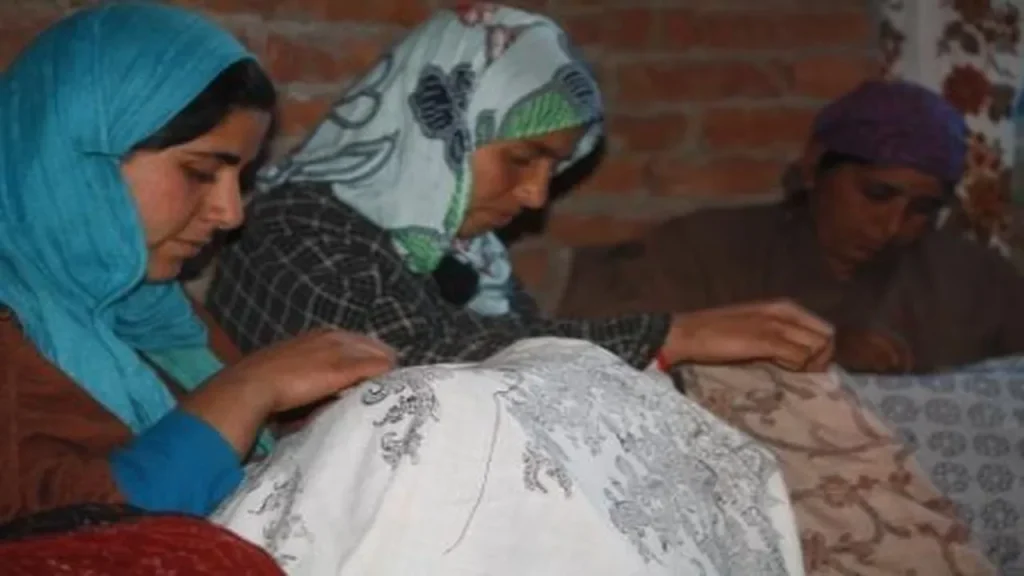
Entrepreneurship is particularly important in Kashmir because the region’s economy has enormous potential in sectors where women can play a leading role. Handicrafts, handloom, food processing, horticulture, floriculture, tourism, wellness, education and creative industries all offer opportunities. The digital economy has opened even more doors. A woman sitting in a village in Kashmir can potentially sell Kashmiri products to customers across India and abroad through e-commerce and social media. But this possibility becomes reality only when she has access to digital literacy, affordable technology, reliable internet, finance and professional guidance.
There is also a need to change the way society perceives women’s economic participation. Entrepreneurship should not be viewed merely as an alternative for women who cannot find conventional employment. It should be recognised as a legitimate and prestigious career choice. A woman who builds a business, employs others and contributes to the local economy is not simply achieving personal independence; she is creating economic value and strengthening her community.
Financial independence is, in many cases, the strongest foundation of personal autonomy. A woman who earns, saves and controls her financial resources is better placed to make decisions about her life and her family’s future. This is particularly significant for divorced women, widows and women facing domestic or marital challenges. Skill development and livelihood programmes must therefore move beyond short-term training certificates. Women need sustained mentoring, access to credit, market linkages and support in scaling their enterprises.
The workshop’s emphasis on legal literacy is equally important. Rights have little meaning if people do not know they exist. Universities and civil society organisations should collaborate to establish legal awareness programmes that reach women beyond campuses. Digital platforms such as the multilingual “Jagruk Mahila” initiative demonstrate how technology can make information about rights, legal remedies and support services more accessible. Such initiatives should be expanded, localised and integrated with existing government and community support systems.
Educational institutions must also become safer and more inclusive spaces. Effective grievance-redressal mechanisms, gender-sensitive infrastructure, counselling services and awareness programmes are essential. Women should feel confident that institutions will listen to them and act when they face harassment, discrimination or violence. Empowerment cannot flourish in an environment where safety and dignity are uncertain.
Most importantly, Kashmir needs to move from viewing women as beneficiaries of welfare programmes to recognising them as partners in development. Government schemes are important, but empowerment is strongest when women become decision-makers, entrepreneurs, professionals, researchers, educators and leaders.
The Central University of Kashmir workshop has highlighted an important truth: empowerment begins with awareness but does not end there. The real test lies in what follows – whether a woman can access education, find employment, start a business, obtain credit, understand her legal rights and participate equally in decisions that affect her life.
Kashmir cannot afford to leave half of its potential untapped. Its educational institutions must become launchpads for women’s aspirations, its policies must create pathways to economic independence, and its society must celebrate women not merely for their resilience but for their achievements.
The future of a more prosperous Kashmir will depend, in no small measure, on how effectively it educates, empowers and enables its women. The goal must be clear: from awareness to education, from education to enterprise, and from enterprise to equality.
About the Author
Bisma Rafiq is interested in human resources and wants to improve journalism from the human resources point of view. She is also a passionate story teller.
Let Women Lead