


Talks yield consensus on roadmap for greater autonomy in Ladakh as statehood remains a long-term demand
Kashmir Impulse Desk
New Delhi, July 3
The Centre and representatives of civil society groups from Ladakh have moved a step closer to an agreement on the region’s future governance after reaching broad consensus on a framework that includes an elected Union Territory-level government and special constitutional safeguards, participants said on Friday.
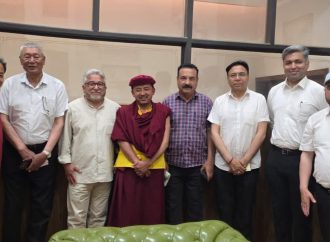
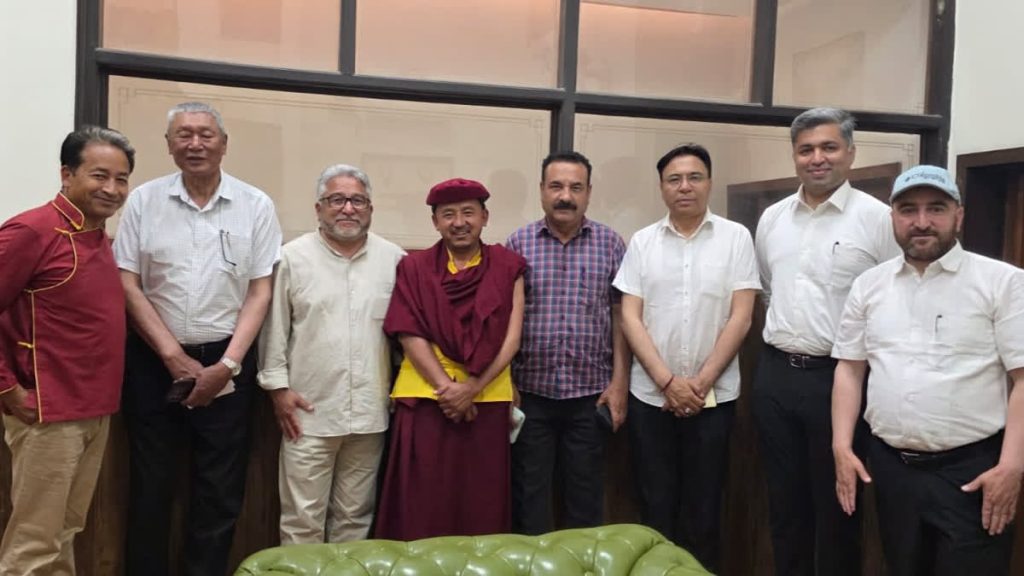
The breakthrough came after discussions in Leh between officials from the Ministry of Home Affairs (MHA) and representatives of the Apex Body Leh (ABL) and the Kargil Democratic Alliance (KDA), two influential organisations that have spearheaded demands for greater political and constitutional protections since Ladakh was carved out of the former state of Jammu and Kashmir in 2019.
Officials and representatives said all sides unanimously signed the minutes of their previous round of talks after resolving contentious issues through what they described as lengthy and constructive discussions.
The meeting was led by Additional Secretary in the Ministry of Home Affairs Prashant Sitaram Lokhande. Environmental activist Sonam Wangchuk, a prominent face of the Ladakh movement, did not attend as he is participating in a hunger strike in New Delhi.
According to the agreed minutes of the fifth meeting of the sub-committee of the High-Powered Committee on Ladakh, held on May 22 in New Delhi, the government presented progress made during multiple rounds of negotiations and outlined a proposed framework for strengthening democratic governance in the strategically located Himalayan territory.
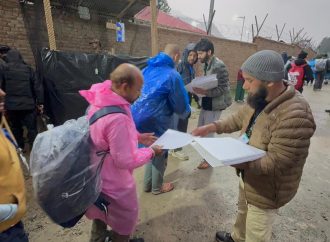
While Ladakh’s representatives reiterated their longstanding demands for restoration of statehood, constitutional protection under the Sixth Schedule, creation of separate Ladakh Administrative and Police Services, and withdrawal of cases registered against protesters following demonstrations in September last year, discussions increasingly focused on an interim governance arrangement that both sides viewed as immediately achievable.
Participants agreed that the next stage of reforms should establish an elected Union Territory-level institution vested with executive, financial and legislative authority, giving Ladakh a stronger political voice while continuing under Union Territory status.
Statehood, they said, would remain a longer-term political aspiration.
One of the key issues addressed during the meeting was administrative control over the bureaucracy. Under the proposed framework, officials handling subjects transferred to the elected body would function under its executive authority, including oversight of Annual Performance Appraisal Reports, with detailed rules to be finalised during subsequent negotiations.
The discussions also centred on constitutional safeguards tailored specifically for Ladakh. Rather than limiting deliberations to protections similar to Article 371A, both sides agreed to explore a customised arrangement drawing from the broader range of provisions available under Articles 371A to 371J of the Constitution.
ABL President Chering Dorjey said the government’s willingness to examine stronger constitutional safeguards had been incorporated into the agreed record of discussions.
“The government has accepted that constitutional safeguards for Ladakh can be explored through provisions under Articles 371A to 371J, depending on what offers the strongest protection for the region,” Dorjey told reporters after the meeting.
Representatives from Ladakh said both sides would now prepare draft proposals defining the powers of the proposed elected institution, including its executive, legislative and financial authority, while ensuring coordination with existing Panchayati Raj institutions.
The ABL said it had already prepared its own draft and would refine it after consultations with the KDA and legal experts before submitting it to the Centre. Officials informed the delegation that the government’s draft was also under preparation.
KDA Co-chairman Asgar Karbalai said the Centre had also assured the delegation that cases against more than 83 people detained during protests in September 2025 would be reviewed after charges against Wangchuk had been withdrawn.
The Ministry also indicated that it was actively considering the creation of dedicated Ladakh Administrative Service (LAS) and Ladakh Police Service (LPS) cadres to strengthen local governance, representatives said.
Participants described Friday’s discussions as the most substantive since formal dialogue began, saying they sensed greater urgency within the government to conclude negotiations.
According to the Ladakh representatives, Union Home Minister Amit Shah has directed officials to expedite discussions and work towards an early resolution of the region’s political demands.
No date has been announced for the next round of negotiations, although officials indicated that talks would resume once both sides exchange draft governance proposals.
Ladakh became a separate Union Territory in August 2019 after the Indian government revoked the special constitutional status of the former state of Jammu and Kashmir and reorganised it into two federally administered territories. While many residents initially welcomed Union Territory status, political and civil society groups in both Leh and Kargil have since sought stronger constitutional guarantees to safeguard the region’s land, employment opportunities, culture and political representation.
The Apex Body Leh and the Kargil Democratic Alliance have jointly led those demands, making the rare alliance between the Buddhist-majority Leh district and the Muslim-majority Kargil district one of the defining features of the negotiations with New Delhi.