


Days-long ceremonies expected to draw millions of mourners, foreign delegations amid tensions with Israel, US
Kashmir Impulse Desk
New Delhi, July 3
Iran prepared on Friday for the funeral of late Supreme Leader Ayatollah Ali Khamenei, with authorities expecting millions of mourners to take to the streets in a display of national unity as the Islamic Republic seeks to project stability following a devastating war with Israel that killed the country’s highest-ranking leader.
The funeral ceremonies, scheduled to begin on Saturday and continue through next week across several Iranian cities, come at a pivotal moment for the Islamic Republic as it seeks to consolidate domestic support while navigating heightened tensions with Israel and the United States after months of conflict.
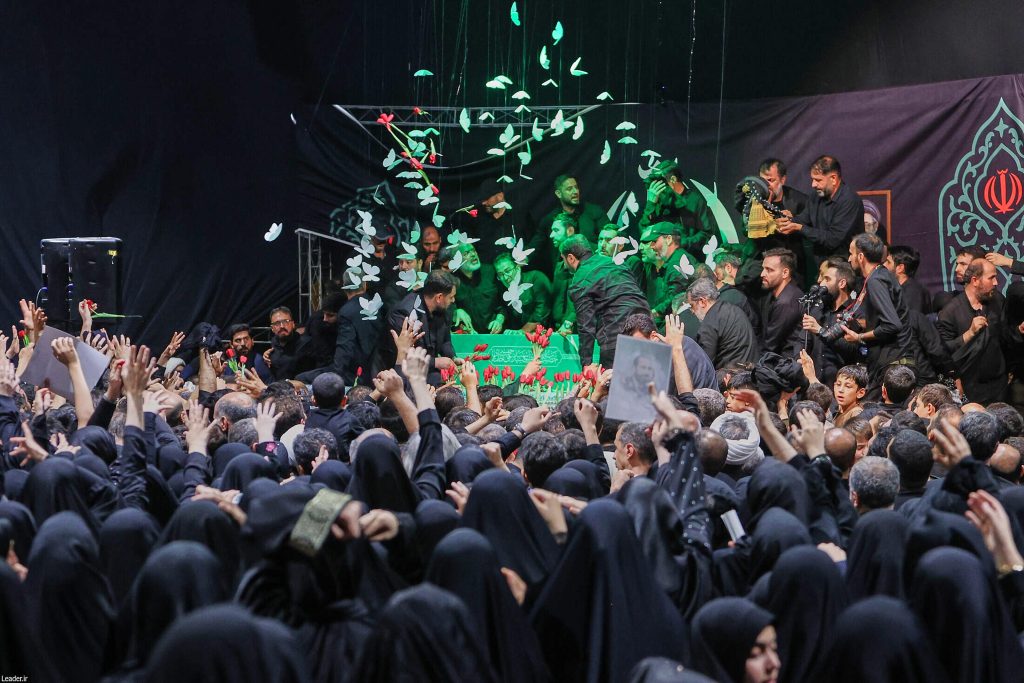
State media showed Khamenei’s flag-draped coffin lying in state at Tehran’s Grand Mosalla, where senior government officials, military commanders, religious leaders and foreign dignitaries gathered to pay their respects.
President Masoud Pezeshkian, Parliament Speaker Mohammad Bagher Ghalibaf and Foreign Minister Abbas Araghchi were among the country’s top civilian leaders who attended the ceremony.
The funeral is expected to evoke memories of the 1989 burial of Ayatollah Ruhollah Khomeini, the founder of the Islamic Republic, when millions of Iranians filled the streets of Tehran in one of the largest public gatherings in the country’s history.
Iranian authorities have called on citizens to participate in the ceremonies, with banners displayed across Tehran carrying the slogan, “We Must Rise,” in Persian, Arabic and English.
Officials and supporters portrayed the funeral as a demonstration of resilience following the conflict that claimed Khamenei’s life and left several senior military commanders and members of his family dead.
Among those killed in the opening Israeli strike were members of Khamenei’s family, including a son-in-law, his eldest daughter, a granddaughter and the wife of Iran’s current Supreme Leader, Ayatollah Mojtaba Khamenei.
State television also broadcast footage of mourners participating in religious rituals around the coffin, with many touching scarves and personal belongings to the casket in keeping with Shi’ite traditions seeking blessings from revered religious figures.
The coffin was later draped with a red flag bearing the inscription “Ya Hussein”, a revered Shi’ite symbol associated with Imam Hussein, whose martyrdom in the seventh century remains central to Shi’ite religious identity. The red banner also traditionally signifies the blood of those considered unjustly killed and serves as a call for justice and vengeance.
In one of the most closely watched appearances ahead of the funeral, General Ahmad Vahidi, a senior commander of Iran’s Islamic Revolutionary Guard Corps (IRGC), appeared publicly for the first time in several months after remaining largely out of public view since before the outbreak of the conflict.
Speaking on state television, Vahidi vowed that Iran would continue resisting external pressure.
“They should know that the blood of our martyred leader will become another turning point in the victories of Islam,” he said. “They will never see this nation surrender.”
Analysts view Vahidi as one of the senior figures involved in shaping Iran’s security and negotiating strategy following the conflict, including contacts surrounding efforts to reach a more durable ceasefire and future understandings with the United States.
The funeral also comes against the backdrop of continued regional uncertainty.
Israel has previously threatened senior Iranian leaders, including Ayatollah Mojtaba Khamenei, while Iran’s Joint Armed Forces Command on Thursday warned that any renewed military action by Israel or the United States would draw what it described as a “harsh and regret-inducing response.”
Beginning on Saturday, Khamenei’s coffin will be taken in procession through Tehran before being transported to the holy city of Qom and later to Mashhad, his birthplace, where burial ceremonies are scheduled to conclude on July 9.
Authorities are expected to close major roads, tighten security and restrict parts of Tehran’s airspace during the ceremonies.
The funeral is also expected to attract delegations from around 30 countries, reflecting Khamenei’s influence across the Shi’ite Muslim world and among Iran’s regional allies.
In his first public message following his father’s death, Supreme Leader Ayatollah Mojtaba Khamenei said he had seen his father’s body with a clenched fist, describing it as a symbol of defiance.
Supporters gathering in Tehran echoed that sentiment.
“The leader’s clenched fist is the fist of all Muslims,” Tehran taxi driver Jafar Javadi said. “We will continue to stand against our enemies with the same determination.”
The ceremonies are widely expected to become one of the largest political and religious events in Iran in decades, serving both as a farewell to the country’s long-serving leader and as an opportunity for the new leadership to demonstrate continuity at a time of heightened regional uncertainty.