




Scientists distribute poultry, animal health inputs and promote climate-resilient livestock practices to strengthen tribal livelihoods
Kashmir Impulse Desk
Srinagar, July 3
Scientists from Sher-e-Kashmir University of Agricultural Sciences and Technology of Kashmir (SKUAST-K) conducted an outreach programme in the remote Gurez valley aimed at conserving indigenous animal genetic resources and improving livestock-based livelihoods among tribal farming communities, the university said.
The programme, organised by the university’s Division of Animal Genetics and Breeding in collaboration with the Krishi Vigyan Kendra (KVK), Gurez, and the Jammu and Kashmir Department of Animal Husbandry, combined farmer awareness sessions, distribution of livestock inputs and veterinary healthcare services.
The initiative forms part of the Indian Council of Agricultural Research’s (ICAR) National Bureau of Animal Genetic Resources (NBAGR) network project, which seeks to conserve indigenous livestock breeds while promoting sustainable and climate-resilient animal husbandry.
Speaking at the event, ICAR-Central Institute for Research on Cattle Principal Scientist Ravinder Kumar said indigenous livestock breeds play a vital role in ensuring sustainable agricultural production, climate resilience and food security, particularly in ecologically fragile regions such as the Himalayas.
Mahesh Dige, Senior Scientist at the ICAR-National Bureau of Animal Genetic Resources, highlighted the importance of conserving native breeds through scientific breeding programmes and praised the university’s efforts to strengthen livestock farming in remote areas through research, extension services and farmer training.
Prof Syed Shanaz Shafi, Head of the Division of Animal Genetics and Breeding at SKUAST-K, said indigenous livestock and poultry breeds are well adapted to the harsh climatic conditions of the Kashmir Himalayas and remain critical for preserving biodiversity, supporting rural livelihoods and enhancing the resilience of mountain farming systems.
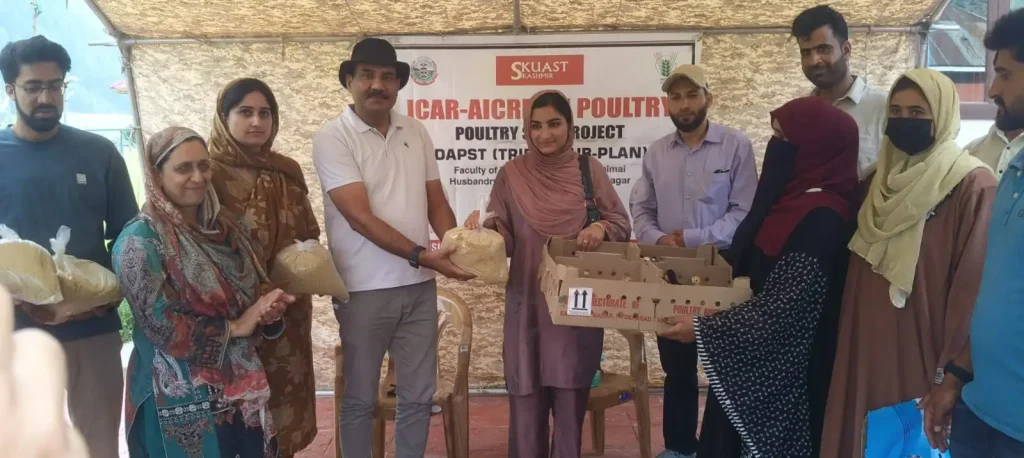
As part of the programme, scientists distributed 100 indigenous Kashmiri poultry birds under the ICAR-NBAGR conservation project to encourage the preservation and multiplication of native poultry germplasm.
An additional 300 Keystone Golden birds were distributed under the ICAR All India Coordinated Research Project on Poultry to promote backyard poultry farming, particularly among women’s self-help groups, to improve household nutrition and generate supplementary income.
Around 50 livestock farmers also received free veterinary medicines, including deworming drugs and mineral supplements, to improve animal health and productivity.
Scientists conducted technical sessions and field demonstrations covering scientific breeding, feeding, disease prevention and livestock healthcare, while also promoting climate-resilient livestock management practices suited to high-altitude regions.
Farmers participated in interactive discussions with veterinary experts, raising concerns about livestock production and receiving technical guidance on improving herd management and productivity.
University officials said the outreach programme forms part of SKUAST-K’s broader efforts to promote sustainable livestock development through scientific interventions, conservation of indigenous genetic resources and improved access to veterinary services in geographically isolated communities across Jammu and Kashmir.