




Police, Army, CAPFs intensify surveillance, counter-terror operations and emergency preparedness before yatra
Kashmir Impulse Desk
Srinagar, July 1
Authorities have stepped up security across Jammu and Kashmir ahead of the annual Amarnath Yatra, deploying a multi-layered security grid along the Srinagar-Jammu National Highway and the twin pilgrimage routes through Pahalgam and Baltal as thousands of devotees prepare to undertake the 57-day pilgrimage beginning July 3.
Senior police officials said extensive security and logistical preparations had been completed to safeguard the annual pilgrimage, which draws hundreds of thousands of devotees from across India and remains one of the country’s largest security operations.
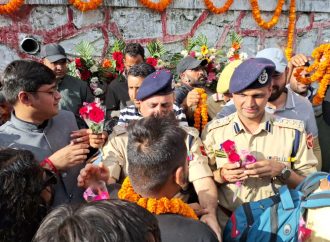
Inspector General of Police (IGP) Kashmir V K Birdi on Wednesday conducted an extensive review of security arrangements in south Kashmir’s Pahalgam, the traditional base camp for the pilgrimage, where he inspected screening facilities, surveillance infrastructure and deployment plans before interacting with officers stationed along the route.
Officials said the review formed part of a series of high-level inspections undertaken by the Jammu and Kashmir Police in coordination with the Army, Central Armed Police Forces (CAPFs) and civil administration to ensure a secure environment for pilgrims.
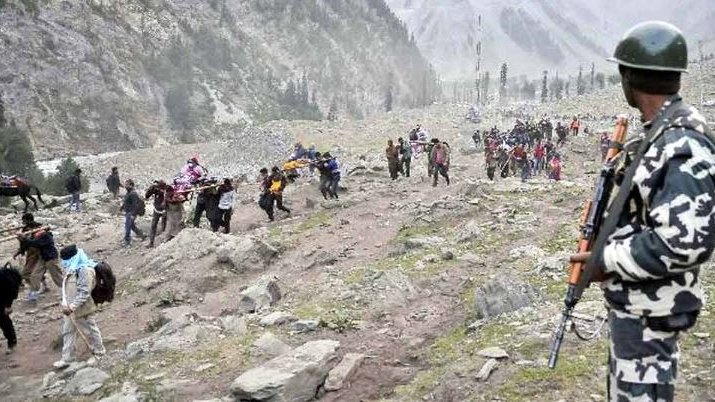
Security has been substantially reinforced along the Srinagar-Jammu National Highway, which serves as the principal corridor for the movement of pilgrimage convoys, while additional deployment has been made along both the traditional Pahalgam route and the shorter Baltal axis.
Personnel from the Jammu and Kashmir Police, the Army, the Central Reserve Police Force (CRPF), the Border Security Force (BSF) and other CAPFs have been stationed at vulnerable locations, with surveillance strengthened through closed-circuit television cameras, drones and anti-drone systems.
Authorities have also intensified area domination exercises, patrols and cordon-and-search operations in sensitive areas, while mock drills involving police, disaster response agencies and other stakeholders have been conducted to test emergency preparedness.
Senior officers said the security measures have been designed to address both conventional and emerging threats while ensuring that the movement of pilgrims remains uninterrupted.
Director General of Police Nalin Prabhat, who has chaired several security review meetings in recent weeks, has instructed officers to maintain close coordination among all security agencies, strengthen intelligence sharing and sustain anti-terror operations throughout the pilgrimage period.
Officials said particular emphasis had been placed on securing vulnerable stretches of the highway and mountain tracks, where weather-related disruptions and difficult terrain pose additional operational challenges.
During his visit to Pahalgam, Birdi inspected baggage and passenger screening procedures at the X-ray Screening Point, directing officers to ensure strict adherence to standard operating procedures while facilitating smooth movement of pilgrims.
He later reviewed the security architecture at the Nunwan Base Camp, examining deployment plans, surveillance systems, access control mechanisms and emergency response arrangements.
Officials said the review covered the integration of CCTV surveillance, facial recognition technology, drone monitoring and anti-drone capabilities under the police’s technology-driven security initiatives.
The IGP also assessed coordination among mountain rescue teams, the State Disaster Response Force (SDRF), National Disaster Response Force (NDRF), medical services and other emergency agencies deployed for the pilgrimage.
Interacting with police personnel on duty, Birdi commended their preparedness and instructed them to maintain a high level of vigilance, strengthen proactive policing and ensure swift response to any contingency.
He also emphasised closer coordination among all security agencies and directed officers to sustain area domination exercises and surveillance throughout the pilgrimage.
Apart from security, authorities said extensive logistical arrangements have been put in place, including accommodation at base camps, communication facilities, medical centres, emergency healthcare units and mountain rescue teams positioned along both routes.
Pilgrims are required to register with the Shri Amarnathji Shrine Board (SASB), obtain mandatory health certificates and carry Radio Frequency Identification (RFID) cards before undertaking the pilgrimage.
Medical camps, insurance cover and disaster response mechanisms have also been established to deal with emergencies during the pilgrimage.
Traffic management plans have been implemented to facilitate the movement of pilgrimage convoys along the national highway while minimising disruption to civilian traffic.
Officials said all operational, logistical and security preparations had been completed ahead of the arrival of the first convoy of pilgrims and appealed to the public to cooperate with authorities and refrain from spreading or acting upon rumours relating to the pilgrimage.
The Amarnath Yatra, one of Hinduism’s most revered annual pilgrimages, will commence on July 3 and conclude on August 28. The pilgrimage to the 3,888-metre-high cave shrine in the Himalayas is expected to attract lakhs of devotees from across the country under one of India’s largest coordinated security deployments.