



Authorities say month-long pilot aims to ease congestion and protect fragile ecology, while hoteliers warn of disruption during peak tourist season
Kashmir Impulse Desk
Srinagar, July 1
A proposal to introduce an odd-even vehicle entry system in the tourist resort of Gulmarg has triggered opposition from tourism stakeholders, who say the measure could disrupt visitor movement and hurt business during the peak summer season, even as authorities defend it as a necessary step to tackle mounting traffic congestion and environmental degradation.
The Gulmarg Development Authority (GDA) has announced that the pilot project will be implemented from July 5 to August 5, restricting the entry of private and commercial vehicles based on the last digit of their registration numbers.
Under the order issued by GDA Chief Executive Officer Tariq Hussain, vehicles with registration numbers ending in odd digits will be permitted to enter Gulmarg on odd-numbered dates, while those ending in even digits will be allowed entry on even dates. The restrictions will remain in force daily between 8 a.m. and 8 p.m.
Transport vehicles carrying goods have been exempted from the regulations.
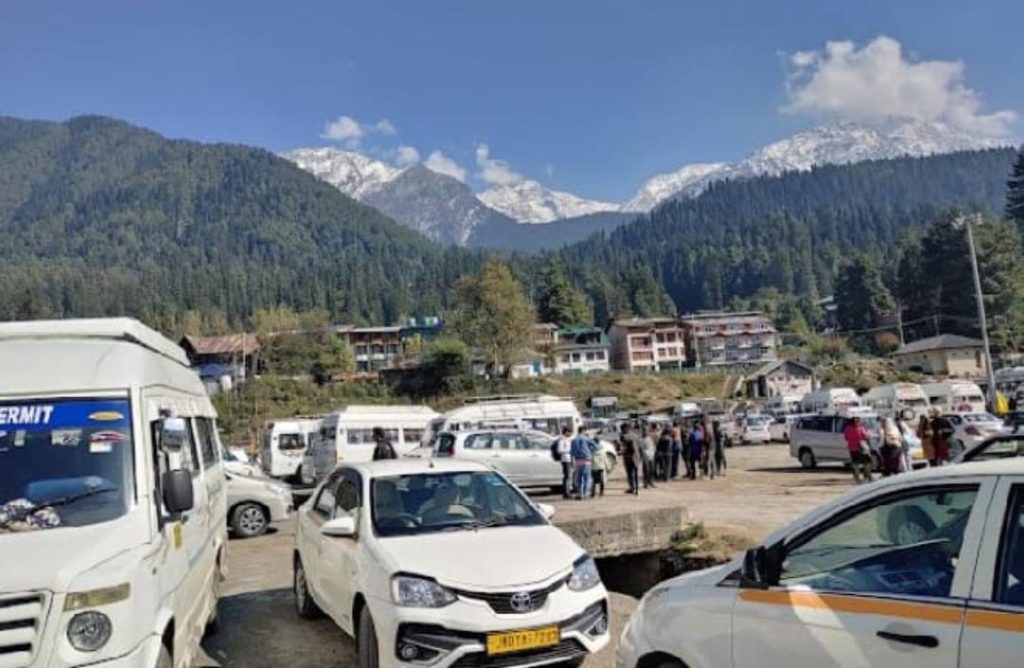
The authority said the initiative had become necessary in view of the sharp increase in tourist arrivals and vehicular traffic, which has led to chronic congestion, air and noise pollution, delays in emergency response and growing pressure on the fragile alpine ecosystem of one of Kashmir’s most visited destinations.
Officials said the month-long exercise would serve as a pilot project to assess the effectiveness of regulated vehicle entry in reducing traffic congestion, improving visitor mobility and mitigating environmental stress before any decision is taken on its long-term implementation.
Gulmarg, located about 50 km from Srinagar, attracts large numbers of tourists throughout the year and witnesses particularly heavy traffic during the summer holiday season, often resulting in long traffic queues and parking shortages on the approach road and within the resort.
The proposed restrictions, however, have drawn criticism from hoteliers, tour operators and other stakeholders, who argue that the decision was announced without adequate consultation with the tourism industry.
Several hotel owners expressed concern that the measure could create confusion among visitors who had already made advance travel and accommodation bookings months before the notification was issued.
“If a tourist has booked accommodation for a particular day but his or her vehicle is not permitted to enter because of the odd-even rule, it will create inconvenience both for the visitor and the hotel,” a hotelier in Gulmarg said.
Industry representatives said such uncertainty could discourage tourists from visiting the resort during one of the busiest periods of the year, potentially affecting businesses that rely heavily on the limited tourism season for their annual income.
Muhammad Ashraf, a stakeholder associated with tourism activities in Gulmarg, said the proposed restrictions could adversely affect livelihoods linked to the hospitality sector.
“Gulmarg has a relatively short tourist season, and many businesses depend on these few months for their earnings. Any decision affecting tourist access should be taken after detailed consultations with all stakeholders,” he said.
Tourism operators said they supported measures aimed at protecting Gulmarg’s environment but urged the administration to explore alternative traffic management strategies that would not inconvenience visitors or affect tourism-dependent businesses.
Among the suggestions put forward by stakeholders are the development of peripheral parking facilities, expansion of shuttle transport services, strengthening of public transport and better traffic regulation during peak hours.
Meanwhile, Gulmarg MLA Farooq Ahmad Shah indicated that the proposal was still under discussion and said stakeholders’ concerns would be taken into consideration before its implementation.
“The proposal will first be discussed with all stakeholders. Their views and concerns will certainly be taken into account before any final decision is implemented,” Shah said.
The proposed pilot project reflects growing efforts by authorities to balance increasing tourist inflows with environmental conservation in Kashmir’s ecologically sensitive destinations, where rising vehicular traffic has become a recurring concern during peak tourism periods.