





Kashmir’s handicrafts sector, known for products such as Pashmina shawls, carpets, papier-mâché and walnut wood carving, remains one of the region’s largest sources of traditional employment and export earnings
Kashmir Impulse Desk
Srinagar, June 24
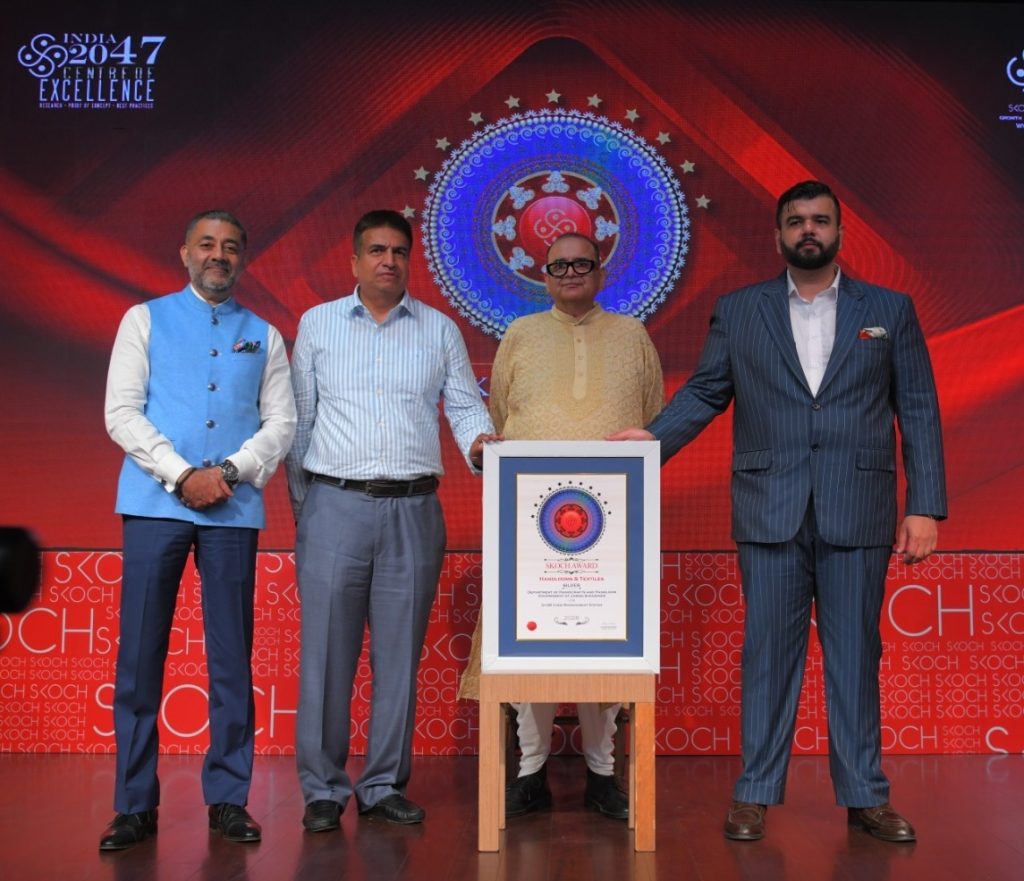
The Department of Handicrafts and Handloom has received a national SKOCH Award for its technology-driven Geographical Indication (GI) QR Code Management System, an initiative aimed at protecting the authenticity of Kashmir’s traditional crafts and strengthening consumer confidence in domestic and export markets.
The department said on Wednesday that the award recognised the state’s pioneering use of digital certification to improve traceability, quality assurance and artisan welfare through QR code-based authentication of GI-tagged handicraft products.
The system has been implemented through the Pashmina Testing and Quality Certification Centre at the Craft Development Institute and the National Accreditation Board for Testing and Calibration Laboratories (NABL)-accredited Carpet Testing Laboratory at the Indian Institute of Carpet Technology in Srinagar.
Officials said the certification mechanism is among the first comprehensive QR code-based GI authentication systems developed for handicrafts in India.
Consumers can scan the QR codes attached to certified products to verify their authenticity, place of origin and quality standards while tracing them directly to the artisan or institution responsible for their production.
The initiative covers a range of Kashmir’s internationally recognised handicrafts, including Pashmina and Kani shawls, Sozni embroidery, hand-knotted carpets and other GI-registered products.
Authorities said thousands of handicraft items have already been certified under the programme, helping reduce counterfeiting, improve transparency and expand market access for artisans.
The award was received in New Delhi by Sajid Nazir of the Craft Development Institute on behalf of the department.
Director of Handicrafts and Handloom Mussarat Islam said the recognition reflected efforts to preserve Kashmir’s traditional craft heritage while using technology to improve livelihoods by giving artisans greater visibility in premium domestic and international markets.
Kashmir’s handicrafts sector, known for products such as Pashmina shawls, carpets, papier-mâché and walnut wood carving, remains one of the region’s largest sources of traditional employment and export earnings, with authorities increasingly relying on digital certification to combat imitation products.