



‘Kashmir’s handicraft tradition, developed over more than six centuries, confronting one of its most serious challenges’
Kashmir Impulse Desk
Srinagar, June 21
Kashmir’s centuries-old handicrafts industry is facing a growing threat from machine-made products being sold as authentic handmade goods, an artisans’ organisation said on Saturday, warning that thousands of craftsmen could lose their livelihoods unless authorities intervene to protect the sector.
The Kashmir Artisans Welfare Organisation (KAWO) said the increasing presence of factory-produced items that imitate traditional Kashmiri crafts is eroding demand for genuine handmade products and undermining the economic foundations of one of the region’s most important cultural industries.
The warning comes at a time when policymakers are seeking to strengthen Kashmir’s handicrafts sector, which supports thousands of families and serves as a major contributor to exports, tourism and cultural preservation.
In a statement issued after a meeting of its members, KAWO said artisans had repeatedly raised concerns with government departments but that the situation continued to worsen.
The organisation said Kashmir’s handicraft tradition, developed over more than six centuries, was confronting one of its most serious challenges in recent years.
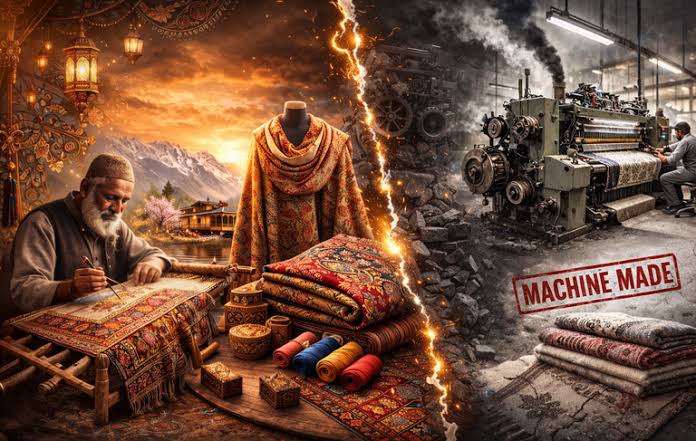
Machine-made products resembling authentic Kashmiri carpets, shawls, papier-mâché items, wood carvings and other traditional crafts have increasingly entered markets, often being sold under labels suggesting they are handmade.
Artisans say this practice not only reduces sales but also damages consumer confidence and dilutes the reputation of genuine Kashmiri craftsmanship.
The handicrafts sector occupies a special place in Kashmir’s economy and identity.
Traditional crafts such as hand-knotted carpets, pashmina shawls, walnut wood carving, crewel embroidery and papier-mâché are internationally recognised and have historically generated employment in both urban and rural areas.
However, artisans say handmade products cannot compete with machine-produced alternatives that are cheaper and quicker to manufacture.
As a result, many craftsmen are finding it increasingly difficult to sustain their livelihoods.
KAWO proposed the creation of exclusive markets dedicated entirely to handmade products, where only verified artisans and traders dealing in authentic crafts would be permitted to operate.
The organisation said such markets could help preserve the integrity of traditional crafts and allow consumers to distinguish between handmade and machine-made goods.
It also called for stricter regulation of handicraft exhibitions organised within and outside Jammu and Kashmir.
While acknowledging government efforts to promote local crafts through trade fairs and exhibitions, the organisation alleged that some exhibitors market machine-made items under the label of “Kashmiri Handmade”, causing reputational and financial damage to genuine artisans.
The body urged authorities to strengthen monitoring mechanisms and enforce penalties against those misrepresenting products.
In addition to market reforms, the organisation appealed for financial support for artisans facing economic hardship.
Many craftsmen, particularly those working independently or in small family-based enterprises, have reported declining incomes amid changing consumer preferences and increased competition.
KAWO President Mir Abdul Majid said timely intervention was necessary to prevent further deterioration of the sector.
He warned that failure to protect traditional handicrafts could result not only in economic losses but also in the gradual erosion of cultural knowledge passed down through generations.
The organisation called for a comprehensive policy framework combining market regulation, financial support, certification mechanisms and promotional initiatives to ensure that Kashmir’s handicraft heritage remains viable for future generations.
For many artisans, the issue extends beyond economics. It is also a struggle to preserve an identity that has long defined Kashmir’s cultural and artistic legacy in markets across India and around the world.