




Plastic is entering Kashmir’s lakes, rivers, forests, wetlands, grazing lands and agricultural fields
Ladakh has declared war on single-use plastics. But as waste piles up in Kashmir’s rivers, lakes, forests, and tourist resorts, the larger question is no longer whether plastic is a problem, it is whether the Valley can afford to wait any longer. Amir Yaseen reports.
On a summer morning, before the tourists arrive and before the shikaras begin gliding across the water, Dal Lake can still offer a glimpse of the Kashmir that exists in postcards and memory.
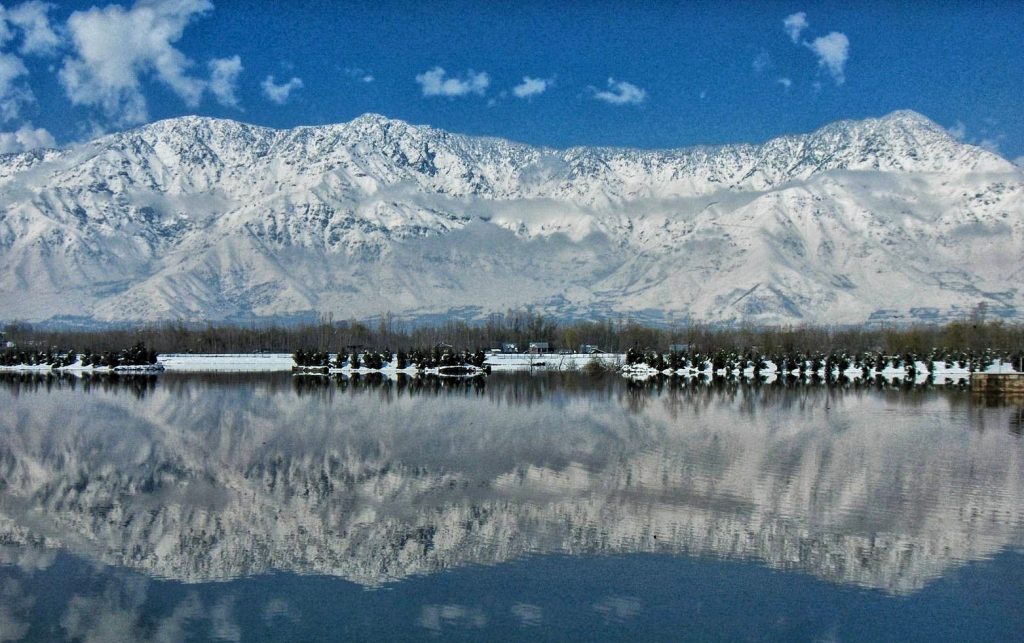
The Zabarwan hills stand reflected on the surface. The light spreads slowly across the water. For a brief moment, the lake appears timeless. Then the plastic becomes visible.
A discarded bottle trapped among lotus stems. A floating food wrapper drifting toward the shore. Fragments of packaging caught in weeds near the embankment. In some corners, the waste gathers into small islands, carried by currents and human neglect.
The scene has become so familiar that many residents barely notice it anymore.
Yet environmental scientists warn that what appears as a scattering of litter is in fact evidence of a much larger transformation taking place across the Himalayas.
Plastic is entering Kashmir’s lakes, rivers, forests, wetlands, grazing lands and agricultural fields at a scale that would have been unimaginable a generation ago.
And now, hundreds of kilometres away on the cold desert plateau of Ladakh, policymakers have decided that enough is enough.
The administration of Ladakh has imposed one of the region’s most comprehensive environmental restrictions, banning a wide range of identified single-use plastic products while introducing stringent penalties for littering and environmental violations.
Under the new framework approved by Lieutenant Governor Brigadier (Retired) B D Mishra, individuals, businesses, hotels, restaurants and institutions found using or distributing prohibited single-use plastic products face environmental penalties of Rs 10,000. Littering in public spaces attracts a fine of Rs 5000.
The administration has also authorized random inspections at Leh airport and major entry points, empowering officials to intercept banned plastic products before they enter the region.
The message is unmistakable. The era of treating plastic pollution as a minor civic nuisance is over. Ladakh now views it as an environmental threat. The question confronting Kashmir is whether it should do the same.
For decades, plastic was celebrated as a miracle material. It was cheap, lightweight, durable and convenient. Today, those same qualities have become the source of one of humanity’s most persistent environmental crises.
Unlike organic waste, plastic does not disappear. A paper cup decomposes. A leaf returns to the soil. A plastic bottle may remain for centuries. In mountain ecosystems, the problem becomes even more severe.
Cold temperatures slow decomposition processes. Waste-management infrastructure is often limited. Collection systems struggle to reach remote settlements. Rivers and streams transport discarded material across vast distances.
As a result, every piece of plastic that enters a Himalayan ecosystem can remain there for years, sometimes decades.
Environmental researchers have repeatedly warned that high-altitude regions are particularly vulnerable to plastic accumulation.
What begins as a wrapper dropped beside a road can eventually travel through streams, wetlands and river systems before fragmenting into microscopic particles.
Those particles do not vanish. They enter soil. They enter water. They enter food chains. And increasingly, they enter the human body.
Scientists have now detected microplastics in drinking water, agricultural products, fish, livestock and even human blood.
The plastic bottle floating in a stream is no longer simply an aesthetic problem.
It is becoming a public-health concern.
Ladakh’s decision did not emerge overnight. For years, environmentalists, researchers and local communities have warned that tourism growth was producing unprecedented volumes of waste.
The region’s popularity has exploded Visitors arrive seeking glaciers, monasteries, mountain passes and some of the most dramatic landscapes on Earth.
Tourism brings income. But it also brings packaging. Disposable bottles. Plastic cups. Food containers. Snack wrappers. Single-use cutlery. The very items now prohibited under Ladakh’s new regulations.
Officials increasingly feared that waste-management systems designed for a sparsely populated region could not keep pace with the volume of refuse being generated.
Plastic litter began appearing near wetlands, trekking routes, glaciers and environmentally sensitive habitats. In ecological terms, Ladakh faced a paradox.
The landscapes attracting tourists were being threatened by tourism itself. The ban represents an attempt to break that cycle. More importantly, it signals a shift in philosophy.
Environmental protection is no longer being treated as a secondary consideration to development. It is becoming a condition of development itself.
If Ladakh’s policy is a warning, Kashmir may be the place where its lessons are most relevant. The Valley possesses environmental advantages that Ladakh does not. It receives greater rainfall. It has more vegetation. Its ecosystem is comparatively resilient. Yet these advantages can create a dangerous illusion. Because environmental degradation often occurs gradually. The damage accumulates quietly. Until one day it becomes impossible to ignore.
Government data indicate that Jammu and Kashmir generates more than 51,000 tonnes of plastic waste annually. Over the last five years, the figure has exceeded 225,000 tonnes. Numbers of that scale are difficult to visualize. But their consequences are visible almost everywhere. Plastic bags trapped in willow trees along the Jhelum. Discarded bottles scattered across meadows in Pahalgam. Food packaging left behind by visitors in Gulmarg. Waste accumulating around streams in Sonamarg. Plastic debris entering Dal Lake and Wular Lake. What appears to be scattered litter is, in reality, a regional environmental challenge. And the challenge is growing.
The Jhelum River is more than a waterway. It is the artery around which Kashmir’s civilization evolved. Cities emerged along its banks. Trade flowed through its channels. Agriculture depended upon its waters. Culture developed around its course. Today, environmentalists increasingly view the river as a measure of the Valley’s ecological health. And the signs are troubling.
Plastic waste entering tributaries eventually reaches the Jhelum. From there, much of it continues through wetlands, floodplains and downstream ecosystems. Some becomes trapped in vegetation. Some settles into sediment. Some breaks apart into microplastics. Each pathway creates new ecological consequences.
Researchers around the world have demonstrated that plastic pollution affects aquatic biodiversity, alters habitats and threatens species already facing environmental pressures.
For Kashmir, where rivers support agriculture, fisheries and drinking-water systems, these concerns are especially significant.
The pollution of the Jhelum is not merely an environmental story. It is an economic story. A public-health story. A cultural story. Kashmir’s tourism industry depends upon a simple promise. Visitors arrive expecting beauty. Snow-covered mountains. Pristine meadows. Crystal-clear lakes. Ancient forests.
Yet tourism itself has become one of the principal drivers of waste generation. Every tourist carries products packaged in plastic. Every hotel produces refuse. Every roadside vendor distributes disposable items. Every busy season leaves behind mountains of waste. The contradiction is becoming increasingly difficult to ignore. The economy benefits from tourism. The environment absorbs its costs.
In destinations such as Gulmarg, Sonamarg, Yousmarg and Pahalgam, environmental activists routinely document litter accumulation following periods of heavy tourist activity.
Plastic waste often reaches locations where collection infrastructure remains inadequate. The result is a cycle repeated across mountain regions worldwide. Visitors consume. Waste accumulates. Authorities clean up. More waste arrives. Without intervention, the cycle never ends.
Ladakh’s ban attempts to address the problem at its source. By reducing the supply of disposable plastics, authorities hope to reduce the volume of waste entering the environment. Many environmentalists argue that Kashmir should adopt a similar strategy.
Whenever discussions about plastic bans emerge, a familiar argument follows. Why ban plastic when it can be recycled? The answer is surprisingly simple. Most plastic is never recycled. Globally, only a fraction of plastic waste returns to productive use. The rest is landfilled, burned, discarded or lost to the environment. Mountain regions face additional challenges. Transportation costs are high. Recycling facilities are limited. Collection systems are fragmented.
Waste often travels farther than recycling infrastructure. As a result, plastic frequently accumulates faster than it can be processed. The belief that recycling alone can solve the problem has increasingly been challenged by environmental experts.
Reducing plastic consumption, they argue, is far more effective than attempting to manage ever-growing volumes of waste.
Ladakh’s policy reflects that logic. It focuses on prevention rather than cleanup.
The significance of Ladakh’s decision extends beyond the ban itself. Perhaps its most important feature is enforcement. The administration has empowered an unusually broad network of officials. Magistrates. Pollution-control authorities. Tourism officers. Municipal staff. Forest personnel. Environment Protection Force members.
Authorities have also approved the use of photographs, video recordings and CCTV evidence during enforcement proceedings. In other words, the policy recognizes a reality often overlooked in environmental governance. A ban without enforcement is merely a slogan. Kashmir already has regulations restricting certain plastic products.
The problem has rarely been legislation. The problem has been implementation. Plastic bags continue to appear in markets. Disposable products remain widely available. Waste continues to accumulate in ecologically sensitive locations.
The lesson from Ladakh is not simply that plastic should be restricted. It is that restrictions must be enforced consistently.
The environmental pressures confronting Kashmir extend far beyond plastic. Glaciers are retreating. Wetlands are shrinking. Urbanization is accelerating. Water bodies are under stress. Climate change is altering weather patterns across the Himalayas. Plastic pollution interacts with all of these challenges. It clogs drainage systems. It contaminates water sources. It degrades landscapes. It places additional pressure on ecosystems already struggling to adapt.
Viewed individually, each discarded bottle may seem insignificant. Viewed collectively, they represent thousands of tonnes of material entering the environment every year. The cumulative impact is enormous. And cumulative impacts are what transform environmental problems into ecological crises.
Ladakh’s ban arrives at a moment when Jammu and Kashmir is debating its own environmental future. Political leaders, environmental committees and civil-society groups have begun calling for stronger restrictions on single-use plastics. The demand reflects a growing recognition that existing measures have failed to stem the tide of pollution.
Critics argue that a comprehensive ban could inconvenience businesses and consumers. Supporters counter that the costs of inaction are far greater. History suggests environmental protection often follows this pattern. Restrictions initially appear burdensome. Years later they become common sense. Seat belts. Smoking bans. Pollution controls. Waste regulations. Each encountered resistance before gaining acceptance. Plastic may be following the same trajectory.
The debate is no longer whether plastic pollution exists. The evidence is overwhelming. The debate is whether policymakers will act before environmental damage reaches a point where restoration becomes vastly more expensive and difficult.
There is a reason Kashmir is often described as paradise. The Valley possesses extraordinary ecological wealth. Its rivers nourish communities. Its forests sustain biodiversity. Its wetlands support migratory birds. Its mountains define landscapes known around the world. Yet paradise is not permanent. It survives only through stewardship. The plastic bottle floating in Dal Lake is not merely a piece of litter. It is a warning. The wrapper abandoned beside a mountain trail is not merely waste. It is evidence of a larger relationship between consumption and consequence.
Ladakh has responded to that warning with one of the strongest environmental measures in its recent history. The decision reflects an understanding that fragile Himalayan ecosystems cannot absorb unlimited pollution. Sooner or later, limits assert themselves. For Kashmir, the lesson may be impossible to ignore. The Valley still has time to act. Its rivers still flow. Its forests still stand. Its lakes still inspire wonder.
But every year, more plastic enters the landscape. Every year, more waste accumulates. Every year, the cost of delay grows.
The question is no longer whether Kashmir faces a plastic problem. The question is whether it will wait for a crisis before treating it like one.
About the Author
Amir Yaseen is a Srinagar-based journalist with an eye for the telling detail and an ear attuned to the cadences of Kashmir. He approaches news as narrative, locating the human story within the language of policy and progress and the quiet recalibration of everyday life.