





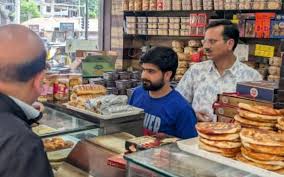
Unsafe food often does not announce itself dramatically.
As food safety inspections intensify in Srinagar, Zafer Iqbal argues that hygiene in Kashmir must become a year-round public culture, not just an occasional enforcement exercise.
The sight of food safety officials inspecting bakery shops on Srinagar’s Residency Road this week is reassuring. It sends a clear message: hygiene matters, public health matters, and the food sold to consumers cannot be left entirely to trust.
The Food Safety Department’s intensified inspections across Srinagar, with a focus on bakery units, ingredient quality, cleanliness and storage standards, are timely. In a city where bakery products are consumed daily in nearly every household—from morning bread and kulcha to evening pastries and snacks – ensuring safe food is not a minor administrative exercise. It is a public health necessity.
Yet while inspection drives are welcome, the larger question remains: can food safety in Kashmir depend only on periodic enforcement campaigns?
The answer is no.
Food safety cannot become visible only when officials arrive with checklists. It cannot be activated only during festive seasons, summer months or in response to complaints. It must become a year-round civic habit shared by regulators, businesses and consumers alike.
Kashmir’s relationship with food is deeply cultural. Food here is not simply nourishment. It is hospitality, tradition, celebration and identity. Bakeries are not merely commercial spaces; they are part of everyday social life. From neighbourhood kandur shops to modern confectioners lining Srinagar’s busy markets, these establishments feed thousands every day. Their products enter homes without much scrutiny because customers assume safety.
That assumption carries responsibility.
When a consumer buys bread, a cream roll, a biscuit packet or a bakery cake, they rarely ask how long ingredients have been stored, whether refrigeration has been maintained, or whether work surfaces are sanitised. Most customers cannot inspect a kitchen. They rely on the system – on shopkeepers, on licensing authorities, on inspectors—to ensure what reaches their plate is safe.
And when that system weakens, public health suffers quietly.
Unsafe food often does not announce itself dramatically. It may appear fresh, smell pleasant and still be contaminated. Poor storage, stale ingredients, contaminated water, improper handling, repeated oil usage, lack of refrigeration or unhygienic preparation can all turn ordinary food into a health risk.
The consequences range from mild food poisoning to serious bacterial infections and long-term health complications. Children, elderly people and those with weakened immunity are especially vulnerable.
This makes food safety different from many other regulatory issues. A violation here is not only a technical lapse. It can directly affect someone’s health.
Kashmir’s food economy has expanded rapidly over the past decade. Traditional bakeries now coexist with cafés, takeaway kitchens, cloud kitchens, dessert counters and packaged food businesses. Food delivery has increased. Demand has grown. Competition is intense. Consumers expect variety and lower prices.
That pressure can sometimes encourage shortcuts.
Cheaper ingredients. Longer shelf storage. Poor refrigeration. Limited cleaning staff. Compromised waste disposal. Weak separation between raw and cooked products.
Not every business cuts corners, of course. Many bakery owners maintain excellent hygiene and take pride in quality. But responsible businesses are often placed at a disadvantage when competitors ignore standards and reduce costs through unsafe practices.
This is why enforcement matters—not to punish business indiscriminately, but to protect fairness.
A clean and compliant bakery should not have to compete against one operating with poor hygiene. Strong regulation protects honest businesses as much as consumers.
The Food Safety Department’s awareness sessions with bakery operators are therefore particularly important. Regulation should not only be punitive. It should also be educational.
Many smaller food operators may not fully understand modern food safety standards, temperature control requirements or contamination risks. Training can often prevent violations before penalties become necessary. Teaching food handlers why raw ingredients must remain separate from finished products, why storage temperatures matter, or why sanitation protocols reduce disease is as important as issuing notices.
But responsibility cannot stop with the department or the businesses.
Consumers too have a role.
Public awareness around food hygiene in Kashmir remains limited. Many people still choose shops based on habit, convenience or price without paying attention to visible cleanliness. Rarely do customers ask whether a product is freshly made, how it has been stored, or whether packaging is labelled properly.
That needs to change.
Consumers should feel empowered to notice hygiene standards—to observe staff handling food, inspect cleanliness around display counters, check expiry dates and raise concerns when conditions appear unsafe. Public reporting mechanisms should be simple, accessible and responsive. Complaints should not disappear into bureaucracy.
A food-safe city requires informed customers.
There is also a larger urban challenge involved.
Waste disposal, drainage, water quality and sanitation infrastructure all influence food hygiene. A bakery can maintain internal cleanliness, but if garbage accumulates outside, drains overflow nearby, or water supply is compromised, food safety risks multiply. Public health is connected to municipal health.
This means food safety policy must work alongside urban management.
For Srinagar especially – where rising temperatures in summer increase spoilage risk – this becomes even more urgent. Heat accelerates bacterial growth. Cream products, dairy items, stored flour and cooked foods become vulnerable much faster. What may remain stable in winter may become unsafe in summer within hours if not handled properly.
With changing weather patterns and longer heat spells, Kashmir’s traditional assumptions around food preservation are also changing.
This requires adaptation.
Better refrigeration. Better monitoring. Better storage infrastructure. More frequent checks.
Not just in bakeries, but in restaurants, street food stalls, meat markets, sweet shops, wholesale storage facilities and food transport chains.
The department’s announcement that surprise inspections will continue across Srinagar is therefore encouraging. But continuity will be the real test.
If inspections remain regular, transparent and city-wide – not selective or occasional – they can build confidence. If violations are addressed consistently, trust grows. If enforcement fades after headlines disappear, little changes.
Ultimately, food safety is not only about compliance certificates or inspection reports.
It is about whether people can eat without fear.
Whether parents can buy snacks for children with confidence.
Whether families can purchase bread each morning without wondering about contamination.
Whether Kashmir’s growing food industry can develop with quality, trust and accountability at its core.
Food is intimate. What we eat becomes part of us.
That is why food safety deserves public attention beyond a single inspection drive. It should not be seen as a bureaucratic requirement but as a collective social commitment.
Kashmir has a rich culinary identity admired far beyond the Valley. Protecting that reputation means protecting the standards behind it.
The inspections in Srinagar this week are a necessary beginning.
But the larger goal must be bigger than inspection.
A culture where clean food is expected. Where hygiene is routine. Where enforcement is continuous. Where business responsibility is non-negotiable.
And where consumers know that what is served across Kashmir is not just delicious – but safe.
About the Author
Zafer Iqbal is a cinematographer with a deep interest in politics. Trained to observe light, movement, and silence, he brings the same sensitivity to the shifting landscapes of politics.














Leave a Comment
Your email address will not be published. Required fields are marked with *