


The waterways remained – beautiful, historic, photographed endlessly – but less central to how Srinagar functioned.
Srinagar is preparing for a water metro across Dal Lake and the Jhelum, an ambitious transit project that could reshape how the city moves, and how it sees itself. Bisma Rafiq reports.
In Srinagar, movement has always belonged to the water.
Before the roads filled with cars and minibuses, before flyovers and traffic diversions and honking bottlenecks became part of daily life, people crossed the city by boat. Wooden shikaras drifted through Dal Lake carrying families, vegetables, flowers, schoolchildren and traders. The Jhelum served as artery and marketplace, route and meeting point. Water was not scenery. It was infrastructure.
Over time, the city turned away from it.
Roads widened.
Vehicles multiplied.
The waterways remained – beautiful, historic, photographed endlessly – but less central to how Srinagar functioned.
The lake became associated more with tourism than transport; the river with memory more than mobility.
Now, the government says it wants to bring the city back to the water.
The Centre has announced plans to introduce water metro services in Srinagar as part of the first phase of a national urban waterways transport programme spanning eighteen Indian cities, positioning the Kashmiri capital within an ambitious push to convert rivers and lakes into working public transport corridors.
The announcement, made by Union Minister for Ports, Shipping and Waterways Sarbananda Sonowal during a review meeting this week, places Srinagar alongside cities such as Guwahati, Patna, Varanasi, Ayodhya and Prayagraj in the first rollout of the project.
If implemented as envisioned, it would mark one of the most significant transformations of Srinagar’s transport landscape in decades.
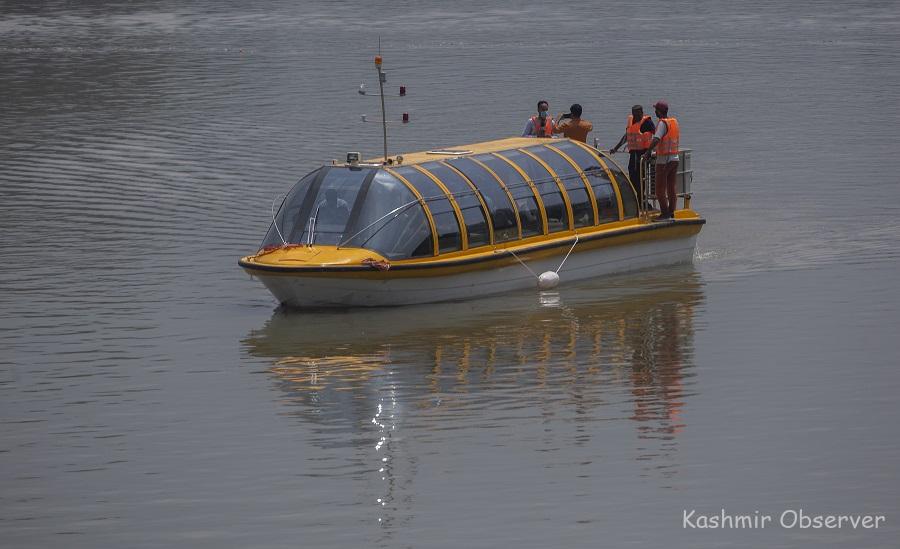
At the centre of the plan is a proposed Rs 900-crore water metro network across Dal Lake and the Jhelum River – a system intended to connect different parts of the city through electric or hybrid ferries, supported by terminals, charging infrastructure and navigational systems.
Officials say the model draws heavily from the Kochi Water Metro, India’s first large-scale urban water metro network, which has been held up as an example of how existing waterways can be repurposed for sustainable mobility with relatively lower infrastructure costs.
For Srinagar, the appeal is immediate.
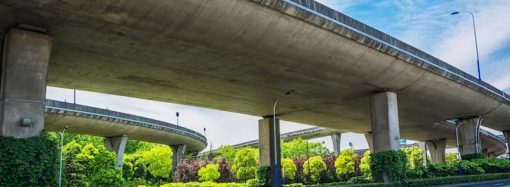
Traffic congestion in the city has become one of its defining urban frustrations. Roads designed for a smaller population now absorb rising private vehicle ownership, tourism traffic, public transport, and commercial movement all at once. Key intersections regularly choke during peak hours. Commute times continue to stretch.
A functioning water transit system could offer more than novelty. It could relieve pressure from the roads.
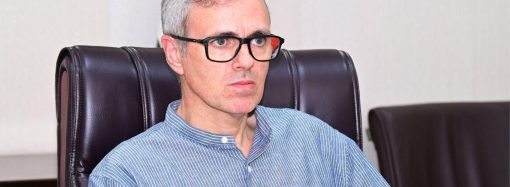
When the Jammu and Kashmir government signed a memorandum of understanding with the Inland Waterways Authority of India in October last year, Chief Minister Omar Abdullah described the Srinagar Water Metro as a project intended to improve connectivity, reduce congestion and create a sustainable public transport alternative for the city.
A similar project, he said at the time, is also being explored for Jammu, including Akhnoor and Reasi.
But beyond traffic planning, the proposed water metro carries another kind of symbolism in Srinagar.
It suggests a return.
Not simply to waterways as transport corridors, but to an older geography of the city—one in which movement through water was ordinary and essential.
For generations, Srinagar grew around the lake and the river. Communities were built facing the water. Commerce moved across it. Lives were structured by proximity to it.
Even today, many parts of the city remain inseparable from that relationship.
Houseboats float permanently on Dal’s surface. Vegetable sellers move through floating markets at dawn. Narrow waterways thread through neighbourhoods with a pace entirely different from the roads above them.
The proposed metro system, if realised, would not recreate that past. It would modernise it.
According to the Union ministry, the water metro framework is intended to serve both commuters and tourists, while prioritising green technology and multimodal urban connectivity. Projects would include ferries, terminals, charging stations, passenger facilities and navigation systems under an integrated development model.
Funding may come through Centre-state partnerships, public-private models, or direct state or federal financing depending on project design.
The ministry has also circulated a draft National Water Metro Policy, 2026, suggesting the government is attempting to create a broader national framework for urban water transport rather than treating each city as a standalone experiment.
Feasibility work is already well underway.
Kochi Metro Rail Limited was appointed to conduct studies for eighteen cities earlier last year. Site visits have been completed across all proposed locations, with draft reports submitted for seventeen. Srinagar is among the cities whose feasibility report has already received approval.
In March, the Inland Waterways Authority also signed a separate agreement with the Jammu and Kashmir government to promote river cruise tourism across national waterways in the region – an indication that waterways are increasingly being viewed as part of Kashmir’s economic as well as transport future.
Still, the success of the Srinagar project will likely depend on what happens beyond policy documents.
Whether the ferries integrate with the city’s existing transport network. Whether routes are practical for daily commuters. Whether infrastructure arrives on time. Whether residents choose the water over the road. And whether a city known for living beside water is ready once again to move through it.
For now, the announcement remains a plan.
But it is a striking one: a modern transit system gliding across an ancient lake, linking neighbourhoods through a route older than the roads themselves.
In Srinagar, where traffic often slows the city to a crawl, the future may arrive by ferry.
About the Author
Bisma Rafiq is interested in human resources and wants to improve journalism from the human resources point of view. She is also a passionate story teller.











Leave a Comment
Your email address will not be published. Required fields are marked with *