





The utility urged consumers to use electricity judiciously as several parts of Jammu continued to face prolonged power outages.
Kashmir Impulse Desk
Jammu, May 17
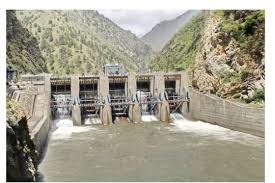
Jammu Power Distribution Corporation Limited on Sunday said lower water discharge in rivers had reduced hydroelectric power generation, widening the gap between electricity demand and supply in the Jammu region amid rising temperatures.
The utility urged consumers to use electricity judiciously as several parts of Jammu continued to face prolonged power outages.
“Lower discharge in rivers reduced power generation, affecting power demand, causing outage in many Jammu areas last night,” JPDCL said in a post on X.
The corporation said efforts were under way to procure additional electricity to manage the shortfall.
“Consumers are requested to use power judiciously. Inconvenience regretted,” it added.
JPDCL said lower water flow in rivers within the Chenab basin had adversely affected power generation, increasing pressure on the electricity grid during peak summer demand.
The Jammu region has witnessed long scheduled and unscheduled power cuts over the past several days, with outages in some areas lasting between five and eight hours, officials and residents said.
According to a curtailment schedule issued by the Superintending Engineer of JPDCL’s Operations and Maintenance Circle in Kathua, electricity supply to Rajpura, Lala Chack, BSF-2nd and adjoining areas would remain suspended on May 18 from 7 a.m. to 12 noon.
Power supply to industrial areas and adjoining localities would also remain affected on May 18 and 19 during the same hours, the utility said.
Separately, the Executive Engineer of Electric Division-I, Parade Jammu, said electricity supply to several localities, including Patel Bazar, Peer Mitha, Jain Bazar and Afghana Mohalla, would remain affected between May 16 and May 30 from 6 a.m. to 1 p.m. on an as-required basis, except on May 27 and 28 during Eid-ul-Adha celebrations.
Jammu plains have been experiencing hot and dry weather conditions with temperatures continuing to rise, increasing electricity consumption across the region.

















Leave a Comment
Your email address will not be published. Required fields are marked with *