


Jaishankar said India had organised more than 80 BRICS-related meetings during its chairmanship, adding that discussions were also underway on integrating new members into the grouping’s existing institutional mechanisms.
Kashmir Impulse Desk
New Delhi, May 15
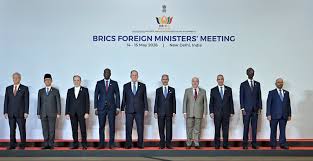
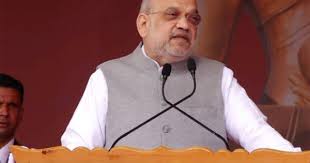
External Affairs Minister S Jaishankar on Thursday called for reforms in global institutions, stronger BRICS cooperation and a unified approach against terrorism as India hosted the BRICS Foreign Ministers’ Meeting in New Delhi amid rising geopolitical and economic uncertainty.
Foreign ministers and senior representatives from BRICS nations attended the meeting under India’s chairmanship, with discussions focused on global conflicts, energy security, climate change, trade disruptions and multilateral reforms.
Addressing the inaugural session, Jaishankar said the world was witnessing a period of “considerable flux in international relations” driven by conflicts, economic instability and challenges related to trade, technology and climate change.
“There is a growing expectation, particularly from emerging markets and developing countries, that BRICS will play a constructive and stabilizing role,” he said.
Jaishankar said India had organised more than 80 BRICS-related meetings during its chairmanship, adding that discussions were also underway on integrating new members into the grouping’s existing institutional mechanisms.
He said it was important that new member states fully align with the bloc’s consensus-based approach on key international issues to ensure the “smooth advancement of BRICS”.
The BRICS grouping, originally comprising Brazil, Russia, India, China and South Africa, expanded in 2024 with the inclusion of Egypt, Ethiopia, Iran and the United Arab Emirates, while Indonesia joined in 2025.
In his remarks on global and regional developments, Jaishankar said the international system was facing “unprecedented geopolitical and economic uncertainty” due to conflicts, climate-related events and the lingering effects of the COVID-19 pandemic.
Referring to tensions in West Asia, he warned that instability around key maritime routes, including the Strait of Hormuz and the Red Sea, posed risks to global economic stability and energy security.
“Safe and unimpeded maritime flows through international waterways, including the Strait of Hormuz and Red Sea, remain vital for global economic well-being,” he said.
On the Gaza conflict, Jaishankar called for a sustained ceasefire, humanitarian access and a credible pathway towards a long-term peaceful resolution, while reiterating India’s support for a two-state solution.
The minister also called for a tougher global stance against terrorism, saying there could be “no justification” for terror acts in any form.
“Cross-border terrorism violates the basic principles of international relations. Zero tolerance must remain an uncompromising and universal norm,” he said.
Jaishankar further pressed for reforms in multilateral institutions, particularly the United Nations Security Council, saying delays in restructuring global governance frameworks were weakening international cooperation.
“With each passing day, the case for reformed multilateralism only gets stronger,” he said.
He also criticised unilateral sanctions and coercive economic measures, saying they disproportionately affected developing countries and could not replace diplomacy and dialogue.











Leave a Comment
Your email address will not be published. Required fields are marked with *