




Lawmakers who had proposed amendments to the bill later withdrew them following government assurances
Kashmir Impulse Desk
Jammu, April 4
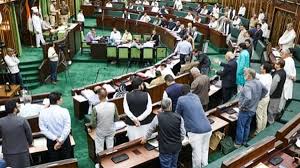
The Jammu and Kashmir Legislative Assembly on Saturday passed two key bills by voice vote on the final day of its budget session, including legislation aimed at decriminalizing minor offenses and another to regulate private universities in the region.
The House cleared the ‘Jammu and Kashmir Jan Vishwas Second (Amendment of Provisions) Bill, 2026,’ which seeks to align local laws with India’s broader push to decriminalise minor violations and reduce regulatory burdens on businesses.
The measure was introduced by Agriculture Minister Javid Ahmed Dar on behalf of Chief Minister Omar Abdullah.
It amends 18 existing laws to replace certain imprisonment provisions with financial penalties and revise outdated fines.
Officials said the legislation builds on an earlier ordinance issued in December 2025 that decriminalised offenses under five laws.
The new bill expands those efforts, aiming to improve the ease of doing business and simplify compliance requirements.
Several lawmakers, including Nizamuddin Bhat, Balwant Singh Mankotia, Pirzada Farooq Ahmad Shah, and Tanvir Sadiq, withdrew proposed amendments after receiving assurances from the government, allowing the bill to pass by voice vote.
The Assembly also approved the ‘Jammu and Kashmir Private Universities Bill, 2026,’ which provides for the establishment and regulation of private universities in J&K.
Education Minister Sakina Itoo said the legislation is intended to strengthen the higher education sector by setting standards for governance, academic quality and accountability, while safeguarding student interests.
The bill outlines provisions for regulatory oversight, adherence to University Grants Commission norms, reservations for local students, scholarships for disadvantaged groups, and penalties for violations.
It also bars capitation fees and mandates safeguards for students in case an institution shuts down.
Lawmakers who had proposed amendments to the bill later withdrew them following government assurances, though one amendment moved by Mankotia was put to a vote and rejected.
The two measures were passed on the concluding day of the session, with officials saying they are expected to support economic activity and expand access to higher education in the region.












Leave a Comment
Your email address will not be published. Required fields are marked with *