



By Kashmir Impulse Desk Srinagar, April 6 In the hills above Tangmarg, where fields tilt gently toward forests and the air carries the scent of damp earth, farming has begun to feel like a profession in retreat. Younger men leave for cities; others stay but hedge their bets, dividing time between land and wage work.
By Kashmir Impulse Desk
Srinagar, April 6
In the hills above Tangmarg, where fields tilt gently toward forests and the air carries the scent of damp earth, farming has begun to feel like a profession in retreat.
Younger men leave for cities; others stay but hedge their bets, dividing time between land and wage work.
The arithmetic of agriculture – input costs rising, returns uncertain – has, for many, stopped adding up.
And yet, on a small plot of land not far from the roadside, a different calculation is quietly taking shape.
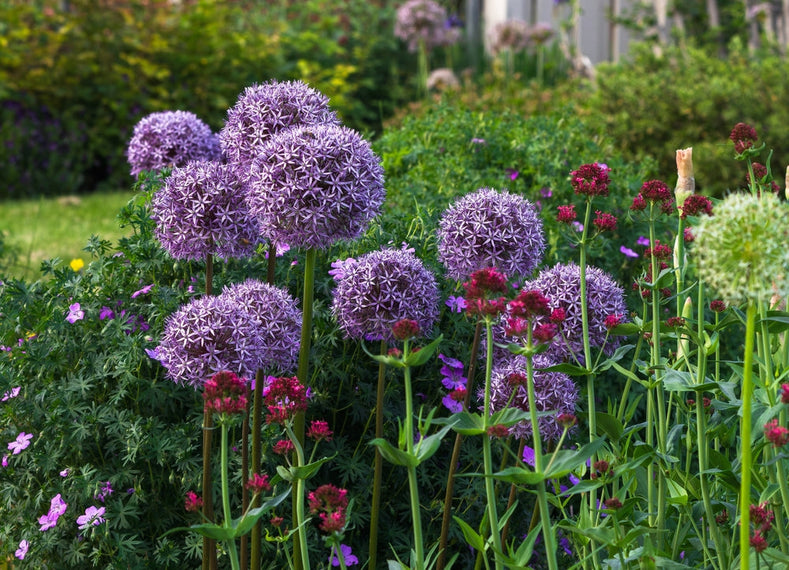
Shabir Ahmad Khanday bends over rows of cockscomb – Mawal, as it is known locally – a plant whose velvety, flame-like blooms arrive in deep crimsons and purples.
The flowers do not announce themselves loudly from a distance, but up close they are almost excessive in their texture, as if designed less for fields than for display.
In Kashmir, they have long belonged to ritual and cuisine: dried, ground, and used to lend colour to the elaborate dishes of Wazwan.
Khanday began growing them in 2019, on a single kanal of land, with little more than a suggestion from the Department of Agriculture and a willingness to experiment.
At the time, he did not fully understand the market he was entering.
“I didn’t have a clear idea of where it would go,” he recalls.
What he had instead was a sense – more instinct than plan – that something overlooked might still hold value.
The early days were tentative.
The crop itself demanded care: seeds sown in March, flowering peaking in June, and then the delicate work of drying.
Mawal cannot be exposed to direct sunlight; its colour, the very quality that gives it value, fades under harsh conditions.
The flowers must be dried in shade, slowly, attentively, preserving both hue and form.
It is a process that resists haste.
What Khanday was learning, in effect, was not just cultivation but translation – how to move a traditional crop from local use into a broader market without losing what made it distinct.
Over time, the scale shifted.
The single kanal expanded, and with it, the ambition.
Today, Khanday’s cockscomb travels far beyond Tangmarg, reaching markets in the United States and the Gulf.
Recently, he fulfilled an order of 300 kg bound for US, a figure he mentions not as a culmination but as a marker along a longer trajectory.
“This is just the beginning,” he says, with a certainty that feels practiced but not rehearsed.
The numbers, while modest by industrial standards, carry a different weight in a place where farming is often measured in subsistence.
They suggest the possibility of agriculture not merely as continuity, but as enterprise.
Khanday does not work alone.
As his output has grown, he has begun sourcing flowers from other farmers in the area, creating a small but expanding network.
The arrangement is informal, built on proximity and trust, but it introduces a different model – one in which individual success begins to distribute itself across a community.
“Everyone can benefit,” he says, though the statement feels less like a slogan than an observation in progress.
The broader context is less encouraging.
Across Kashmir, agriculture has been losing both labour and prestige.
Fields lie fallow where they once supported families; younger generations look elsewhere, toward jobs that promise stability, if not always satisfaction.
The decline is not abrupt but cumulative, shaped by years of diminishing returns and limited access to markets.
In that landscape, Khanday’s work occupies an ambiguous space.
It is at once traditional and adaptive, rooted in a crop with cultural resonance but sustained by an awareness of global demand.
He speaks easily about organic practices and quality control, about meeting export standards, about the importance of presentation.
At the same time, he frames his efforts in terms that are almost custodial.
“I don’t want this crop to disappear,” he says.
There is, in that impulse, a recognition that value is not always inherent; it must be maintained, argued for, sometimes reintroduced.
Support from the Agriculture Department played a role in the beginning, particularly during trial phases that drew in dozens of farmers.
Many, Khanday notes, eventually withdrew – discouraged by uncertainty, by the lag between effort and return.
He stayed, driven less by immediate profit than by a belief that the crop could be made viable.
Now, he is looking toward formal recognition, working to secure a geo-tag that would identify Mawal as a distinct product of the region.
The goal is partly protective, partly promotional: to ensure that what is grown here is understood, elsewhere, as something specific, not interchangeable.
It is, in its own way, an attempt to fix identity in a market that tends to blur it.
By late afternoon, the fields in Tangmarg take on a softer light, the colours of the cockscomb deepening rather than fading.
However, the work continues – harvesting, sorting, preparing for drying.
It is repetitive, careful, and not easily mechanised.
Khanday moves through it with a familiarity that suggests both routine and investment.
What he has built is still small, still contingent on variables beyond his control – weather, demand, logistics.
But it is also, unmistakably, a departure from the narrative of decline that surrounds it.
“I started with 50 kg,” he says, recalling his first export. “Now we’ve reached 300.”
He does not linger on the number. Instead, he looks ahead, toward expansion, toward the possibility of drawing others back into the fields.
In a region where agriculture is often spoken of in the past tense, his work insists, quietly, on the present.









Leave a Comment
Your email address will not be published. Required fields are marked with *