





Maecenas mauris elementum, est morbi interdum cursus at elite imperdiet libero. Proin odios dapibus integer an nulla augue pharetra cursus.
Kashmir Impulse Desk
Jammu, March 31
A series of recent audit findings on Jammu and Kashmir’s finances, public services and environmental management will be examined by two key legislative panels, the region’s top audit official said on Tuesday, signaling the next step in determining accountability and corrective action.
Speaking at a news conference in Jammu, Accountant General (Audit) J&K, Tsewang Tharchin, said that reports prepared by the Comptroller and Auditor General of India had been tabled in the Legislative Assembly and would now be taken up by the Public Accounts Committee and the Committee on Public Undertakings.
“These committees will deliberate on the findings and decide on the course of action,” Tharchin said.
The eight audit reports span a wide range of sectors, from fiscal management and public sector enterprises to health care, environmental conservation and welfare programs.
Together, they present a detailed – and at times critical – picture of governance in J&K.
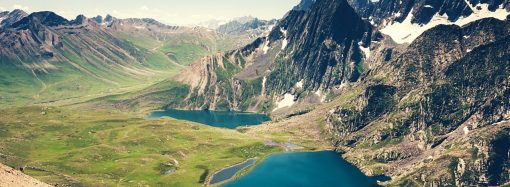
Among the most striking findings were those related to the region’s iconic lakes.
An audit of conservation efforts through March 2022 found that environmental degradation and administrative gaps had hindered restoration work, particularly in Dal Lake.
According to the report, untreated sewage, ineffective weed removal and gaps in monitoring contributed to the failure to restore the lake’s open water area.
Several sewage treatment plants were found to be malfunctioning or, in some cases, contributing to pollution rather than mitigating it.
The audit also pointed to broader weaknesses in lake management across the region, including delays in relocating residents, insufficient catchment treatment and the absence of clear mandates for development authorities tasked with conservation.
In the case of Wular Lake, the report cited the lack of an effective governing body and the absence of a comprehensive restoration plan, which limited access to federal funding and slowed conservation efforts.
Increasing siltation, partly attributed to inadequate afforestation in surrounding areas, has accelerated the lake’s degradation, auditors said.
Using satellite data, auditors also tracked land-use changes across dozens of lakes between 2014 and 2020, finding a steady decline in open water areas alongside expansion of built-up and agricultural land. In some cases, lakes had nearly disappeared.
The reports also highlighted systemic challenges in public health infrastructure.
As of March 2022, only about two-thirds of sanctioned positions for doctors, nurses and paramedical staff were filled, leading to shortages that affected service delivery across districts.
The gaps were unevenly distributed, with some areas facing far more severe shortages than others.
In several hospitals, the lack of specialists and essential facilities – including emergency operation theaters and blood storage units – limited the availability of critical services, forcing patients to seek care elsewhere or endure long wait times.
While the audit noted that doctor-to-population ratios in J&K compared favourably with some Indian states, it emphasised that staffing levels remained insufficient relative to demand and were not aligned with population needs.
Other reports reviewed programs such as direct benefit transfers, solid waste management and infrastructure funding, identifying issues ranging from implementation delays to gaps in oversight.
Tharchin said the audit process was intended to provide a factual basis for legislative oversight rather than immediate enforcement.
The responsibility for acting on the findings now rests with elected representatives.
As the reports move to committee review, they are expected to shape debates over governance, spending and service delivery in Jammu and Kashmir – and determine whether the shortcomings identified by auditors translate into policy changes on the ground.














2 Comments
Heather Dale
March 6, 2015, 3:47 pmDonec ipsum diam, pretium maecenas mollis dapibus risus. Nullam tindun pulvinar at interdum eget, suscipit eget felis. Pellentesque est faucibus tincidunt risus id interdum primis orci cubilla gravida.
REPLYAlex Holden@Heather Dale
March 6, 2015, 3:50 pmMaecenas dolor, sot donec ipsum diam, pretium gravida nulla maecenas mollis dapibus risus. Nullam tindun pulvinar at interdum eget, suscipit eget felis. Pellentesque est faucibus tincidunt.cubilla gravida.
REPLY