




Clears Rs 3.15 lakh crore PM-KISAN extension, Rs 84,084 crore offshore exploration plan and major sports, solar initiatives
Kashmir Impulse Desk
New Delhi, July 31
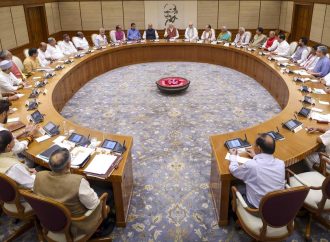
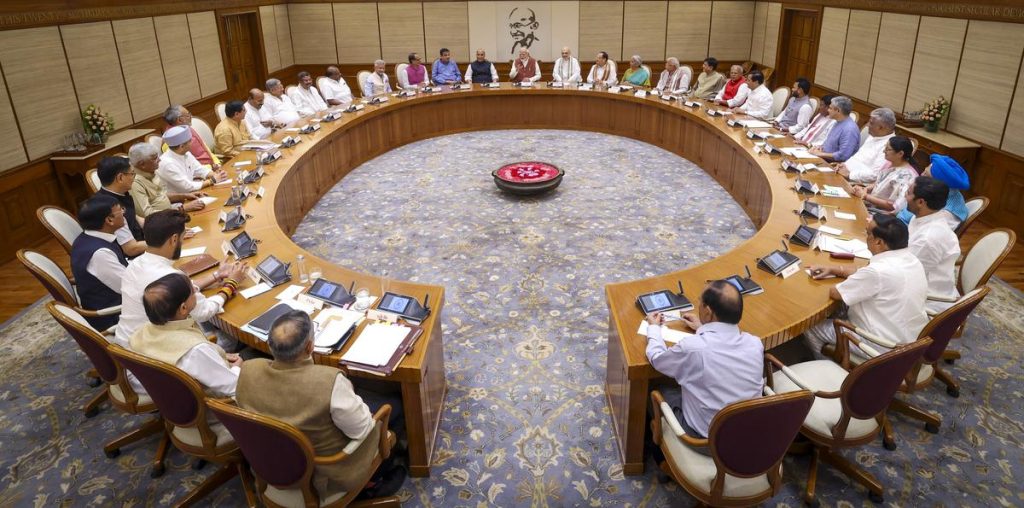
The Union Cabinet, chaired by Prime Minister Narendra Modi on Friday, approved four major initiatives aimed at strengthening India’s energy security, promoting sports and youth development, supporting farmers and accelerating renewable energy capacity.
The decisions include the ‘Samudra Manthan’ (National Offshore Exploration Scheme) with an outlay of Rs 84,084 crore, the revamped Khelo India Scheme and enhanced Assistance to National Sports Federations (ANSFs) with a combined outlay of Rs 36,441 crore, continuation of the PM-KISAN Scheme from 2026-27 to 2030-31 with a financial outlay of Rs.3.15 lakh crore, and the ‘Pradhan Mantri Surya Sarovar Yojana (PM-SSY)’ for development of Floating Solar Photovoltaic Projects with Energy Storage Systems with a total outlay of Rs 5070 crore.
The Union Cabinet, chaired by the Prime Minister Narendra Modi, has approved ‘Samudra Manthan’ – the National Offshore Exploration Scheme, a Central Sector Scheme of the Ministry of Petroleum and Natural Gas with an approved outlay of Rs 84,084 crore for implementation up to FY 2030-31.
The Scheme translates the Prime Minister’s vision, articulated from the Red Fort on Independence Day 2025, of a modern-day Samudra Manthan to unlock India’s vast offshore energy potential. It marks a landmark step towards strengthening India’s energy security, accelerating domestic exploration and production, promoting technological leadership, and advancing the vision of Viksit Bharat.
The Scheme encompasses a comprehensive set of interventions across the offshore exploration value chain. It provides for large-scale acquisition, processing and interpretation of high-quality seismic data, accelerated deepwater and ultra-deepwater exploratory drilling, scientific drilling in frontier basins, development of common offshore production and evacuation infrastructure, and establishment of an integrated Oil and Gas Manufacturing and Services Zone. It also includes dedicated provisions for digital programme management, capacity building, technology adoption, stakeholder engagement and international outreach, creating an integrated ecosystem to accelerate offshore exploration and production in the country.
Samudra Manthan is expected to catalyse reserve accretion of over 600 Million Metric Tons of Oil Equivalent (MMTOE), substantially increase offshore exploration activity, promote higher domestic oil and gas production, generate large-scale employment, strengthen indigenous manufacturing under Make in India and Atmanirbhar Bharat, and foster a globally competitive ecosystem for offshore technologies and services. The Scheme is also expected to stimulate significant investments across the exploration and production value chain, creating long-term opportunities for industry, innovation and economic growth.
As India progresses towards becoming a developed nation, Samudra Manthan represents a transformational national initiative that will unlock the country’s offshore energy resources, strengthen long-term energy security, deepen technological capabilities, and create enduring value for the economy and future generations.
Over the past decade, the Government has undertaken transformative reforms across the upstream sector, including opening almost the entire offshore acreage for exploration, modernising the legislative and contractual framework, and strengthening the National Data Repository. Building on these reforms, Samudra Manthan will usher in a new era of accelerated offshore exploration through strategic public investment, cutting-edge technologies and world-class infrastructure.
The Union Cabinet chaired by the Prime Minister Shri Narendra Modi has approved an expanded Khelo India Scheme and enhanced Assistance to National Sports Federations (ANSFs) with a combined outlay of Rs.36,441 crore for the period 2026-27 to 2030-31, reaffirming the Government’s commitment to harnessing the power of sports for youth development and nation-building.
This is the country’s most ambitious sports development programme since Independence. The aspirations of the youth of the country towards sports have been given a major boost and will have a transformational impact over the coming decade.
The approved outlay is nearly eight times that of the previous Khelo India Scheme, reflecting the Government’s commitment to making sports a cornerstone of youth development, nation-building and India’s emergence as a global sporting powerhouse.
The revamped scheme is designed to create a seamless pathway for every talented young Indian – from school playgrounds and village sports fields to the Olympic podium. It seeks to ensure that no sporting talent is left undiscovered because of geography, economic background or lack of opportunity.
Aligned with the vision of Khelo Bharat Niti 2025 and the National Education Policy 2020, the scheme integrates sports with education, fitness, technology and high-performance training while laying a strong foundation for India’s long-term sporting ambitions, including the 2030 Commonwealth Games and the country’s bid to host the Olympic and Paralympic Games.
For the first time, a comprehensive athlete development pathway has been created to support young sportspersons at every stage – from talent identification and scientific training to international competition and Olympic preparation.
The scheme establishes an integrated nationwide sports ecosystem comprising National Centres of Excellence (NCOEs), Khelo India Centres of Excellence (KICoEs), SAI Training Centres (STCs), Khelo India Accredited Academies (KIAAs), Khelo India Centres (KICs) and Youth Sports Companies (YSCs) of the Armed Forces. Together, these institutions will provide world-class coaching, sports science support and modern infrastructure across the country.
To strengthen the school sports ecosystem, the Government has introduced two new initiatives – Khelo India Feeder Schools (KIFS) and Khelo India Utkrishta Vidyalayas (KIUV) – which will integrate sports with mainstream education and enable early identification and systematic nurturing of talented children.
A major reform under the scheme is the creation of the Emerging Khelo India Athletes (E-KIAs) category alongside the existing Khelo India Athletes programme. This will expand the structured athlete development ecosystem by nearly ten times, bringing thousands of additional young athletes under professional coaching, scientific support and long-term mentoring.
A strengthened nationwide talent identification framework involving Talent Identification Development Committees, Zonal Committees, Talent Scouts, High Performance Directors and High Performance Managers will ensure continuous identification, tracking and development of promising athletes across the country.
The scheme also establishes a clear progression pathway from grassroots competitions to Khelo India, and subsequently to the Target Olympic Podium Scheme (TOPS), enabling deserving athletes to receive world-class training, international exposure and comprehensive support to compete for medals at the highest level.
Recognising that sporting excellence depends on regular competition, the revamped scheme significantly strengthens India’s domestic competition ecosystem. It supports school, university, regional and sport-specific leagues alongside national championships to provide sustained competitive exposure to young athletes.
Special emphasis has been placed on expanding opportunities for women athletes, para-athletes, indigenous sports, and sports as a tool for peace, inclusion and community development. The scheme also provides support for organising the National Games and hosting major international sporting events in India.
The Fit India Movement will be significantly expanded to promote fitness as a nationwide movement, particularly among young people. Campaigns will encourage active lifestyles, women’s participation in sports, outreach in border and remote areas and sports-based initiatives against substance abuse, reinforcing sports as a vehicle for social transformation.
Recognising that athletes can excel only with world-class support systems, the Government will establish the National Coach Accreditation Board (NCAB) to standardise coaching qualifications, improve professional standards and strengthen the capacity of coaches and support staff across the country.
The scheme also envisages a unified digital sports platform integrating athlete databases, infrastructure, competitions, coaching resources, talent assessments, funding and Fit India participation. The platform will enable data-driven planning, transparent governance and personalised athlete development.
The Government will deepen collaboration with private academies, corporate partners and other institutions to leverage investment, innovation and expertise in sports infrastructure, talent development and athlete support, creating a truly national sports ecosystem driven by both public and private participation.
To complement the revamped Khelo India Scheme, the Government has also approved a strengthened Assistance to National Sports Federations (ANSF) Scheme for the period 2026-31. The scheme will support Indian athletes and teams through funding for coaching, sports science, modern equipment, international exposure, coaching camps, engagement of foreign experts and participation in major international competitions. It will also support sports cooperation with countries of the Global South and promote India’s indigenous sports internationally.
The revamped Khelo India Scheme represents one of the largest investments ever made in India’s sporting future. More than a sports programme, it is a national mission to empower young Indians with opportunity, confidence and excellence.
By creating a seamless pathway from grassroots talent to global sporting success, the scheme aims to nurture champions, inspire a culture of fitness, strengthen India’s sporting ecosystem and position the country among the world’s leading sporting nations as it moves towards the vision of Viksit Bharat@2047.
Cabinet approves continuation of the PM-KISAN Scheme from 2026-27 to 2030-31. The Union Cabinet, chaired by Prime Minister Narendra Modi, has approved continuation of the Pradhan Mantri Kisan Samman Nidhi (PM-KISAN) Scheme from 2026-27 to 2030-31. A total financial outlay of Rs.3.15 lakh crore has been approved for the Scheme during this period.
The approval reiterates the Government’s commitment that the prosperity of farmers forms the foundation of the nation’s prosperity. Through the PM-KISAN Scheme, timely and transparent income support is being provided to eligible farmer families through the Direct Benefit Transfer (DBT) system, enabling farmers to increase agricultural investment and strengthen their livelihoods.
The PM-KISAN Scheme was launched in February 2019. Under the Scheme, eligible landholding farmer families receive financial assistance of Rs 6000 per year, transferred directly into their bank accounts in three equal instalments. Through Aadhaar authentication, digital verification and a robust DBT system, the Scheme has set an effective example of transparency, efficiency and accountability.
More than Rs 4.47 lakh crore has been transferred directly into farmers’ bank accounts through 23 instalments under the Scheme.
Under the 23rd instalment, more than 9.49 crore farmers benefited, with over Rs.18,984 crore released.
During the COVID-19 pandemic, more than Rs.1.71 lakh crore was disbursed to provide financial assistance to farmers.
Women farmers have received more than Rs 1.06 lakh crore under PM-KISAN, and nearly one out of every four beneficiaries is a woman farmer.
The assistance provided under PM-KISAN has enabled farmers to make timely investments in seeds, fertilizers, irrigation, agricultural machinery and other agricultural requirements. This has enhanced farmers’ productive capacity, reduced their dependence on informal credit and strengthened the financial stability of rural households.
The impact of the PM-KISAN Scheme has been assessed by various independent institutions. According to the evaluation conducted by the Development Monitoring and Evaluation, more than 92 percent of beneficiaries reported that they utilised the assistance amount for agricultural activities and agricultural investment.
Approximately 85 percent of beneficiaries confirmed an improvement in agricultural income and a reduction in dependence on informal credit.
During the period 2020-21 to 2025-26, foodgrain production recorded significant growth. During this period, the area under cultivation increased by approximately 9.65 percent, productivity by approximately 10.53 percent, and total foodgrain production by approximately 21.18 percent, reflecting the comprehensive support being provided to farmers under PM-KISAN and the growing capacity of the agriculture sector.
The PM-KISAN Scheme is an excellent example of the effective use of Digital India. Through Aadhaar-based authentication, digital beneficiary verification and the DBT system, financial assistance is being transferred directly to farmers. The Scheme is not limited to providing financial assistance alone; it is also strengthening farmers’ confidence, self-reliance and capacity to invest in agriculture.
The continued expansion of the PM-KISAN Scheme will enhance farmers’ capacity to invest in agriculture, improve productivity, help reduce agricultural risks and strengthen the rural economy.
The PM-KISAN Scheme is an important pillar of the Government’s farmer-centric policies. The Scheme is aimed at empowering crores of the country’s food producers, thereby strengthening their role in India’s journey towards Viksit Bharat.
Cabinet approves ‘Pradhan Mantri Surya Sarovar Yojana (PM-SSY)’ for Development of Floating Solar Photovoltaic Projects with Energy Storage Systems with a total outlay of Rs 5070 crore
The Union Cabinet, chaired by the Prime Minister Narendra Modi, today approved the ‘Pradhan Mantri Surya Sarovar Yojana (PM-SSY)’, a Scheme for the development of Floating Solar Photovoltaic (FSPV) Projects with Energy Storage Systems (ESS) with a total outlay of Rs.5,070 crore.
The scheme envisages the development of 5,000 MW of Floating Solar Photovoltaic projects with co-located Energy Storage Systems having a minimum storage capacity of two hours, that is 10,000 MWh. The projects will be sanctioned during FY 2026-27 to FY 2030-31, with disbursement of financial support continuing up to FY 2032-33.
The approval follows the recent assessment undertaken by the National Institute of Solar Energy (NISE), which has estimated a floating solar potential of approximately 102.18 GWp across reservoirs and other suitable inland water bodies in the country.
Under the scheme, Central Financial Assistance (CFA) of Rs 1 crore per MW will be provided for eligible Floating Solar Photovoltaic projects after successful commissioning. In addition, CFA of up to Rs 50 lakh per project will be available for undertaking feasibility studies, including bathymetry and hydrography assessments, environmental studies, and other preparatory activities required for de-risking the project development.
All States and Union Territories will benefit through this scheme. The scheme would enhance the floating Solar PV capacity in the country by 5000 MW, which is presently around 700 MW only. These projects would provide an opportunity to gainfully utilize existing reservoirs and industrial ponds, and eliminate competition for scarce land resources. The integration of an energy storage system will help strengthen grid reliability. The scheme would help in the reduction of around 10 million tonnes of CO₂ emissions annually. It would help in the generation of approximately 16,000-17,000 full-time equivalent employment opportunities across the project value chain. The scheme would also promote domestic manufacturing of flotation systems as well as the entire value chain of the projects, like PV cells, modules, energy storage systems, and support the vision of Aatmanirbhar Bharat.
The scheme will contribute to renewable energy capacity addition, support the achievement of national energy and climate objectives, and facilitate optimal utilisation of water resources while advancing the vision of Viksit Bharat.