




Reviews anti-terror strategy, calls for protection of Amarnath Yatra, rail network, tourist hubs
Kashmir Impulse Desk
Srinagar, July 10
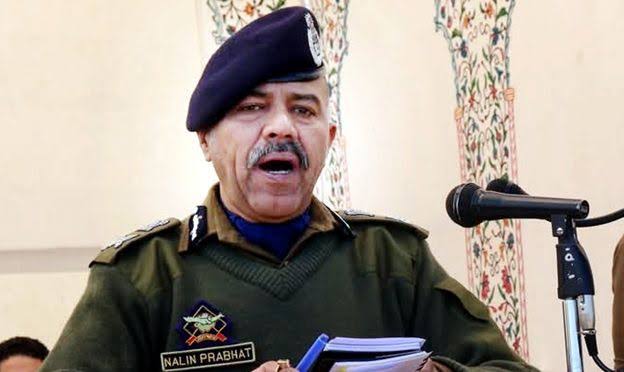
Director General of Police (DGP) Nalin Prabhat on Friday ordered security forces to intensify surveillance, strengthen anti-terror operations and maintain heightened vigilance across the region, as senior commanders reviewed the security environment amid the ongoing Amarnath pilgrimage and the summer tourist season.
Prabhat chaired a high-level meeting in Srinagar bringing together senior officers from the Indian Army, Central Armed Police Forces (CAPFs), intelligence agencies and the Jammu and Kashmir Police to assess operational preparedness and reinforce coordination among security agencies.
The review comes at a time when authorities have significantly tightened security across Jammu and Kashmir to safeguard the annual Amarnath Yatra, one of India’s largest religious pilgrimages, while also protecting critical infrastructure and popular tourist destinations against potential militant threats.
Officials said the meeting focused on intelligence assessments, deployment strategies, traffic management, disaster preparedness and the implementation of standard operating procedures designed to respond swiftly to evolving security challenges.
“We must maintain the highest level of operational readiness,” Prabhat told the meeting, according to officials familiar with the discussions.
He directed field commanders to enhance surveillance across vulnerable locations, intensify area domination exercises and sustain pressure on militant networks operating in the region.
The police chief also called for regular cordon-and-search operations, increased night patrols and stronger monitoring of routes used by Amarnath pilgrims, railway infrastructure, the Jammu-Srinagar National Highway and major tourist destinations, all of which remain under an extensive multi-layered security cover.
Authorities said special emphasis was placed on monitoring militant associates and individuals suspected of providing logistical or financial support to insurgent groups.
Prabhat instructed officers to ensure timely preventive action and pursue anti-terror operations aimed at disrupting militant infrastructure before attacks could be planned or executed.
The meeting also reviewed measures introduced to strengthen access control at vulnerable locations, including the establishment of additional checkpoints and enhanced verification procedures along sensitive stretches of the pilgrimage routes.
Officials briefed the DGP on the deployment of anti-drone systems, no-fly zones, ridge domination by security forces and surveillance technologies that have become integral to protecting the annual pilgrimage.
The Amarnath Yatra has historically remained a high-security event because of past militant attacks targeting pilgrims and security personnel. Although the overall security situation has improved in recent years, authorities continue to deploy thousands of personnel drawn from the police, army and paramilitary forces to secure both the Baltal and Pahalgam routes.
Beyond conventional security measures, disaster preparedness featured prominently during Friday’s review.
With the pilgrimage taking place during the monsoon season, flash floods, landslides and extreme weather remain significant operational concerns in the Himalayan terrain.
Prabhat directed all agencies to maintain contingency plans for weather-related emergencies, including rapid evacuation procedures, emergency medical support, temporary shelter arrangements and uninterrupted communication between field units.
Officials were also instructed to strengthen public awareness campaigns at pilgrimage base camps by educating devotees about weather advisories, emergency protocols and safety guidelines before they begin the trek to the cave shrine.
The DGP emphasised that effective coordination among multiple agencies remained essential for responding quickly to any emerging threat.
“Real-time intelligence sharing and seamless inter-agency cooperation are critical to maintaining a secure environment,” he said.
Security officials attending the meeting presented detailed assessments covering operational deployments, intelligence inputs and preparedness levels across different districts.
The discussions also examined traffic regulation plans intended to facilitate the movement of pilgrims while ensuring that emergency services and security convoys could operate without disruption.
Besides senior Jammu and Kashmir Police officers, the meeting was attended by General Officer Commanding (GOC) of the Army’s Srinagar-based 15 Corps, Lieutenant General Balbir Singh, along with senior representatives from the Central Reserve Police Force (CRPF), Border Security Force (BSF), Indo-Tibetan Border Police (ITBP), Sashastra Seema Bal (SSB), the Criminal Investigation Department (CID) and other intelligence agencies.
Range Deputy Inspectors General, district police chiefs and senior army officers responsible for operational planning across the Kashmir Valley also participated in the review.
The meeting concluded with directions for sustained coordination between all security agencies as authorities prepare for the next phase of the pilgrimage, which is expected to witness a continued influx of devotees over the coming weeks.
Officials said the security grid would remain under constant review, with operational plans being adjusted in response to intelligence inputs and changing ground conditions, as the administration seeks to ensure that both pilgrims and tourists can travel safely during one of the busiest periods of the year.