





Iranian officials cancelled a planned trip to Switzerland, insisting that fighting in Lebanon must cease before negotiations can proceed
Kashmir Impulse Desk
New Delhi, June 19
Planned talks between the United States and Iran were postponed on Friday after heavy fighting between Israel and Hezbollah in southern Lebanon, three officials said, casting doubt on efforts to advance a fragile agreement aimed at ending regional hostilities and addressing Tehran’s nuclear programme.
Iranian officials cancelled a planned trip to Switzerland, insisting that fighting in Lebanon must cease before negotiations can proceed, the officials said, speaking on condition of anonymity because of the sensitivity of the diplomatic efforts.
US Vice President JD Vance also called off his visit.
The postponement followed a sharp escalation in violence along the Israel-Lebanon border. Israel’s military said it carried out overnight strikes in southern and eastern Lebanon, while Hezbollah reported intense clashes.
Lebanon’s Health Ministry said at least 21 people were killed, while Israel reported the deaths of four soldiers.
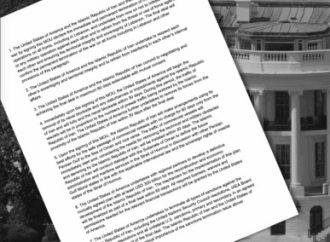
The Israel-Hezbollah front has emerged as the most fragile element of a broader interim understanding involving Iran. Neither Israel nor Hezbollah is a party to the agreement, but the deal is intended to halt hostilities and create conditions for wider negotiations involving Tehran and Washington.
Diplomats are now seeking to reschedule the Switzerland meetings, which were expected to focus on curbing Iran’s nuclear activities, a central issue in tensions between Iran, Israel and the United States.
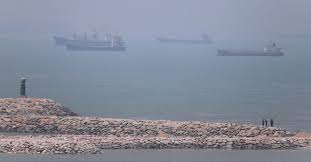
The talks were also intended to advance efforts toward a permanent settlement of regional conflicts. The interim arrangement has already facilitated renewed shipping through the Strait of Hormuz after months of disruptions caused by Iranian attacks and threats against maritime traffic.
A newly established Iranian authority overseeing the strategic waterway issued guidance on Friday asking vessels to register with it, signalling Tehran may seek to impose future transit charges despite current unrestricted passage.
Israel said military operations in Lebanon continued on Friday after four soldiers, including a lieutenant colonel, were killed in an attack on a tank near the southern Lebanese city of Nabatiyeh. Another five soldiers were wounded in a drone strike, the military said.
Israeli forces subsequently launched strikes against what they described as Hezbollah infrastructure in Nabatiyeh and other areas, accusing the group of violating ceasefire arrangements. The military later reported strikes in Lebanon’s eastern Beqaa Valley.
Israeli Prime Minister Benjamin Netanyahu said Israel would respond forcefully to attacks on its forces and territory.
Hezbollah said it had targeted Israeli tanks in response to what it described as Israeli violations of the ceasefire. The group said the clashes occurred after Israeli troops attempted to advance toward the northern side of the Ali al-Taher hill overlooking Nabatiyeh.
Residents in southern Lebanon fled affected areas as fighting intensified.
“The situation is lawless, we couldn’t stay,” Mustafa Zain said while evacuating his family from the area.
The renewed violence threatens to undermine the recently signed agreement, which calls for respect for Lebanon’s territorial integrity and sovereignty. However, the deal does not specify whether Israel would withdraw from areas of southern Lebanon occupied during the conflict.
Iran has repeatedly demanded a full Israeli withdrawal, while Netanyahu said on Thursday that Israeli forces would remain in a security zone in southern Lebanon as long as required.
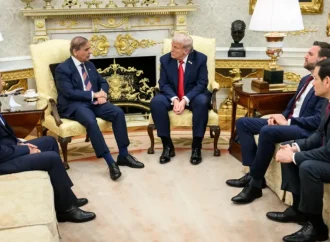
The fighting has also exposed tensions between Israel and the United States, with President Donald Trump becoming increasingly critical of Netanyahu, according to officials familiar with the discussions.
Iran’s refusal to attend the Switzerland talks has complicated diplomatic efforts. Tehran has made a cessation of Israeli military operations in Lebanon a condition for participating in negotiations, officials said.
The White House said logistical considerations were behind Vance’s decision to postpone his trip.
Regional officials said Pakistan and other countries involved in mediation efforts were surprised by Iran’s decision to delay participation.
Negotiators had hoped to begin discussions on Iran’s nuclear programme, which Tehran says is intended for peaceful purposes. Western governments have long expressed concern over Iran’s stockpile of highly enriched uranium, which the U.N. nuclear watchdog says could be used to produce nuclear weapons if Tehran chose to do so.
Diplomats caution that any new nuclear agreement could take months to negotiate. The 2015 accord between Iran and world powers required more than a year of talks before it was concluded.
Under the interim arrangement, negotiators have 60 days to reach a broader agreement, with the possibility of an extension. The framework includes incentives for Iran, including the eventual lifting of international sanctions and access to funding for post-war reconstruction.
Since the agreement was announced, the United States has eased restrictions on Iranian ports and oil exports, while discussions continue over the release of frozen Iranian assets.
Oil shipments through the Strait of Hormuz have resumed in recent days, although industry analysts say it could take weeks or months before energy flows return to normal levels.