





Plans expanded Himalayan forecasting network
Kashmir Impulse Desk
Jammu, June 5
India on Friday inaugurated its seventh Regional Meteorological Centre (RMC) in Jammu, a move the government said would strengthen weather forecasting, disaster preparedness and climate services across the western Himalayan region, as authorities seek to improve early warning systems in an area increasingly vulnerable to extreme weather events.
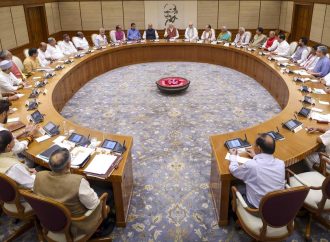
Union Minister Jitendra Singh inaugurated the facility and announced that a similar regional centre would soon be established in Lucknow as part of a broader restructuring of the India Meteorological Department’s (IMD) forecasting network.
The new Jammu centre will cater to Jammu and Kashmir, Ladakh, and Himachal Pradesh, providing specialised weather services tailored to the diverse terrain of the Himalayan region, which includes high-altitude mountains, glacier-fed river systems and densely populated valleys.
“The establishment of the Regional Meteorological Centre in Jammu marks an important milestone in strengthening weather services and disaster preparedness in the region,” Singh said during the inauguration ceremony.
The development comes amid growing concerns over climate-induced disasters in the Himalayas, where cloudbursts, flash floods, avalanches and landslides have become increasingly frequent and destructive.
Singh said the new centre would significantly improve forecasting capabilities and provide district-level weather updates, mountain forecasts, tourist advisories and early warnings for adverse weather conditions.
Until now, weather services for Jammu and Kashmir, Ladakh and several northern states were coordinated through the Regional Meteorological Centre in New Delhi.
Under the new arrangement, forecasting responsibilities for Jammu and Kashmir, Ladakh and Himachal Pradesh will be managed from Jammu, while the proposed Lucknow centre will oversee Uttar Pradesh and Uttarakhand.
Officials said the decentralisation would improve responsiveness and allow forecasters to better account for local geographical conditions.
Responding to questions about recent cloudburst incidents in Reasi and Kishtwar districts, Singh said precise forecasting of cloudbursts remained difficult worldwide but emphasised that meteorological agencies were increasingly capable of identifying conditions that could lead to such events.
“There is no exact cloudburst forecast available anywhere. Our effort is to forecast the contributing factors so that losses can be minimised,” he said.
The minister also stressed the importance of compliance with weather advisories, saying warnings often failed to achieve their intended impact because they were not taken seriously by authorities or the public.
“The forecasts should be taken seriously,” he said.
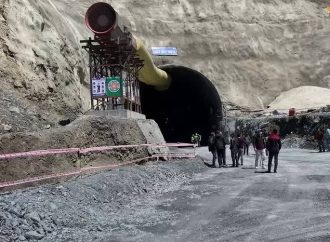
Singh announced that an Automatic Weather Station and a new seismological observatory would be established in Kishtwar district, including near Chisoti, an area affected by a major weather-related disaster last year.
He said land required for the projects had already been identified and approved by district authorities.
Officials said the new meteorological centre would benefit pilgrims travelling to the Amarnath cave shrine and the Vaishno Devi temple, as well as farmers, hydropower operators, transport agencies, disaster management authorities and security forces operating in remote terrain.
Highlighting the expansion of weather infrastructure in Jammu and Kashmir over the past decade, Singh said the region currently has four operational Doppler Weather Radars located in Jammu, Srinagar, Leh and Banihal Top.
Five additional radars have been proposed under the Centre’s Mission Mausam programme for Anantnag, Rajouri, Baramulla, Kishtwar and Doda districts.
The observational network has also expanded significantly, with 56 weather observatories currently functioning across Jammu and Kashmir and Ladakh, compared with a much smaller network a decade ago.
Several new Automatic Weather Stations have recently been installed, including facilities at Kargil, Ukhral in Ramban district and the Mata Vaishno Devi shrine.
On earthquake monitoring, Singh said seismic stations across Jammu and Kashmir had undergone modernisation and were now transmitting near real-time data to the National Centre for Seismology.
He also noted that the Srinagar Meteorological Observatory, which has operated for more than a century, had been recognised by the World Meteorological Organisation as a Centennial Observing Station.
The minister said improved forecasting and warning systems would play a critical role in reducing casualties and economic losses caused by natural disasters in the Himalayan region.