




Electricity arrives through a switch, not a dam. Water through a tap, not a pipeline. Search through a browser, not a warehouse of processors.
As artificial intelligence reshapes the world from unseen server rooms, Moien Darial explores what the global tech boom reveals about energy, infrastructure, and digital life from Kashmir’s edge.
As the world races to build artificial intelligence faster than it can explain it, the physical machinery behind that intelligence has become impossible to ignore. Microsoft is preparing to open its biggest data centre in India in Hyderabad, part of a US 17.5 billion dollar expansion tied to the country’s growing AI ambitions. Across India and beyond, a new contest is unfolding – not for software, but for land, water, and electricity.
The cloud, it turns out, is very heavy.
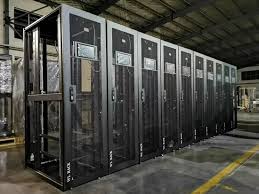
Every AI prompt typed into a chatbot, every photo uploaded to a drive, every voice command whispered into a phone ends up somewhere physical: inside a server rack, inside a warehouse-sized building, cooled by enormous machines and powered by an electric grid that rarely appears in conversation. Globally, data centres already consume around 415 terawatt-hours of electricity annually, and that demand is expected to more than double by the end of the decade.
In Kashmir, this story feels distant until it doesn’t.
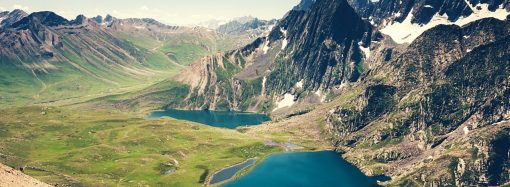
There are no hyperscale data centres rising above saffron fields in Pampore. No giant server campuses stretch across Budgam. No humming warehouse of GPUs glows in the Valley night. And yet Kashmir sits inside this technological shift in intimate ways: as consumer, labour market, climate zone and future frontier.
You see it in the student in Srinagar using AI to draft an application to a university in Delhi. In a designer in Baramulla generating product images for a client abroad. In a journalist transcribing interviews. In a trader checking inventory. In the growing dependence on cloud-based systems for everything from banking to administration.
Kashmir increasingly lives online. But the infrastructure powering that online life remains somewhere else – usually far away, invisible, and consuming extraordinary resources on our behalf.
Technology has always hidden its machinery from the user.
Electricity arrives through a switch, not a dam. Water through a tap, not a pipeline. Search through a browser, not a warehouse of processors.
AI may be the purest version of that illusion yet.
It appears effortless. Human-like. Weightless. A sentence enters; an answer arrives.
But behind every response is heat.
Lots of it.
The new AI economy is creating a dramatic increase in power demand. Analysts now describe energy – not chips – as the biggest constraint on AI growth. Power availability has become a strategic question shaping where data centres get built and where investment flows next.
This raises a difficult question from Kashmir’s edge: who pays the environmental price for digital convenience?
If the future belongs to AI, it will also belong to substations, cooling towers, transmission lines, backup diesel systems, copper supply chains, and water-intensive cooling infrastructure.
That future has a geography.
And geography matters deeply in Kashmir.
The Valley already experiences climate stress in visible forms—warmer winters, changing snowfall patterns, shrinking water streams, longer summers. Resources once assumed abundant now feel seasonal. Water arrives unevenly. Electricity remains politically charged and materially fragile.
Against that backdrop, the global AI boom feels less abstract than it first appears.
Because the conversation around technology is quietly becoming a conversation about energy.
And energy, in Kashmir, has always meant politics.
Who gets power. When it arrives. Who waits. Which districts light first. Which machines stay running. Which homes go dark.
To speak of digital futures here without speaking of electricity is to misunderstand both.
There is another paradox too.
Kashmir is full of talent but light on infrastructure.
The Valley produces coders, editors, freelancers, designers, engineers and increasingly AI-native young workers. But the platforms they rely on are hosted elsewhere. Their labour is local; the machine is remote.
This makes Kashmir both participant and outsider in the AI economy.
Connected to it. Dependent on it. But rarely shaping it. And yet that could change.
Globally, the next phase of digital infrastructure may not belong only to megacities. As heat, land cost and grid pressure reshape the map of data centre expansion, colder geographies are increasingly viewed differently. Cooling matters. Climate matters. Renewable energy matters.
Kashmir has all three as strategic possibilities—even if policy has not yet begun imagining them seriously.
Not necessarily as the next data centre capital of India. But as a place where the relationship between climate and computing could be reconsidered.
For now, though, AI arrives here mostly as interface—not infrastructure.
A glowing answer box. A voice assistant. An image generator. A recommendation engine. Useful, entertaining, astonishing. But also increasingly hungry.
The irony of modern technology is that the more invisible it becomes, the more material it gets underneath.
Artificial intelligence feels like language. But it runs on steel, cables, silicon, land, water and power.
And somewhere between Silicon Valley’s imagination and Kashmir’s mountains lies the real question of this decade:
What does intelligence cost – not intellectually, but physically?
The answer may not be written in code.
It may be written on the electric bill.
About the Author
Moien Darial writes with the precision of a market analyst and sensitivity of a storyteller. With a keen eye on global economic shifts and emerging technologies, he navigates complex transformations with clarity and restraint. Darial captures not just where markets are, but where they are quietly heading.









Leave a Comment
Your email address will not be published. Required fields are marked with *